

Between the Blooming Stations
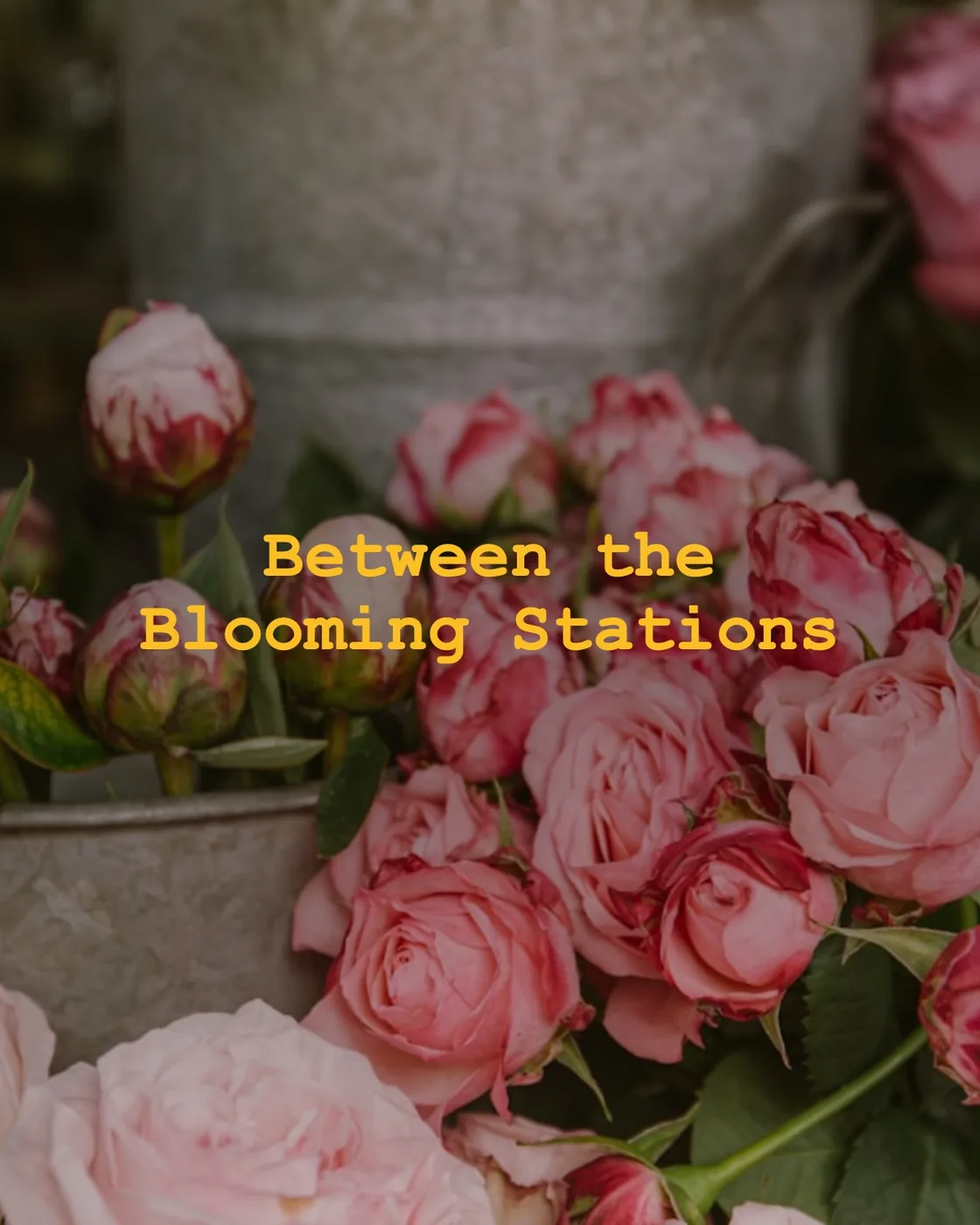
Listen to Between the Blooming Stations
Checking audio availability…
Chapter 1
By late March, London had begun, reluctantly, to bloom, not in any gentle or yielding way, but as if something vast had awoken beneath the grey pavements and had started to creep insistently upwards. Above, great branches of wisteria uncoiled themselves over iron railings in slow, violet cascades, making the white terraces seem almost plump with spring. While below, pink and white blossom gathered in gutters like a wedding’s forgotten confetti. The air throughout danced with the unsettled warmth of early spring; not yet trustful, and still threaded with winter’s silver ghost. The faint sweetness of early tulips and daffodils, alongside the buzz of excited bees interwound as one multi-coloured gust, meandering through even the coldest and forgotten corners of the city. And there, above it all, a giant orb of golden comfort grew, casting perpetual streams of light onto the awakening streets, illuminating the most inconspicuous of contours: the bricks, the leaves, the shoes of scurrying people.
South Kensington seemed particularly vulnerable to spring. Along Exhibition Road, beneath the towering limestone facades of the museums, café tables had begun spilling once again onto pavements, crowded now with tourists and students lingering lazily beneath the pale magnolias. The rich arches of the Natural History Museum stood glowing amber beneath the morning light, while opposite, rows of white stucco houses stretched endlessly forward, their grey iron balconies dripping with ivy and window-box carnations. Black taxis prowled slowly through the streets below, carrying streaks of yellow pollen across their polished roofs, and somewhere nearby, a violinist’s melody rose faintly from within the murmur of passing footsteps. Yet beneath all this warmth and fluttering movement, the Underground still waited patiently below ground; deep tunnels twisting silently beneath the awakening city, where sunlight never could quite reach, and where spring arrived only in fragments carried down on commuters’ coats and in the petals caught along the steel escalators’ teeth.
Each morning, she passed through the main street towards the station, carrying the faint scent of damp earth and freshly cut stems behind her, as though spring itself had tangled briefly in the folds of her coat. At her wrist, a fraying lilac ribbon wound twice, and shifted as she walked, the colour being almost identical to the many violet explosions framing the bricks around her. Beneath her fingernails, traces of dark soil still lingered stubbornly from the morning’s arrangements, or maybe the day before, she had lost track. She moved quickly, though never hurriedly, weaving between tourists and suited commuters with the absent ease of someone long accustomed to the city’s rhythms; head slightly bowed against the breeze, curls still silvered faintly from the earlier rain. And every morning, just as the bells of the nearby churches dissolved into the noise of traffic above ground, she disappeared beneath the station arches and descended slowly into the waiting dark of the Underground below.
Down along the tiled passageways, the air turned warmer and close against the skin, carrying with it the stale trace of wet umbrellas, old broadsheets and the faint burn of the rails below. Commuters clustered restlessly along the platform edge; students with scrawny ties tangled around their crisp collars, businessmen folded into dark coats and tourists clutching crumpled maps. Somewhere farther down the tunnel, a busker’s saxophone echoed faintly through the curved walls before dissolving beneath the sudden mechanical scream of an approaching train. Just then, as she arrived at the Eastbound Piccadilly platform, a sudden gust tore violently through the station. Lifting curls from foreheads and sending a single pale blossom skittering across the yellow safety line, the train finally erupted from the tunnelled darkness. Carriage windows flashed gold beneath the platform lights as the train slowed beside her, and through the shifting blur of shoulders and reflections, she saw him already seated inside; with a newspaper raised neatly before him.
She always boarded through the second set of doors. After some time, she began to suspect he did too.
Most mornings, he was already seated by the window when she entered the carriage, a broadsheet opened between his hands, as the train carried them westward through the deep-buried tunnels below the city. Looking at him, he dressed with a kind of effortless formality that had become increasingly rare in London after the war; dark wool overcoats buttoned cleanly to the throat, polished shoes catching sudden flashes of station light and corners of shirts pressed so sharply they seemed almost untouched by the rushing disorder around him. Yet, there was always something slightly undone about him too. A loosened cuff. A missing glove. Once, she noticed a faint streak of ink along the side of his thumb, which remained there for nearly a week afterwards.
Chapter 2
That Tuesday, she decided he was a pianist.
There was something measured in the movement of his hands. Even while still, his fingers drifted intuitively against his knee in soft and restless patterns, as though some unheard melody continued quietly beneath the mechanical rhythm of the train. She imagined him returning each evening to some cavernous Kensington townhouse; with darkened windows and high ceilings, where cigarette smoke curled lazily through rooms lined with books, and where crystal decanters of amber whisky rested untouched beside enormous Steinway Grands. In her mind, he performed beneath glittering chandeliers before crowds of silent strangers, only to wander afterwards through echoing corridors filled with dust and lamplight, loosening his cuffs long after midnight while old records crackled somewhere deeper within the house.
At Leicester Square, they always rose within moments of one another. Together, though never side by side, they crossed the crowded platform towards the Northern line, carried silently onwards with the tide of dark coats and damp air. By then, the city above had already begun brightening into morning, though far below ground, time seemed to move differently; measured only by station names and the thunder of the approaching rails.
She left at Hampstead. She noticed that he did too.
For the first time, she followed him.
Not closely enough to be noticed, only enough to satisfy the quiet curiosity that had begun lingering stubbornly within her over the past weeks. Emerging from Hampstead station into the cool spring air, she watched as he crossed the narrow road opposite without hesitation, disappearing towards the same imposing building she had seen him enter every morning before. It stood withdrawn from the bustle of the high street; all black stone and looming windows darkened against the pale gold morning, with brass-plated doors polished so brightly they caught fractured shards of sunlight whenever they opened. No sign hung outside. No indication of what waited within. Only a uniformed porter stationed beside the entrance, motionless as carved marble beneath the striped awning overhead, where inscribed deep within the stone front while almost forgotten, three letters became the only clue; H A L.
She paused across the street beside the florist’s shop window, pretending briefly to rearrange the stems of peonies gathered outside in hammered metal buckets.
Then she watched him disappear inside, a brief frown strung her brows, before the voice of the Flower Matron called, asking her inside.
For the remainder of that morning, she found herself thinking about the building far more than she ought to have. While trimming rose thorns and changing water-clouded vases, her mind returned repeatedly to those darkened windows and polished brass doors. Perhaps, she thought now, he was not a pianist after all. Perhaps he worked somewhere stranger. Somewhere important.
By midday, she had decided he belonged to one of those old private firms that dealt exclusively in things nobody fully understood — foreign affairs, antique maps, inherited fortunes, vanished paintings. She imagined dim rooms lined with mahogany shelves and men speaking quietly beneath drifting cigarette smoke, their conversations threaded with the names of distant cities she would never see. And somewhere amongst them all, seated silently behind an enormous walnut desk, would be him; ink still faintly staining the side of his thumb.
The florist’s shop always felt like a different kind of weather. Warmer than the street outside, heavier with scent, as though spring had condensed itself into glass and water and refused to leave. Buckets crowded every corner; metal tins and ceramic vases packed so tightly the floor itself seemed to disappear beneath them. Peonies lay open in slow folds of cream and pale blush; their petals heavy as though already remembering summer, whilst roses stood half-closed; thorns dark and wet against their stems. Next to these, tulips leaned into one another incessantly and in blurred shades of crimson, apricot and butter yellow – their heads slightly bruised from warmth. Daffodils scattered like small, reckless suns between them all, while hyacinths thickened the air with a sweetness so dense it almost turned physical. Sweet peas trailed over bucket rims in tangled ribbons of violet and white, and eucalyptus cut through everything with its sharp, cold breath, steadying what would otherwise have become overwhelming. Even the water in the vases had begun to smell faintly green, as if it too were learning how to grow.
The bell above the door rang quietly.
Mrs Blossomwell entered as though arriving to inspect something already falling short of expectation. She paused just inside, taking in the room with narrowed consideration.
“I need something that suggests apology,” she said. “Not guilt. Apology.”
A pause. “And nothing too… dramatic.”
The girl nodded, already selecting stems without fully looking at them. Roses first, pale and open at the edges. A few sprigs of lavender. Something soft enough to feel accidental rather than arranged. Her hands moved quickly now, less like composition and more like recall.
Mrs Blossomwell watched with suspicion. “Last time it looked like heartbreak,” she added.
“It depends who it’s for,” the girl said quietly.
Mrs Blossomwell gave a small, satisfied sound that might have been agreement. Or not. It was difficult to tell.
When the bouquet was finished, it looked almost unfinished on purpose — loose, slightly asymmetrical, as though it had only just decided to become itself and was still uncertain about the final shape.
“That’s better,” Mrs Blossomwell said at last. “This one says I’m sorry without making a scene of it.”
The girl wrapped it carefully and passed it over.
For a moment after the door closed again, the shop seemed to exhale. The scent settled back into itself. Nothing moved except the faint tilt of stems adjusting to their own weight.
She rested her hands lightly against the counter.
HAL.
Not a question now, but something that had begun to occupy space in her mind without asking permission. And slowly, as she looked back at the flowers still waiting to be arranged, her thoughts began to drift again (away from petals, away from scent, away from the soft abundance of the room) and back towards the dark stone building at Hampstead, where a name of three letters waited quietly beneath the surface of the city.
That Thursday, she decided he must have been an architect.
The clue arrived in fragments. A thin roll of tracing paper tucked briefly beneath his arm as he boarded at South Kensington. Charcoal along the edge of his cuff. The faint geometric indentation left across one page of his newspaper, as though a ruler had rested there moments before.
Yes, she thought. An architect. It made sense.
All morning afterwards, she imagined him leaning over enormous drafting tables within the upper floors of HAL, sleeves rolled neatly towards his elbows whilst the city spread itself across blueprints beneath his hands. In her mind, he spoke rarely but precisely, correcting measurements with the quiet confidence of someone accustomed to permanence. She imagined models of future buildings scattered throughout dim rooms lined with brass lamps and cigarette smoke; tiny paper cities waiting patiently to exist.
And afterwards, always afterwards, came that same Kensington townhouse.
That part never changed, however many times she recounted his story.
No matter who he became throughout the day ( the pianist, the architect, the diplomat, even the master-mind thief) she always returned him there eventually. To those high ceilings and amber-lit corridors. To records turning faintly somewhere in the dark whilst rain pressed against enormous windows overlooking the square below. She could picture it now with embarrassing clarity. The black grand piano near the staircase; silver cigarette trays abandoned half-full beside crystal glasses; famed novels left open face-down upon velvet armchairs. Sometimes she imagined him alone there. Sometimes unbearably lonely.
And sometimes, though she tried not to, she imagined herself within it too.
Chapter 3
The following week, she decided he, instead, restored paintings.
This time it was his hands that betrayed him. There were faint smudges beneath his nails again, though not ink now but something darker (green perhaps, or blue) and when the train lurched unexpectedly near Russell Square, a small folded cloth slipped briefly from his coat pocket before he caught it. Linen. Paint-stained.
Immediately, the entire shape of his life rearranged itself inside her mind, just as it had done daily for weeks now.
She saw him within vast silent galleries after closing hours, standing alone beneath pools of golden museum light whilst enormous oil paintings towered around him. Delicate brushes resting between careful fingers. Great fractured canvases slowly returning to life beneath his touch. She imagined him studying centuries-old faces with almost devotional patience, uncovering colour where time had tried to bury it.
At Hampstead, she watched him disappear once more behind the dark brass doors of HAL.
And for the first time, she wondered whether the building itself changed depending on who she believed him to be.
That afternoon, whilst replacing the wilted hydrangeas outside the shopfront, she glanced upwards towards the higher windows of HAL for no reason she could properly explain. Indeed, most of them remained dark beneath the pale wash of clouded sunlight. Still and reflective. Empty, almost.
Except one. Her eyes widened.
Near the uppermost floor, a single window had been pushed partially open against the spring air, and there, half-obscured behind the shifting reflection of the city itself, stood him.
Not reading now. Not moving.
Simply watching the street below with one hand resting loosely against the ebony window frame, and for one strange suspended moment, she did not realise he was looking at her.
A breeze moved suddenly through Hampstead then, warm and careless, lifting loose petals from the buckets gathered outside the shop. Pale tulip heads trembled tenderly against one another whilst fragments of blossom spiralled briefly upwards into the air between them.
His gaze followed them down.
And then, quietly — almost imperceptibly — he smiled.
Not fully. Only at one corner of his mouth, where something dimpled faintly beside the sharpness of his cheek.
It altered him completely.
Until then, she had known him only in fragments: the careful hands, the loosened cuffs, the ink-stained thumb. But smiling, he became startlingly young all at once. Younger than the dark overcoats and newspapers had ever allowed him to seem. There was a small mole just above his left brow she had never noticed before, and his eyes (although near impossible to distinguish clearly from that distance) seemed neither a distinct brown nor green, but something indeterminate between the two, like leaves darkened after long-awaited rain.
The moment lasted perhaps seconds. Then someone crossed behind him within the room beyond, and he stepped away from the window entirely.
Still, afterwards, whilst trimming stems in the back room, she found herself smiling too without quite meaning to.
That evening, she decided he had noticed her long ago.
Over the following mornings, their pattern held itself together with quiet insistence, as though the city refused to allow it to break. The same carriage. The same seat by the window. His same folded broadsheet held at the same careful angle, the pages turning only when the train dipped or slowed beneath the weight of the tunnels. Even the light felt repeated; the same brief flashes at each station, the same momentary interruption of darkness before the train moved on again.
And yet —
On the seventeenth morning, she was almost certain he had not been there when she first entered the carriage. Only for a moment. Only long enough to register the shape of absence before he was suddenly present again, as though he had simply been overlooked. She told herself she had been distracted.
But the feeling stayed.
At Hampstead, the air shifted in ways she could not account for. The building still stood where it always had, black and unreadable against the pale morning, HAL cut into stone so subtly it felt more remembered than carved. And yet, once, as she crossed the street, she thought she saw the porter already looking at her before she had even turned her gaze towards him. Not moving. Not reacting. Simply… already there in her line of sight. That wasn’t right.
She did not stop walking – her legs drew her almost mechanically forwards.
Once in the shop, she began, incredibly, to miscount stems. Not dramatically. Only in small, inconvenient ways that forced her to start again without knowing why she had been wrong the first time. A bundle of tulips she was certain had been twelve became thirteen. A vase she had filled minutes earlier appeared slightly emptier when she returned to it. Mrs Blossomwell did not comment, though she did say once, absently, that “time was behaving oddly this week,” before choosing not to explain what she had meant at all.
On the train, he still read his broadsheet. Still sat by the window. Still folded and unfolded the same corners with precise, unthinking care. And yet she began to notice something else now—not in him, but in the spaces between him. Moments where the carriage felt fractionally out of step with itself. Where the announcement at one station seemed to arrive before the train had fully stopped. Where Leicester Square, once certain, felt as though it had been passed twice in the same journey without either of them moving.
She stopped trying to correct it.
But then the day comes.
Chapter 4
April 12th.
Rain presses delicately against the windows of her flat long before dawn, turning the city outside pale and indistinct beneath the early morning fog. Somewhere along the street below, milk bottles clatter faintly against stone, followed by the distant groan of a delivery lorry disappearing westward through Kensington.
She wakes before her alarm.
For several moments, she remains still beneath the sheets, listening.
April 12th.
The date arrives in her mind with strange certainty, though she cannot explain why it feels so significant. Important somehow. Like the final page of a book, she has not yet finished reading.
Beside the sink, she tears a small corner from yesterday’s newspaper and writes it down carefully before she can forget it.
12 April.
The ink catches slightly against the paper.
When she folds the scrap and slips it into the pocket of her coat, the gesture feels oddly ceremonial.
Outside, London has not yet fully woken. The streets shine darkly from rain. Flower petals cling wetly against the pavement stones, flattened now into pale streaks of pink and violet beneath passing footsteps. Along Exhibition Road, the magnolias bow heavily beneath gathered water whilst buses move slowly through the mist with their headlights still glowing dimly against the morning.
At South Kensington station, she notices immediately that he is not there.
He is not there.
The seat beside the window remains empty. No newspaper. No dark wool coat folded neatly against the corner. Nothing. And absurdly, the entire carriage feels altered by the absence of him.
At Knightsbridge, she glances upwards instinctively as the doors open. Nothing.
Hyde Park Corner follows. Then Green Park.
Still nothing.
By the time the train reaches Piccadilly Circus, a peculiar unease has begun settling itself beneath her ribs; not disappointment exactly, but the feeling of having forgotten something important moments before remembering it again too late.
At Leicester Square, she rises automatically with the rest of the carriage, carried forward by habit more than thought. The tiled platform gleams faintly beneath the station lights as crowds divide around her in familiar currents; dark coats drifting towards escalators, briefcases knocking against swinging knees.
Usually, somewhere amongst them, he exists. A shoulder briefly glimpsed ahead. The edge of a newspaper. That same dark overcoat disappearing towards the Northern line platform below.
But not today. She descends alone.
The Northern line platform feels colder than usual. Wind moves restlessly through the tunnels, lifting the edges of abandoned broadsheets along the tracks. Somewhere overhead, an announcement fractures midway through a sentence before restarting itself several seconds later. She frowns.
That wasn’t right.
When the Hampstead train finally arrives, she boards almost absently, standing this time rather than sitting. Rainwater trembles faintly along the carriage windows whilst station lights dissolve and reform across the glass like blurred repetitions of themselves.
Chalk Farm.
Belsize Park.
Hampstead.
The doors sigh open. For one strange moment, she remains motionless inside the carriage, watching the platform beyond her as though expecting someone to emerge at the very last second. No one does.
Outside, the rain has softened into something finer now; a silver mist hanging weightlessly through the morning air. Hampstead appears dreamlike beneath it. Black railings shine wetly beneath the pale sky whilst blossom clings in damp clusters along the pavement edges, bruised now by weather.
She climbs the station steps slowly.
And then she sees him.
Not across the street. Not vanishing through the brass doors of HAL. Not seated behind glass with a folded newspaper raised between his hands. He is standing directly outside the station entrance beneath the blind, rain darkening the shoulders of his coat.
Waiting.
The sight of him halts her so abruptly that someone behind almost walks into her shoulder. For a second, neither of them moves. Then, quietly, he smiles again; that same slight tilt at one corner of his mouth, softer now somehow in the grey morning light.
“I was beginning to think you weren’t coming,” he says.
His voice startles. Not because of how deep it is, nor the calmness of it, but because hearing it feels less like something new and more like remembering something she has somehow heard before.
Around them, the city continues moving. Umbrellas drift past. Cars hiss melodiously through rainwater further down the hill. Somewhere nearby, church bells begin striking the quarter hour.
But all she could even begin to think was:
“Oh. So, this is how it begins.”
Chapter 5
Rain silvered the edges of his dark hair where the mist had settled there, softening the otherwise careful severity of him. Up close, he seemed taller than she had imagined over all those weeks underground, though not imposing. Only still. Steady in the way old buildings were steady. His coat hung open now, one hand resting loosely inside the pocket whilst the other curled faintly around the handle of a black umbrella he did not appear to be using.
And his eyes —
She understood suddenly why she had never been able to decide their colour properly from across the carriage, for they changed when he listened.
That was the only way she could think to describe it. At first, they seemed green beneath the washed grey morning, but then amber moved through them when she shifted beneath the station light, and something warmer again when the corner of his mouth lifted slightly at her silence.
Not amused, but fond: as though her astonishment was something delicate, he ought to handle carefully.
“I know,” he said softly, watching her still trying to recover herself. “It’s stranger aloud.”
She blinked once. “What is?”
“This.”
The word settled between them.
Not dramatic. Not flirtatious. Simply true.
Around them, commuters drifted steadily up the station stairs beneath umbrellas and damp collars, brushing past without notice, but she could no longer quite feel the movement of the city properly. Only him standing there watching her with impossible attentiveness, as though he had narrowed the entire morning down to the shape of her face.
“I don’t understand,” she admitted quietly.
“No,” he agreed. “I don’t think you do yet.”
Yet.
Something about the word loosened a nervous laugh from her before she could stop it.
“Well, that sounds vaguely threatening.”
To her surprise, he laughed too.
Not politely.
Really laughed.
The sound altered him completely.
It arrived suddenly and low in his chest, brief enough that he almost caught it back again afterwards, though not before she saw the dimple appear properly this time beside his mouth. For one impossible moment he no longer resembled the composed stranger from the Underground at all, but someone younger, warmer, almost boyish beneath all that dark wool and restraint.
And absurdly, seeing him laugh made her want to do it again.
“You looked disappointed,” he observed.
“When?”
“On the platform.”
She glanced away immediately. “You weren’t there.”
“No,” he said. “I wasn’t.”
“And now you are.”
“And now I am.”
The ease with which he answered unsettled her slightly, not because it was arrogant, but because it felt as though he had already accepted some intimacy, she herself had only just begun understanding.
Rainwater slipped quietly from the station sign beside them, and somewhere nearby, a bicycle bell rang twice before dissolving into the mist.
“You’ve been watching me,” she said finally.
It should have sounded accusatory.
Instead, it came out breathlessly curious.
A pause.
Then, very gently:
“So have you.”
Heat rose instantly into her cheeks.
He noticed. Of course, he noticed.
But unlike most people, he did not rush to rescue her from embarrassment nor draw attention cruelly towards it. He simply let the silence remain long enough for it to become something softer between them.
“I thought you restored paintings,” she confessed suddenly.
That startled him, not visibly perhaps to anyone else, but she saw it; the fractional lift of his brows, the faint shift at the corner of his mouth like surprise struggling briefly against composure.
“Paintings?”
“Last week.”
“And before that?”
“A pianist.”
Now he was smiling again.
“And before that?”
She groaned quietly, covering part of her face with her hand. “Oh God.”
“No, tell me.”
“You’ll become unbearable.”
“I already suspect I am.”
She looked at him then, fully this time. Their eyes reflecting each other’s grins, and warmth blanketing them entirely; souls now laid bare.
“You really want to know?” she laughed.
“Yes.”
The answer came without hesitation.
Not casual interest. Not politeness.
Yes.
As though hearing her thoughts mattered.
She felt something strange happen inside her then; not quite safety, not yet affection, but the terrifying beginning of being understood.
“Well,” she said carefully, “there was briefly an architect.”
“Briefly?”
Another smile.
“You carried tracing paper one morning.”
“I did.”
“And there was charcoal on your cuff.”
“Ah.”
“But then you ruined it by looking melancholy beside a rain-covered window, so naturally I had to revise the entire narrative.”
His smile deepened slowly.
“And what narrative was that?”
“That you lived alone in a tragic Kensington townhouse with twelve-foot ceilings and unresolved emotional problems.”
This time the laugh escaped him fully.
God. She had not realised until then how badly she had wanted to hear it again.
“You imagined all that from a newspaper and a coat?”
“And your hands,” she corrected quietly.
Something in his expression changed then. Not dramatically. Only a slight stillness entering him.
“My hands?”
“They never stop moving,” she said, “not ever. Even when the rest of you does.”
For the first time since speaking to him, he seemed to lose his answer.
Not entirely. Only enough that she saw it happen. And suddenly she understood something else too: he was not used to being observed back. That discovery thrilled her.
Rain drifted silver through the air between them whilst the city breathed quietly on around the hill below. Then, after a pause, he said: “Would you walk with me?” Not can I take you somewhere. Not performance. Not charm. Only: Would you walk with me? And because she was already doomed, she said yes, immediately.
“I'm Violet, by the way, I'm sure it will become useful now.”
“Julian.”
That was good, she thought. He had a perfect name.
Chapter 6
They left Hampstead slowly, not with any clear destination between them, but with the strange ease of two people continuing something that had perhaps begun long before either of them realised it. The rain had nearly passed now, leaving the pavements darkened and gleaming beneath the pale morning. Along the high street, greengrocers arranged crates of blood oranges and pears beneath striped emerald canopies whilst somewhere above them an open window released the distant sound of a radio orchestra drifting faintly into the air.
He walked beside her without rushing her once.
That, more than anything, unsettled her. Most people listened only long enough to answer. Others waited impatiently for their turn to speak. But he listened as though each sentence she offered altered something for him internally, and she found herself speaking more than she normally would simply because of the way he paid attention.
Not staring.
Not intense.
Just wholly there.
By the time they reached the edge of Regent’s Park, she had somehow told him about the woman who bought apology bouquets every Thursday, the old florist on Thurloe Place who insisted lilies carried bad luck indoors, and the small private grief of watching flowers die slowly even whilst customers called them beautiful.
“And does it upset you?” he asked quietly.
“What?”
“That they die.”
She glanced towards him, surprised not by the question itself, but by the seriousness with which he asked it.
“A little,” she admitted. “Though I think perhaps that’s why people love them so much. If roses lasted forever, no one would bother buying them on Tuesdays.”
Something in him shifted softly at that.
Not amusement. Recognition.
“You think like a letter,” he said absentmindedly.
Her brows lifted. “I beg your pardon?”
Only then did he seem to realise he had spoken aloud. A faint colour touched the tops of his cheeks almost imperceptibly.
God.
Even his embarrassment was lovely.
“I just meant…” He looked down briefly, gathering the thought properly. “Most people describe things directly. You describe what they become beside other things.”
For a moment, she could only look at him. Nobody had ever said something like that to her before.
Not exactly.
The wind moved lightly through the park trees above them, scattering petals across the path in uneven spirals. Somewhere further ahead, a little girl shrieked with laughter as her brother chased her towards the boating lake.
“You say strange things,” she murmured.
“I know.”
“But you mean them.”
“Yes.”
The simplicity of the answer nearly undid her.
Chapter 7
By midday they had crossed into Primrose Hill, where the clouds finally began breaking apart properly above London, unveiling brief expanses of impossible blue between them. The city stretched below in softened greys and ivory stone, church domes and chimney pots dissolving into distance beneath the changing light. She sat beside him on the grass near the summit, drawing one knee loosely towards her chest whilst he leaned back on his palms beside her, coat discarded now across the ground. The sleeves of his shirt had been folded carelessly towards his elbows, exposing wrists and forearms lightly marked with faint ink shadows that had not entirely washed away. The breeze moved through his dark hair continuously now, undoing whatever careful order it had once possessed that morning underground. And still, even here beneath open sky, he looked at her as though she remained the most absorbing thing within his field of vision.
It made her feel almost incandescent.
“You still haven’t told me what you do inside HAL,” she said eventually.
A smile touched his mouth.
“No.”
“That wasn’t a very good answer.”
“It wasn’t meant to be evasive.”
“Then what was it meant to be?”
His gaze shifted briefly towards the skyline below them before returning to her again.
“A delay.”
Heat gathered unexpectedly beneath her ribs.
“You always speak like this?”
“Unfortunately.”
She laughed then, and the sound seemed to affect him physically. She saw it happen; the immediate softening around his eyes, the unconscious way his attention sharpened towards her the second she smiled. As though her happiness arrived to him like music reaching someone through another room.
“I restore archives,” he said at last.
She tilted her head slightly.
“Historical records?”
“No.”
Again, that answer.
Soft.
Certain.
“What, then?”
For the first time since meeting him, he hesitated. Not because he wished to hide it, she realised suddenly.
Because he wished to explain it properly.
Below them, London shimmered faintly beneath the clearing afternoon. Somewhere nearby, the scent of cut grass rose warm beneath the sun.
“We preserve personal collections,” he said slowly. “Letters mostly. Journals. Annotated manuscripts. Private correspondence. Things families nearly lose after deaths or wars or time.”
Something tightened gently within her chest.
“Love letters?” she asked quietly.
A small smile returned. “Sometimes.”
“And people just… give them to you?”
“Usually after the people who wrote them are gone.”
She did not answer immediately. For some reason, the thought made her unbearably sad.
“I suppose,” he continued softly, “most people don’t realise how fragile memory becomes once there’s nobody left to repeat it aloud.”
There it was again. That feeling. That terrifying sense that every sentence he spoke had somehow arrived already carrying part of her with it.
“And you restore them?”
“Yes.”
“How?”
His expression brightened then. Not dramatically, but enough that she saw at once how deeply he loved what he did.
“Carefully,” he said. “Sometimes paper splits where it’s been folded too many times. Ink inevitably fades. Water damage. Fire damage once.”
She watched him as he spoke. Watched the way his hands moved mechanically beside him whilst explaining things he cared about. Watched the quiet animation entering his voice for the first time all day.
“And sometimes,” he continued, “you find things inside them.”
“What sort of things?”
“Train tickets. Theatre programmes. Pressed flowers. One woman hid tiny sketches of her husband in the margins of grocery lists for nearly forty years.”
She smiled helplessly.
“Oh, that’s devastating.”
“I know.”
“And you read all of them?”
“Only enough to preserve them properly.”
“But still.”
“Yes,” he admitted.
The breeze shifted around them again. Then, after a moment:
“I think,” he said carefully, “that’s why I noticed you.”
Her heartbeat stumbled.
He looked almost embarrassed now, though he did not look away from her.
“You reminded me of them.”
“Dead people?” she said before she could stop herself.
To her relief, he laughed immediately.
“No.”
“Good.”
“I meant the way they wrote.”
She fell silent.
“When you look at things,” he said quietly, “you look at them as though they matter beyond themselves.”
Nobody had ever listened to her this way before. Not merely hearing her words, but uncovering shape beneath them. And suddenly she understood with frightening clarity why she had followed him in the first place. Not because he was handsome. Though he was. Not because he was mysterious. Though God, he was. But because every morning on that train, some hidden instinct inside her had recognised the terrible rarity of being seen properly. And now that it was happening, she found she could scarcely breathe through the enormity of it.
Chapter 8
They remained on Primrose Hill far longer than either of them intended. At some point, the afternoon simply loosened around them. The city below drifted gradually gold at the edges whilst shadows lengthened faintly through the grass. Around them, London continued its endless motion: cyclists cutting along outer paths; children collapsing breathless beside half-melted ice creams; dogs racing wildly through the open greens. Yet everything beyond the small orbit of the two of them, felt strangely unfocused, as though the world itself had stepped politely backwards.
She learned he preferred winter symphonies to summer ones because “summer music often tries too hard to sound happy. He learned she cried in bookshops.
“Not dramatically,” she clarified at once.
“That makes it sound concerning.”
“It does raise questions.”
“I only mean sometimes I find sentences that feel as though somebody reached into my ribcage and removed something without permission.”
He looked at her then with that same unbearable attentiveness.
“Yes,” he said quietly. “I know exactly what you mean.”
God. Every time he answered her like that, she felt herself falling another impossible inch.
By the time they finally rose from the hill, the air had shifted warmer around them, carrying the faint green scent of crushed stems and sun-touched bark. They descended slowly towards Regent’s Park again, their shoulders brushing now and then purely by accident (though after the third or fourth time, she began suspecting perhaps not entirely).
At the boating lake near the bridge, they paused. The water moved lazily beneath the afternoon light, folding soft reflections of willow branches through its surface whilst little painted boats drifted quietly between patches of reeds. Nearby, an elderly man scattered crumbs to an aggressive cluster of ducks who appeared wholly unimpressed by one another’s existence.
She leaned lightly against the railing.
“I used to think,” she admitted, watching the water below, “that love would feel enormous when it arrived.”
Beside her, he stayed silent.
Listening again.
“Like fireworks perhaps. Or orchestras.” She smiled faintly at herself. “Something unmistakable.”
“And now?” he asked.
Now.
The word entered her gently.
She looked out across the lake, watching sunlight break apart against the ripples.
“Now I think perhaps it’s much quieter than that.”
His gaze had not left her profile.
“How quiet?”
She swallowed once, though she could not have said why.
“Like finding a place beside someone where your mind finally goes still.”
Silence. Not empty silence. Changed silence. The kind that arrives after something true has already been said.
When she finally turned towards him again, his expression had altered slightly. Softer now. Almost undone at the edges, and for one terrifying second, she had the distinct feeling he might kiss her.
The thought moved through her so suddenly she forgot how to breathe properly.
But instead, he smiled.
Small.
Private.
As though he had heard the thought pass through her and chosen, gentlemanly, to protect it.
“Come on,” he said quietly after a moment. “There’s somewhere I want to show you.”
Chapter 9
They crossed through the park together beneath broad planes of late sunlight, leaving the lake behind them as the afternoon deepened steadily towards evening. By the time they reached Hyde Park, the sky above London had begun turning slowly pearl-coloured at the edges, clouds stretched thin as silk across the fading blue. Along the Serpentine, the water burned bronze beneath the lowering sun. Rowboats drifted lazily across its surface whilst couples leaned together along the embankment sharing paper cups of tea gone cold in their hands. Somewhere nearby, a violinist played beneath the trees, the melody dissolving beautifully into the open air before she could properly recognise it.
“It’s strange,” she said as they walked.
“What is?”
“That I know almost nothing about you.”
“You know some things.”
“Only important things.”
That smile again.
“And the unimportant things?”
“Yes.”
He pretended to consider it seriously.
“I can’t whistle.”
She laughed immediately.
“That cannot possibly be true.”
“It’s humiliating.”
“Show me.”
“No.”
“Why not?”
“Because I’ve grown fond of the way you currently look at me.”
She pressed a hand briefly against her mouth, laughing harder now despite herself.
There it was again: that impossible feeling of him stepping precisely into the shape of her humour every single time.
“How dangerous,” she murmured once she’d recovered slightly.
“What?”
“You.”
He seemed genuinely surprised by that, for once.
Meekly, almost boyishly, he said: “I rather thought it was the other way around.”
The evening gathered slowly around them afterwards.
They crossed through Kensington Gardens beneath trees just beginning to gather their first true leaves of spring, the paths quieter now as daylight softened into dusk. Near the Italian Gardens they found a narrow half-forgotten trail branching away from the wider promenade, partially hidden behind low hanging branches of a mulberry tree whose roots had begun lifting the paving stones beneath it.
“This way,” he said.
“You know London like a secret.”
A faint glance over his shoulder.
“No,” he replied tenderly. “Only the parts worth keeping.”
And somehow, impossibly, that felt like flirtation too.
They sat beneath the mulberry tree for what might have been minutes or hours; neither of them seemed capable anymore of measuring time properly when left alone together like this. Kensington Gardens unfolded sensitively around them in blurred sketches of green and pearl-grey light, the afternoon now leaning slowly towards evening whilst distant movement of water drifted somewhere beyond the trees.
Above them, the branches swayed gently.
“It fruits too early,” he had said once, glancing upwards through the leaves with something oddly affectionate in his expression. “Every year. Weeks before it should.”
She smiled faintly. “That sounds unhealthy.”
“It’s stubborn.”
“That sounds more like you.”
The laugh that left him then came quieter than before, almost private.
A small handful of mulberries rested now between them atop the folded newspaper he had spread across the grass. Most remained dark crimson rather than fully ripened black, their colour rich as spilled wine where the fading light touched them. One had burst slightly beneath his fingers earlier, staining the edge of his thumb violet-blue.
She could not stop looking at it.
Carefully, he picked another from the branch above and passed it towards her.
“Try this one.”
“It looks kind-of scary.”
“That’s because it isn’t ready yet.”
“And you’re giving it to me anyway?”
“You strike me as someone who’d prefer things before they become sweet.”
She looked at him properly then Not because of the words themselves, but because of how precisely he had said them. As though he had been listening long before either of them began speaking aloud.
Slowly, she took the fruit from his hand.
Its skin felt delicate between her fingers, almost warm from the day’s lingering heat. When she bit into it, sharpness flooded instantly across her tongue; tart at first, then deeper, darker, something rich unfurling afterwards like wine left too long against the mouth.
Her eyes widened slightly.
“Oh.”
He smiled immediately.
“There it is.”
“What?”
“That face you make when something surprises you.”
She stared at him. “You notice that?”
“I notice everything you do, Violet.”
Chapter 10
The words should have frightened her. Instead, something inside her gave way. Without thinking, she shifted closer beside him until her shoulder brushed lightly against the sleeve of his coat. Neither of them moved away. Then, unconsciously, so naturally she did not realise she was doing it at all, her head rested gently against his shoulder.
The movement startled neither of them.
He simply went still beneath the weight of her. Not tense. Reverent. She continued speaking after that, softly at first, unaware of what she had done. About flowers. About how hyacinths smelled too beautiful to survive long. About the old woman who came into the shop every Thursday pretending not to buy peonies for herself. About childhood summers spent pressing petals between book pages until the colours faded into ghosts.
And he listened.
Completely. Not politely. Not waiting for an opening. As though every word she gave him was something he intended to keep.
Once, his hand shifted slightly in the grass beside hers, close enough that their fingers nearly touched, stopping just short as if he was afraid of breaking whatever this was by naming it too quickly.
“You keep saying flowers remember things,” he murmured once.
“They do.”
“How?”
“They return exactly where grief left them.”
He didn’t speak for a while after that. When he finally did, it was quieter than before.
“That might be the most beautiful thing I’ve ever heard.”
She didn’t answer straight away.
Because something in him had changed when he said it; not visibly at first, but in the way his silence settled afterwards. Like the words had loosened something carefully held in place for a very long time.
The light between the branches had begun to thin now, turning everything softer at the edges, less certain, less defended. Even the air felt paused, as if the park itself had stopped pretending to move for a moment.
She became aware of him properly then. Not the imagined versions. Not the pianist or the architect or any of the lives she had built around him in motionless train carriages. Him, here, real, in a way that made everything else feel like preparation. He looked at her and it wasn’t tentative anymore. It was recognition, as though something in both of them had finally arrived at the same place at the same time.
His hand lifted slightly, not quite touching her face yet, hovering there like a question that already knew its answer.
And she saw it then, in his eyes, the same thing she was feeling. That quiet, impossible alignment. Like everything had been leaning towards this without either of them knowing how to name it.
Her breath caught once.
Then she said, very quietly, almost amused:
“About time.”
The corner of his mouth twitched and lifted immediately. That small, helpless laugh escaped him — warm, disbelieving.
“You think so?” he murmured.
“Mhm.”
That was all it took.
The hesitation didn’t disappear so much as break.
He leaned in and it wasn’t careful anymore, not in the way it had been imagined. It was certain now, but still strangely gentle, like something finally allowed to happen after being delayed for too long. His lips met hers with the faintest trace of mulberry still there; sharp-sweet, dark, almost wine-warm.
Her hand moved first, instinct before thought, catching the front of his coat as if anchoring herself to the fact that this was actually happening. His other hand found her waist, steadying her without pulling her in so much as meeting her where she already was.
For a moment it felt like everything tilted (not rushing, not chaotic) just opening. Like a spiral unfolding inward, both of them caught in the same turning point. When they broke apart, it wasn’t distance. It was breath. He was still close enough that she could feel him smiling against her.
“Was that your plan?” she whispered.
“Absolutely not,” he said, still laughing under his breath.
“Liar.”
That made him laugh properly this time; softer, freer, like something inside him had finally stopped holding its shape. Then, almost without thinking, he shifted backwards, tugging off his coat and laying it down on the grass behind them. Before she could question it, he gently pulled her down with him, and suddenly they were both lying there beneath the thinning branches, half in shadow, half in fading light.
The world felt very far away. Above them, leaves moved slowly against the sky like dark lace. She turned her head slightly toward him.
“You taste like mulberries,” she said.
He glanced at her. “That’s concerning.”
“It’s not a complaint.”
That made him smile again– quieter now, softer at the edges.
For a while they didn’t speak. Just stayed there, side by side, as if the park had finally agreed to stop asking anything of them.
Then she said, almost absently:
“They’re my favourite fruit now.”
He turned his head toward her.
“Mulberries?”
“No,” she said, looking at him properly. “You’re just… annoying enough that nothing else quite compares anymore.”
“I’ll take that as praise.”
“It is.”
And just like that, she wasn’t looking at him anymore; her gaze had drifted up instead, to the last wool of cloud unravelling slowly across the sky above the trees, as if her thoughts had stepped slightly out of reach of the moment itself.
“You’re perfect.”
He said it quietly.
No build-u or hesitation. Like it had simply been waiting for the gap in her attention to exist.
The words didn’t land like a compliment or a claim, but more like something steady finally being placed where it belonged, and for a second, nothing followed it. No correction or attempt to soften it, because anything added would have made it less true. And in that stillness, it didn’t feel like something spoken anymore, but something already known, finally said out loud.
Chapter 11
The park carried on around them as if it had decided not to interrupt: leaves turning slowly above in the thinning light; distant footsteps slipping in and out along the paths beyond.
Then somewhere, not close, not loud, just caught between the trees, music drifted through.
Faint at first. Uncertain.
She lifted her head slightly.
“Do you hear that?” she asked.
He didn’t answer straight away. He was already listening in the way he always did. Fully, precisely, as though sound itself could be read.
“It’s a waltz,” he said after a moment.
“It sounds like it’s trying not to be,” she murmured.
That made him smile. She felt it next to her cheek. They stayed there a little longer, letting it thread itself through the branches above them — fragments of melody breaking, carried and lost in the wind.
Then she spoke again, quieter now, almost to herself.
“It reminds me of something.”
“What?” he asked.
She hesitated, eyes still half on the sky.
“The way it creeps up on you. Pas de Deux. The Nutcracker.”
He turned his head slightly toward her, interested.
“You like ballet?”
“Yes,” she said simply. “I’ve been dancing since I was young. My parents met through dance. Its melody is the only time it feels like trust is the only thing holding everything together, at least when you’re dancing” she added, softer.
A pause.
Then, very quietly:
“I know it,” he said.
She looked at him properly now.
“You do?”
Something shifted in his expression; slight, reluctant, like he hadn’t meant to let that slip into the open.
“I play it,” he said.
That made her sit up a little.
“You play it?”
“Yes.”
She blinked at him, recalibrating him again, as if he kept refusing to stay in one fixed shape.
“You’re not serious.”
“I am,” he said, a faint trace of amusement now. “I just don’t usually tell people.”
A beat.
Then, softer:
“I didn’t think you’d believe me.”
She stared for a second, then let out a small laugh under her breath.
“I knew you were a pianist,” she said.
“I wasn’t correcting you,” he replied.
He pushed himself up first, brushing a hand once through the grass, as if returning himself to motion.
The music had grown a little clearer now and it was moving through the trees like it had finally decided to be heard. She slowly stood.
“Don’t you think it sounds like it’s pretending?” she asked quietly.
“Pretending what?”
“That it’s simple.”
That made him look at her — properly, for a second longer than before. Then he smiled.
“Come on,” he said gently.
“Where?”
“Well didn’t you want to hear me play?” Not an invitation so much as the next step they were already taking without realising.
Chapter 12
They began walking again, the last traces of evening thinning gently through the trees above. Somewhere beyond the gardens, London had already begun glowing properly into night; windows kindling gold one by one behind the darkening branches whilst the air carried that faint silver dampness that always arrived just before rain.
“You say that as though you’ve been waiting all day to reveal your secret musical talent,” Violet said.
“Yeah well, I may have been.”
She half-smiled, “That’s unbearable.” Their eyes met, sparkling with affection now.
“I know.”
She grinned despite herself, following him further along the winding path beside the water. The music behind them had faded now, lost gradually amongst the trees and evening air, until only fragments remained.
Then —
A metallic clang sounded somewhere ahead.
Julian stopped.
Violet frowned slightly. “What was that?”
But he was already looking towards the gates at the far end of the path where, through the dimming light, an elderly groundskeeper had begun fastening heavy iron chains between them.
A pause.
Then, slowly:
“Oh no,” Julian murmured.
Her eyes widened immediately. “No?”
“I think,” he said, with the unmistakable expression of someone trying very hard not to laugh, “we may have stayed slightly longer than the park intended.”
“Julian.”
“It’s not technically our fault.”
“It is entirely our fault.”
By the time they reached the gates, the chain had already been secured.
The groundskeeper was gone.
For one long second, they simply stared at it.
Then Violet laughed first. Not delicately. Properly. The sound escaped her so suddenly she had to grab briefly at his sleeve to steady herself, and the sight of her laughing like that, breathless beneath the deepening dusk, curls loosened wildly by the evening wind, seemed to undo the last of Julian’s composure entirely.
Rain began lightly then, soft pinpricks against the leaves overhead. Violet looked up. “Perfect.” He glanced once towards the gate before loosening his cuffs with quiet resignation.
“What are you doing?”
“Well,” he said mildly, “unless you’d prefer we live here now.” Before she could answer, he stepped closer, one hand already resting lightly at her waist. Her breath caught instantly.
“Julian—”
“I’m going to lift you over,” he said, far too calmly.
“That is a terrible idea.”
“Probably.”
Rain silvered through the dark around them now, catching briefly in his hair and along the sharp line of his jaw as he looked at her. Then, gentler: “Come here.” The words entered her like warmth. Before she could fully think through the decision, his hands settled carefully at her waist and suddenly the world tilted; the wet iron gate rising beneath her whilst laughter broke helplessly from somewhere inside her chest.
“For the record,” she managed breathlessly, “this is the strangest evening of my life.”
“I should hope so.”
He lifted her easily onto the opposite side before climbing after her himself with considerably less grace, landing beside her in the rain with a muffled curse beneath his breath that made her laugh harder. Then they ran. Down rain-darkened Kensington paths beneath dripping trees and the shadows of streetlights, breathless and ridiculous and grinning like children escaping something ancient and important behind them.
Chapter 13
With the rain softening, the city had entered that brief suspended hour where everything became kinder. Shop windows glowed amber against the darkening streets. Cyclists drifted silently past beneath plane trees just beginning to leaf. Somewhere from an upper window came the smell of garlic and butter warming gently in a pan, followed by laughter that dissolved almost immediately back into the evening air.
Beside her, Julian walked with his hands loosely in the pockets of his coat, shoulders no longer carrying the same careful reserve they had that morning beneath Hampstead station. Every so often he glanced towards her whilst she spoke, not interrupting, simply looking as though he still found her unexpectedly there. Like relief.
By the time they crossed back towards South Kensington, the streets had grown quieter. The grand museum facades stood pale beneath the rising night, their windows reflecting long ribbons of lamplight across the damp pavements below.
“You’re smiling again,” he observed quietly.
She blinked. “Am I?”
“Yes.”
“That sounds accusing.”
“It wasn’t meant to.”
She tried to stop after that and discovered, irritatingly, that she couldn’t.
They turned eventually onto a narrower road tucked just beyond the broader terraces and traffic of the main street. The noise of the city seemed to loosen there almost immediately, as though the avenue existed slightly outside the rest of London altogether.
Victoria Grove unfolded softly before them.
Tall townhouses stood shoulder to shoulder beneath the darkening sky, their brick facades washed silver-blue beneath climbing ivy and the trembling shadows of overhanging branches. Pools of amber light gathered beneath old iron lamps along the pavement whilst somewhere further down the crescent, hidden behind garden walls, she heard the low murmur of a radio playing faintly through an open window. A willow tree bent lazily across the street ahead, its branches stirring like green silk in the evening wind. Then he stopped before Number 22.
For a moment, she simply looked at it.
The townhouse rose taller than the neighbouring buildings, though not ostentatiously so; broad-fronted and quietly magnificent beneath the softened glow spilling from its lower windows. Ivy climbed heavily across one side of the brickwork, disappearing towards the upper floors where the last traces of daylight still clung faintly to the glass. The front door was dark oak. Not painted to resemble age, but genuinely old; deep-grained and luminous beneath years of polish, with narrow stained-glass panels set into either side. Their coloured pieces caught the lamplight in fractured jewel tones across the front steps: muted sapphire, wine-red, amber. At the centre hung a brass knocker shaped like a swallow mid-flight. Something about it tightened unexpectedly inside her chest. It looked like the sort of house children in storybooks disappeared into in a dream.
“You live here?” she asked mellifluously.
Julian glanced upwards once, almost as though seeing it anew through her eyes.
“Yes.”
The single word carried no performance in it. No pride. If anything, something gentler. Almost apology.
Beyond the curtains, warm light shifted somewhere deeper within the house. And suddenly, absurdly, she remembered every imagined version of him she had invented on Underground journeys over the past months; the pianist, the architect, the lonely man wandering enormous rooms at midnight whilst records crackled softly somewhere out of sight.
The terrible thing was:
she had not imagined it wrongly at all.
He opened the door. Warmth met them first. Not merely heat, but the dense living warmth of old houses filled continuously with music and books and lamplight. The scent arrived next: cedarwood, paper, dust, black tea, rain dampening wool coats beside radiators. Something faintly smoky underneath it all. The hallway beyond glowed amber.
For one suspended moment she forgot entirely how to move.
The house unfolded upwards around a vast spiralling staircase that seemed to rise endlessly through the centre of the building itself, its dark banisters winding floor after floor towards a great glass canopy far above. Evening still lingered weakly against the panes overhead, the remaining blue of the sky dissolving through the structure so that the entire stairwell appeared submerged in dim aquatic light.
And beneath it —
the piano.
A black Steinway rested at the centre of the entrance hall like something sacred.
The last traces of daylight poured directly down through the glass ceiling onto its lacquered surface, turning the curves of it silver-blue against the surrounding amber shadows. Half-lit amongst the dark oak panelling and towering bookcases, it looked less like furniture and more like an animal sleeping. Around it, the house stretched away in warm cavernous rooms lined floor-to-ceiling with books and records. Walnut shelves climbed impossibly high against the walls, their ladders disappearing into shadowed upper galleries. Velvet armchairs in faded mustard and crimson sat beside low lamps glowing through pleated shades. Heavy curtains pooled against parquet floors darkened by age whilst framed sketches and old oil paintings leaned half-stacked upon shelves as though the house itself had begun collecting beautiful things faster than it could organise them. It did not feel decorated, but accumulated, and lived in carefully over years.
Somewhere overhead, pipes shifted quietly within the walls. Rain tapped lightly against the distant glass canopy above the staircase, and standing there beside him in the centre of it all, Violet had the strange overwhelming feeling of stepping not into somebody’s home, but into the interior of a life she had already been mourning long before she understood why.
For one impossible flicker of a second —
the room changed.
Not visibly at first. More like a skipped heartbeat inside the architecture itself.
The light above dimmed strangely.
Dust thickened through the stairwell.
One of the upper balconies appeared darker than before, the wood warped faintly with age, whilst somewhere deep within the house came the distant echo of something metallic falling faintly against the floorboards.
Her breath caught.
Then –
nothing.
Warm lamplight returned immediately across the bannisters. The piano gleamed untouched beneath the canopy overhead. Somewhere nearby, Julian was still removing his coat completely unaware anything had altered at all.
“You alright?” he asked gently.
She blinked once.
“Yes,” she said automatically.
But even as she answered, her eyes drifted back upwards towards the staircase. For the briefest moment, she could have sworn she had seen the house remembering itself differently.
Chapter 14
Julian followed her gaze briefly towards the staircase, though whatever he expected to find there, it clearly was not what she had seen. After a moment, his expression softened.
“You’re tired,” he said gently. “It’s been a long day.”
Perhaps it had. Yet the strange feeling lingered faintly beneath her ribs as he moved past her into the adjoining room, switching on another lamp somewhere deeper within the house. Warm gold unfurled immediately across the dark panelling, dissolving shadows into amber softness. The rooms seemed to breathe open one by one around them.
“Tea?” he called lightly.
She smiled faintly to herself, finally stepping further inside. “That seems oddly domestic after scaling a locked gate.”
“I contain multitudes.”
“No more like criminal tendencies.”
His laugh drifted back towards her from the kitchen and, somehow, hearing it inside the house felt different. Fuller. As though the walls themselves had grown accustomed to the sound over many years and softened around it. Slowly, she wandered. Not snooping exactly. Only looking. Books lay everywhere; not arranged for display, but abandoned mid-thought. Open along armchairs. Stacked sideways upon staircases. Resting in precarious towers beside the record player built seamlessly into the walnut shelves. Some rooms appeared almost untouched whilst others carried the intimate disarray of constant occupation: a crystal tumbler left beside a lamp; sheet music scattered loosely across a side table; charcoal sketches almost-slipped from leather folders.
Near the staircase, she paused before a long wall of records. Hundreds. Perhaps thousands. Their spines faded with age beneath the low lights: Debussy. Rachmaninoff. Tchaikovsky. Her fingertips drifted lightly across them.
“You alphabetised them,” she called.
From somewhere beyond the doorway came his distracted reply:
“I tried not to.”
“That’s worse somehow.”
When he returned, two cups of tea curled warmth into the air between his hands. He had removed his tie now, she noticed, and loosened the upper buttons of his shirt slightly. The sight of it, so small, so human, undid something quiet inside her.
He handed her one cup carefully. Their fingers brushed. Neither mentioned it.
Outside, rain moved softly against the glass canopy high above the staircase, blurring the last traces of evening into silver watercolour shadows overhead. Beneath it, the Steinway waited in silence. Violet looked towards it instinctively. Julian noticed.
“You really want to hear me play,” he said.
“I think,” she admitted, “I’ve wanted to since the train.”
Something unreadable crossed his expression then. Not surprise. More dangerous than surprise. Recognition. Without another word, he crossed slowly towards the piano. The house seemed to quieten around him. Even the rain softened
Violet remained standing for a moment, tea still warming her hands, watching as he settled himself onto the bench beneath the vast spill of starlit glass above. The light there had turned extraordinary now; London’s night reflecting faintly across the canopy so that the piano rested beneath something resembling dark water and stars simultaneously.
Then he looked up at her. Not performing. Inviting.
“Come here.”
The words entered her exactly as they had in the gardens earlier; not command, not persuasion. Simply a place being made for her beside him. Slowly, she crossed the room. But instead of sitting beside the piano bench, she lowered herself onto the floor near him instead, folding one leg beneath herself atop the edge of his discarded coat. From there she could lean lightly against the side of the instrument itself, close enough to feel the vibration of it once he began.
Julian looked down at her for a second and smiled faintly. “That can’t possibly be comfortable.”
“It feels correct.”
That smile again.
God.
Then finally, he played.
The first notes arrived so quietly she almost mistook them for memory Pas de Deux unfolded gently into the room; delicate at first, nearly weightless beneath his hands. Yet gradually the melody deepened, gathering warmth within the dark oak walls until the entire house seemed to fill with it. The staircase. The bookshelves. The velvet shadows. Everything listening.
And Violet —
Violet forgot entirely how to breathe.
Because he did not play flawlessly. He played personally.
There were tiny hesitations in places where emotion caught against precision. Moments where certain notes lingered fractionally too long as though he could not quite bear letting them go. It felt less like performance and more like confession translated somehow into sound. She watched his hands move across the keys and realised suddenly that she had imagined them correctly all along. Not the details perhaps Not the townhouse or the records or the lonely midnight corridors. But this This unbearable tenderness inside him.
Outside, rain slid endlessly down the canopy glass above whilst music rose through the stairwell towards the upper floors like candle smoke.
And slowly —
almost imperceptibly —
the house began to change again.
The melody continued sensitively beneath his hands. Returning. Like something circling endlessly through water.
Violet rested her head lightly against the curve of the piano and closed her eyes for only a moment, allowing the music to move through her completely. Beneath her cheek, the Steinway hummed faintly with each note; small trembling vibrations travelling through polished wood and into bone, as though the instrument itself possessed a heartbeat somewhere deep within it.
Julian played without looking at the keys now. Sometimes she caught him watching her instead. Not enough to interrupt the music. Only brief glances beneath lowered lashes, as though reassuring himself she still remained there beside him each time the melody returned. And every time it did, something inside her softened further.
God.
How had she ever survived the world before him?
The thought startled her slightly in its intensity. Because now she could no longer properly remember the shape of loneliness before Julian existed within it. The Underground mornings. The flower shop. The endless city moving around her untouched. It all felt strangely colourless now compared to this room; this impossible amber warmth filled with rain and music and him.
The piano returned her again.
A phrase unfolding.
Dissolving.
Returning.
And suddenly she could see it so clearly it frightened her.
Winter evenings here beneath the glass canopy whilst rain threaded silver down the panes overhead. Flowers abandoned across the kitchen counters. Records spinning through darkened rooms. His coat draped over staircases. Her books amongst his. Her laughter absorbed gradually into the architecture of the house until even silence began sounding like the two of them.
The melody deepened. Julian’s hands lingered fractionally too long across one aching sequence of notes, emotion catching very slightly against precision.
Not flawless.
Personal.
She watched the movement of his wrists beneath the rolled sleeves of his shirt and felt something painful bloom quietly inside her chest.
Not desire exactly.
Recognition. She recognized this. It was as though every imagined version of him she had ever invented on Underground journeys had only been her mind attempting desperately to reach someone her soul had already known.
The piano gathered her thoughts again before they could drift further.
Returning.
Always returning.
Outside, rain moved against the canopy glass.
Inside, the house glowed.
And slowly —
everything began slipping.
Chapter 15
At first, Violet thought it was simply exhaustion distorting the light. One of the lamps near the staircase flickered weakly before steadying again. Shadows stretched strangely across the upper gallery where the oak banisters disappeared into darkness.
The music continued.
A low aching phrase now, folding endlessly back into itself.
Her gaze drifted upwards.
Dust.
There was dust gathered heavily along the bannisters above.
Not ordinary neglect.
Years of it.
Her brow furrowed faintly.
The piano returned her again before unease could fully settle.
Soft notes.
Familiar now.
Like leaden circles dissolving through the room.
Julian remained bowed slightly above the keys, entirely absorbed.
Or perhaps not absorbed.
Held.
The distinction frightened her.
Another flicker.
This time longer.
The velvet armchair near the staircase no longer appeared gold beneath the lamplight, but greyed faintly with age. One arm sagged inward slightly, stuffing visible through a tear along the seam.
Violet sat upright slowly.
The melody faltered only briefly beneath Julian’s hands before returning once more.
Returning.
Returning.
Somewhere upstairs, wood creaked heavily beneath invisible weight.
Her heartbeat tightened.
“Julian?”
He did not answer immediately.
Only continued playing, his hands frantic.
And horrifyingly, Violet realised the music was now the only thing in the room that sounded unchanged.
The walls had darkened subtly around them. Water stains bloomed faintly across sections of ceiling near the upper gallery whilst one bookshelf along the far side of the room leaned warped against the panelling, swollen softly with damp.
No.
Not changing.
Remembered.
The thought entered her coldly.
This house was not becoming ruined.
It already was. It had been for a long time.
The piano interrupted her again immediately.
A trembling repetition of the melody rising through the dark.
Julian finally lifted his gaze towards her then.
And she saw it happen.
The exact moment he understood she could see it too.
Not confusion.
Not surprise.
Recognition.
Terrible recognition.
Like someone watching another person arrive finally at the edge of the same grief they themselves had inhabited for years.
The music continued quietly between them.
Violet could scarcely breathe now.
Around them, the two versions of the room overlapped imperfectly; amber lamplight dissolving across rotted floorboards, velvet shadows collapsing softly into dust-covered furniture, rain leaking steadily through fractures in the canopy overhead.
Yet the piano remained untouched at the centre of it all.
The same melody. The same instrument. The only thing refusing entirely to disappear.
“No,” Violet whispered delicately.
Julian’s expression broke her heart then, because he looked neither frightened nor shocked.
Only unbearably tired.
The piano returned again beneath his shivering hands.
Returning.
Returning.
And suddenly Violet understood why the melody had felt familiar from the very beginning.
Not because of ballet, because she had heard it before. Not tonight. Not in this room. Elsewhere. Later. The thought struck her so violently she physically recoiled from it. The lights flickered hard overhead. Darkness swallowed the staircase entirely.
Then —
white light burst suddenly through the room.
Cold. Artificial. Buzzing faintly overhead.
The music did not stop. That was the worst part.
Even as the townhouse dissolved around her, Pas de Deux continued through the collapse of everything else. The oak panels vanished first. Then the velvet chairs. Then the endless shelves and rain-streaked canopy above. Until finally only the piano remained. Smaller now. An upright piano beside a narrow-reinforced window where rain moved colourlessly against the glass.
Violet’s breath caught painfully.
Julian sat before it with his eyes closed, his hands moving carefully across worn keys beneath the fluorescent hum of a quiet institutional room. Older now. Not dramatically. Only enough for grief to have settled visibly into him. Silver hair threaded faintly through the darkness near his temples. His shoulders curved inward slightly as he played, like someone carrying years too carefully. But his expression remained exactly the same. That same tenderness. That same devastating softness whenever the melody returned. As though part of him still believed she sat beside the piano listening.
And then Violet remembered. April 12th. The rain. The mulberries staining his thumb dark violet beneath the tree. The locked gates. The kiss. Number 22 glowing amber against the night. All of it real. All of it, once alive.
The piano continued melodiously through the silence.
Returning.
Returning.
Julian opened his eyes slowly. And looking towards the empty space beside the piano, towards her, he smiled. For one impossible moment, he looked at her exactly as he once had.
Then the music moved on, and took him with it.
The final notes drifted into the fluorescent quiet. Not finished. Only fading.
Julian remained still for a moment afterwards, his fingers resting lightly against the worn ivory keys as though listening for something that had not entirely disappeared yet. Rain trembled faintly against the reinforced window beside him. Somewhere further down the corridor, a trolley wheel squeaked briefly across linoleum before vanishing again into silence.
Violet could not move.
Because the room was real now. Entirely real. No velvet. No amber lamplight. No staircase winding endlessly towards stars.
Only the piano. Only him.
And slowly, horrifically, she understood what had happened to the rest.
Not destroyed. Forgotten.
The thought hollowed her instantly. Years had passed through him like weather through stone, wearing away dear names, rooms, whole histories, until almost nothing remained intact except this: the music. The melody had survived where memory had failed. It had carried her long after he no longer could.
And suddenly the years rearranged themselves before her.
Every April 12th for years. Every careful return she had made to him.
Different names, every time, offered gently at reception desks. Different coats. Different versions of herself reflected faintly in train windows on the journey there.
Yet always the same flowers in her hands.
Always the same terrible hope blooming quietly against reason before she stepped inside.
As though somewhere beneath all the forgetting, some hidden season inside him might still recognise her.
The first April 12th.
The mulberry tree.
The rain-dark gates.
“You’re perfect.”
Her head against his shoulder beneath the leaves.
Still there.
Still alive somewhere inside him.
But scattered now. Unreachable except in fragments. In melodies. In sudden looks towards empty corners of rooms.
And worst of all was that he had not forgotten all at once, but slowly, like winter entering room by room.
The piano sat between them in the silence afterwards, humming faintly with the ghost of its final note.
Then he spoke.
Very softly.
Without looking at her.
“Funny,” Julian murmured. His voice sounded older when it carried no laughter inside it.
“I always feel like someone’s listening when I play this.”
Violet’s worn breath broke. She wondered suddenly how many times he had said those exact words into empty rooms over the years. How many springs had arrived and died beyond these windows whilst she sat beside him under borrowed names, waiting for recognition like a flower turning endlessly towards weak light.
He frowned faintly then, not in fear, but concentration, as though something fragile had brushed unexpectedly against the edge of his mind. Slowly, his gaze lifted towards the empty space beside the piano again. Towards her.
And for one impossible second —
something almost arrived.
Recognition flickered briefly across his face, like the first bloom forcing itself stubbornly through frost.
“Violet,” he said softly. “My Violet.”
Not certain.
Not questioning either.
Remembering.
Her eyes filled instantly.
But already the moment was slipping. She saw it happening. The confusion returning gently around the edges of him. The years settling back into place. Whatever doorway the music had opened beginning quietly to close again.
Still, he kept looking at her.
And then —
he smiled.
That same helpless, boyish smile from beneath the mulberry tree all those years ago. The one she had carried longer than either of them understood.
Outside, rain moved silver-grey against the window.
Inside, the final note lingered invisibly through the room a little longer before disappearing altogether.
But not before blooming just once more.
Story complete!
Enjoyed this story? Sign up to like it, save it, and support the author.



Discussion