

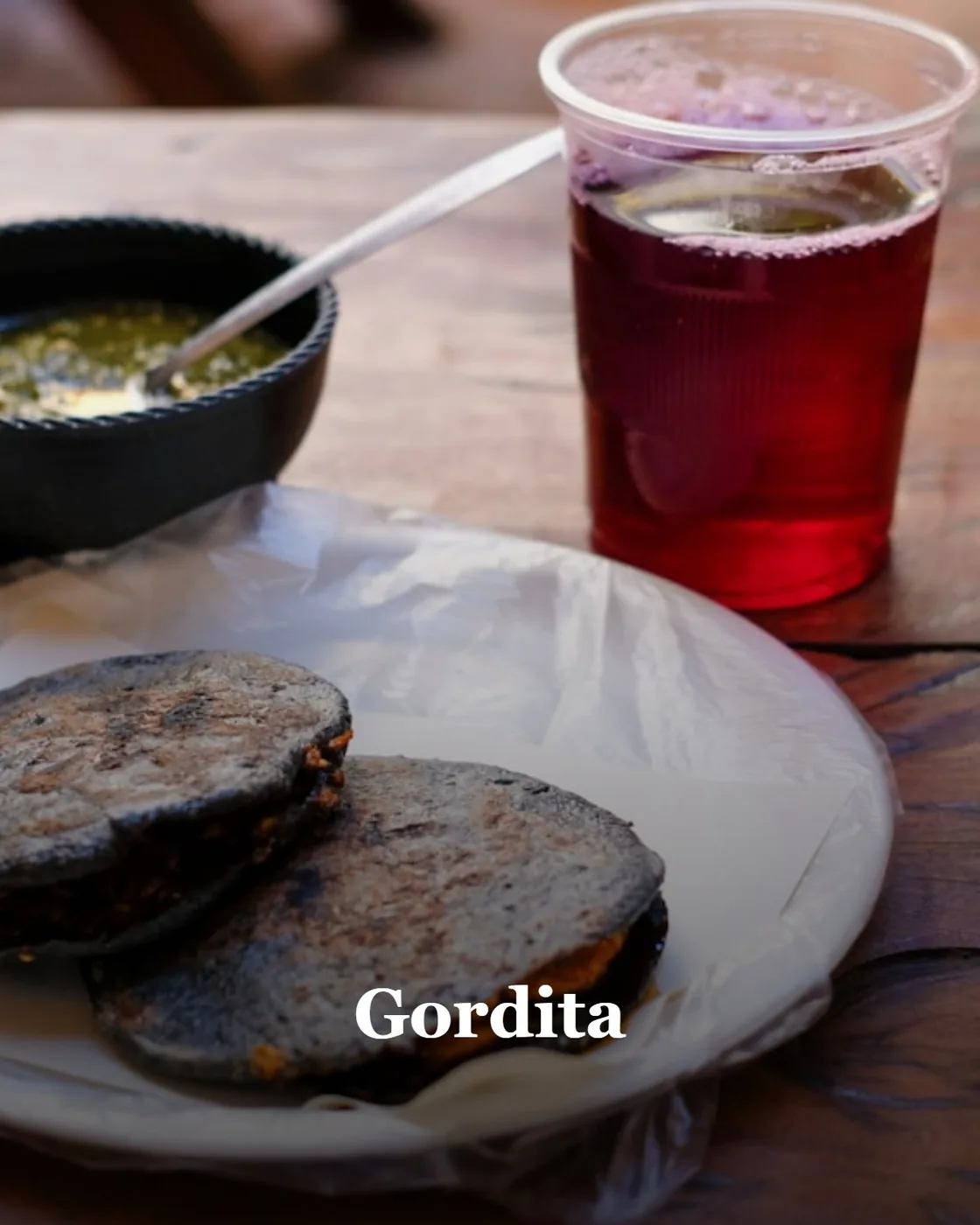
Gordita
Listen to Gordita
Checking audio availability…
Gordita
You won’t find the town on any map. When spoken of, it’s usually by old men drinking coffee at the local Dairy Queen. It’s part legend, part myth, a relic of the Old West that left nothing behind to mark its existence, save a lot of charred bones and a half-buried, rotted sign pronouncing the town’s name. Gordita.
Not that anyone has lately seen these bones, or the sign; they are lost in the vast West Texas desert, bleached by the sun and sniffed at by coyotes. The sun returns each day to further ossify the bones, and the coyotes have long since abandoned them in search of something worth eating.
Even the name of the town is debated. Some say the name was Gordia, not Gordita. Arguments ensue. Even after decades of debate, there is no consensus on the name. Everyone under the age of sixty doesn't care. The employees at the local Dairy Queen want the old men to leave, to make room for people who desire to eat their life-shortening burgers and fries.
The one thing all the old men agree on is that something calamitous happened to the town.
**************
Gordita (Gordia?) met its end, literally and figuratively, because of three seemingly innocuous situations:
The astounding level of laziness in the state cartographer’s office.
A traveling circus passing through town.
The mayor discovering tequila.
**************
1832
Joe and Marylou Statler stopped midway through their journey to California. This was due to Joe’s indolence; he never saw the advantage of working hard when one could work less hard. Marylou had married him, despite knowing of his shortcomings. She vowed to remake Joe in her own image. A tactical mistake that women, throughout history, often repeat.
They built a small house in the semi-desert. Marylou planted a vegetable garden and Joe planted a baby inside Marylou. Jessie, when born, saw a world that made little sense to him. This would not change much over the years.
Jessie’s father died when he was twelve. Rather, he watched as his mother shot his father over a dispute about her culinary abilities. To wit: he complained about undercooked corn one too many times. Jessie had to dig a grave and plant his father.
Jessie’s purpose in life, as far as he could tell, involved planting (vegetables and a father) and placating (a mother, continually). He was dimly aware that his mama loved him, and acutely aware that her form of love was often accompanied by a leather belt to the posterior or a swift slap to the head.
His formal education extended to learning how to read and write in a rudimentary fashion, before being abruptly abandoned in favor of a more practical education. He was taught, by his mama, how to run a business.
He also learned patience when he went hunting with Paco, the man his mama entrusted with taking care of her land and livestock. Paco was a big believer in sitting still and waiting for prey to come to him. What Jessie came away with, besides patience, was that being lazy was rewarded — and rewarding.
His mother, diametrically opposed to such a philosophy, worked more diligently than ever. Jessie believed that the more she worked, the happier she was, something he couldn’t relate to. Surely, he thought, there was more to life than work, and the accruing of money and land.
His mother died ten years later. A rattlesnake bit her. She didn’t die, though, before prying the snake off her ankle and bashing its brains out on a nearby rock.
She also didn’t die before leaving a budding empire in the arid climes of the Texas Panhandle. Jessie, a sudden possessor of a general store, a saloon, two bordellos, livestock, thousands of acres of land, and a fortune, considered his options.
He planted his mother next to his father and continued her legacy. From the miniscule amount of ambition he inherited from his mama and the large amount of laziness from his papa, this genetic combination shouldn’t have worked for Jessie, but it did.
**************
1855
One warm June evening, Jessie got gloriously drunk, not an unusual occurrence at the time. He also eschewed female company for the night in lieu of doing something productive. This was very unusual.
He desired to name the town, and it seemed fitting to name it in his mother’s honor. He thought about it for a few minutes before coming up with an appropriate-sounding name that he could spell.
Gordita. Pudgy woman.
Maggie, a sporting woman (and the one who introduced Jessie to the pleasures of the flesh), called his mother by this name, though never to her face.
Jessie found a thick piece of wood and some paint. He started working. The first four letters were legible and evenly spaced. Unfortunately, there was little space left for the remaining three letters. Jessie squished them in the best he could. He attached the sign to a post and planted it in the ground. It fell over. So did he.
Maggie got a couple of ranch hands to secure the sign the next day. It stayed up, firm and true.
However, Jessie proved to be not as sturdy as the sign.
**************
1867
Jessie appointed himself mayor of Gordita on his thirty-fifth birthday. He had appointed himself sheriff on his thirtieth birthday, so it seemed right that he would become – at least in his eyes – more important every few years.
Because of his new-found status, Jessie decided to contact the state of Texas and requested that they put Gordita on the map. Surprisingly, they acquiesced. Government bureaucrats arrived in August. Four bespectacled men in gray suits, accompanied by strange instruments and wide eyes. They had never seen such a place, a blooming oasis in the desert.
Maggie, too old to be lying on her back for a living any longer, now managed the bar and the girls. Upon sight of the men from Austin, she brought in better whiskey and friskier girls. The bar no longer carried a sour, musty odor. Jessie was so happy about this that he gave her a month off work to go back to Sonora and visit her family. She came back with a husband and several bottles of something that Jessie had never tasted: tequila.
Jessie liked it. He liked it a lot. He liked it so much that he appropriated the twelve bottles of the magic elixir for himself. Maggie’s husband went back to Sonora to procure as much as he could of the clear, peppery liquid.
Maggie went back to work. She provided the cartographers with female company for the duration of their stay, had the bar cleaned up again, and whiled away her free time mixing the tequila she had hidden from Jessie with lime juice and sugar water. She considered selling it in the saloon at some point.
To commemorate the presumed status of Gordita as a place on the state map, Jessie also managed to get a traveling circus to perform while the cartographers were there. Witt’s Amazing Spectacles arrived a day before the cartographers. Elephants and lions and tigers made their way down the main street, advertising the circus. Bearded ladies cavorted, strong men flexed, clowns danced around, handing out sweets to the kids, and Jessop Witt himself led the procession.
This is where things got interesting.
**************
Jessop Witt wasn’t simply the owner of a traveling circus; he was also the ringmaster and the lion tamer. Although a skilled orator, he wasn’t much of a lion tamer. He would saunter into the cages, crack his whip a few times, getting the lions to roar, and then leave the cage.
He was prone to drinking, and somewhat less prone to quality control. Cages weren’t being secured. Animals weren’t being fed regularly. Hiring and firing largely depended on whether or not Jessop liked the person. These didn’t seem like terrible sins - until the animals escaped.
It had happened before, but never in such a vast landscape. Rounding up the animals would prove much more difficult in such rugged terrain.
The elephants were easy. The monkeys were less easy, but their capture was accomplished in a few hours. The lions, though, proved impossible. Men searched for them day and night to no avail; they had simply vanished.
But that wasn’t quite true. The lions left evidence of their existence: bloody carcasses of dead sheep. The ranch hands would find a half dozen slaughtered animals every morning, half-eaten, hearts and livers gone. Lions, apparently, liked hearts and livers.
Jessop Witt decided to do a flit. The circus, like the lions, disappeared. They could do without the lions but they didn’t care to face an increasingly hostile populace. After the animals had absconded, there was talk of incarceration and worse. Jessop decided that discretion and distance was the better part of valor, so the circus high-tailed it to New Mexico.
The lion problem remained, as did the cartographers. They tarried, more because of the free drink and free women than anything else. The lions tarried because of easily-procured food.
Jessie was distraught. When Jessie was distraught, he drank.
**************
Tequila has an amazing effect on people. It soothes the soul, warms the belly, and goes down as easily as a good cup of coffee. Too much, however, causes a person to lose any sense of perspective. Jessie was good at having too much of everything, and tequila was no exception.
He was drowning his sorrows with tequila and adventurous prostitutes the day the circus left town. Both revived his spirits, to a point. The early-morning hours found him crawling over nubile bodies on his way to the outhouse. He felt like shit, and his mind was once again troubled by the lion problem.
Morose and full of self-pity, Jessie decided to hunt the lions himself. He would wait no longer. It was dark, feeding time for these odd lions, and he was ready to tackle the problem himself.
The effects of the tequila became apparent immediately. The waning crescent moon created a dim, hazy atmosphere. Shadows lurked in the desert. Ghosts appeared out of nowhere. A low, guttural growl pierced the air, terrifying Jessie. He started shooting wildly at the dark.
He didn’t manage to hit anything of note except for the town sign. He had shot off the sign at the spot after the “i” and before the “a.” Jessie didn’t know this; he had run screaming back to his hotel room. The growls of the lions scared him more than his mother ever did.
A couple of ranch hands found the damage as they were heading into town for coffee and supplies. After gathering what they needed, they consulted Maggie on what to do about the damage done to the town’s name. Maggie, shrugging, told them to just attach the pieces together and let it go at that.
“The “t” is gone, Maggie,” one of the men informed her.
Maggie thought about this knotty little problem for a moment.
“No one’s gonna miss one little ‘t.’ We all know the name of our town, anyway.”
The men nodded at Maggie’s good sense and went off to repair the sign. They attached the two pieces together with a couple of bracing boards on the back and set the sign back in the ground. Standing back to look at their work, the men noticed that the remaining letters were now evenly spaced and more pleasing to the eye. Gordia looked a hell of a lot better than Gordita ever did, they reckoned.
Maggie had been almost correct in her assumption that no one would notice the difference. Unfortunately, the cartographers noticed.
Discussions took place in the saloon. These mutated into arguments. Two of the four cartographers swore that the name of the town was, and always had been, Gordita. The other two swore that the name of the town was, and always had been, Gordia. The impasse remained unresolved, even when they left town on their way back to Houston.
.
.
Dominic Farleigh was the head of the mapmaking division for the state of Texas. He took his job seriously enough to work diligently to create a department rich in graft and corruption. He made friends in the accounting department so that he could eat and drink on the state’s money. He greased the palms of several other bureaucrats to procure nice clothes, a fine house, and the occasional frolic with women of loose moral character. He, in turn, aided and abetted the schemes of his fellow bureaucrats. Texas may be a young state, but its bureaucrats were wise in the ways of greasing the wheels of government.
The cartographers were fortunate enough to find their boss present and fairly sober when they returned. The quandary regarding the town’s name was put to Dominic.
Dominic grimaced; he actually had to make an official decision. Dominic lectured the cartographers on many things, most of them dealing with the fact that they brought him a problem to deal with. After a couple of snorts of whiskey, he calmed down. After lighting a cigar, he became downright philosophical.
“That’s a knotty little problem you boys gave me.”
The contrite cartographers nodded They had no idea that decision-making was frowned upon by the state’s machinery.
“Listen, boys. A town that can’t decide on what to call itself has no business being on our map. We’ll just leave it off.”
The cartographers looked at each other, frowning.
“But – but it’s there,” one of them said.
“That’s as may be, son, but is it really worthy of being on the map of the great state of Texas? This is a state of boldness and decisiveness, boys. Hard men, forging empires and becoming legends. This Gordita Gordia thing doesn’t sound like it belongs on my map. Sounds like it belongs in Louisiana.”
The cartographers couldn’t think of any argument decent enough to put forth to their boss, so they left it at that. Dominic waved them out of the office so that he could take a nap. It had been an exhausting thirty minutes.
.
.
Jessie got gloriously drunk the night after the cartographers left Gordita. The tequila had invaded his system once more, dulling his senses to the point that he thought of a brilliant plan to get rid of the lions. The problem, of course, was that the plan wasn’t at all brilliant.
Jessie did what he had to do, then went to bed; he slept well, certain that his brilliant plan would be the talk of the town.
This is where things got very interesting.
**************
The sheep were dead. All of them. White clouds of wool dotted the landscape, fluttering in the breeze and decaying in the desert heat. Several men wandered through the carnage, looking for a reason why every sheep in the area had died.
They found the reason soon enough. Someone had put out poisoned hay.
Jessie was silent. He wasn’t going to tell anyone that it had been his doing. He thought about his plan, and realized, in his sober state, where he had gone wrong. He had thought that the lions would eat the poisoned hay, neglecting to think that the lions’ diet had consisted exclusively of sheep. The sheep, however, ate the poisoned hay.
The townspeople were unusually quiet and sober when nighttime arrived. This was a fortunate occurrence, for several lions wandered into town, looking for a new food source.
Bedlam erupted.
People ran, screaming, for cover. The lions roared at the screams, pawing the air as if they could rid the air of such a terrible sound. Men grabbed guns and started shooting. The bullets evaded the lions, and the lions crept through the town, sniffing out meat in all of its forms.
In the chaos, someone had knocked over a lantern. The fire spread from building to building, carried about by a stiff desert breeze. Soon, the horizon was alight with fire and people running. No one was killed by a lion that night, miraculously, but Gordita had burned to the ground.
The lions all died in the fire. The knotty problem of ridding the area of lions had been solved, but at great cost. Jessie found no comfort in this.
Everyone left. Nothing remained of the town except smoking embers and flambéed lions.
Jessie, still drunk and distraught, climbed on his horse to join the exodus. He slipped and fell to the ground, directly under his horse. The horse stomped on Jessie’s skull, thereby sending Jessie off to God’s judgment.
Jessie Statler was the first and last victim in Gordita to die from drinking and driving.
Maggie and her husband found Jessie’s body. They buried what was left of him beside the repaired sign that had altered the town’s name, figuring that the sign would double as Jessie’s burial marker. After saying a few words over the grave, the couple left Gordita. Sonora was their destination. Maggie wanted to have a bar of her own so she could sell her new concoction.
The town’s sign fell over a few months later. The Statler legacy was left to the tender mercies of the desert.
**************
2023
“I’m sick of those old men. All they do is argue about cattle prices and some stupid town that never existed,” Larry said, shaking his head before returning to the grill to flip a few burgers.
“They’re harmless. Tall tales aside, I like ‘em,” Jill replied. She popped a couple of steel cans into the milkshake mixer.
“Don’t know why,” Larry grumbled.
“They have great stories, and they tip well.”
“Made up stories.” Larry clucked in disapproval.
“Yeah. Maybe. But stories are all they have now.”
Jill eyed the old men with a mixture of sadness and pity. She prayed that she would never wind up in a Dairy Queen, telling old stories at the end of her life. It was tragic, she thought.
Like all those Greek mythology stories old Mrs. Crannick made us read. Someone rises to glory and then dies. I never got why that was so great.
Somewhere in the deserts of West Texas, a coyote urinated on the very spot where Jessie Statler was buried.
The universe, it seemed, had a very firm grasp on justice.
Story complete!
Enjoyed this story? Sign up to like it, save it, and support the author.


Discussion