

Where the Last Notes Go

Listen to Where the Last Notes Go
Checking audio availability…
Eleanor Whitmore had forgotten how much it rained in Wrenford.
It was the first thing she noticed when she stepped off the train, the familiar dampness settling against her skin as she dragged her suitcase across the platform. The sky was a dull shade of grey, almost indistinguishable from the rooftops beyond the station, and a cold breeze carried the faint smell of saltwater from the harbour. Somewhere in the distance, a church bell chimed the hour.
Twelve years was a long time to be away. Long enough for familiar shopfronts to change hands, for old neighbours to grow older, and for the children who once ran through the streets to become strangers with families of their own. Yet there were things that remained stubbornly untouched. The little bakery beside the crossing still had its faded blue sign, the flower shop still displayed its pots along the pavement, and the old clock above the town hall appeared to be running several minutes behind, just as it always had.
Eleanor had imagined returning home many times. In some versions, she was successful, arriving with a suitcase full of concert programmes and a name that people recognised. In others, she was older and wiser, having finally made peace with the girl who had left. She had never imagined arriving on an ordinary Thursday afternoon with an uncomfortable pair of shoes and a list of errands that needed completing before the weekend.
There was something almost insulting about how ordinary it all felt.
She was passing the old bookshop when she noticed the notice in the window. A simple sheet of cream paper, neatly placed between a display of second-hand novels and a collection of postcards.
Arthur Bell's Retirement Recital.
Fifty-two years of teaching. One final evening of music.
Eleanor stopped.
For a moment, she was seventeen again, standing outside the same shop with a music folder tucked beneath her arm, listening to the distant sound of someone practising scales from an upstairs window. She remembered the impatience of youth, the perpetual rush to get somewhere, the certainty that the world was waiting for her to arrive.
Most of all, she remembered the piano.
"Eleanor?"
The voice came from behind her, frail but unmistakably familiar.
She turned.
An elderly gentleman stood outside the little café opposite the bookshop, one hand resting on the curved handle of a walking stick. He wore a brown woollen coat and a dark green scarf, loosely wrapped around his neck. His silver hair had thinned considerably, and the years had left their mark around his eyes, but his expression was the same one she remembered.
For several seconds, neither of them spoke.
Then his face brightened. "Well, I'll be."
"Hello, Arthur."
He approached her slowly, looking her over as though he were trying to reconcile the woman standing before him with the young girl who had once occupied half his afternoons.
"Look at you," he said. "I hardly recognised you."
"I suppose it's been a while."
"A while? My dear girl, it's been twelve years."
They laughed, and Eleanor felt an unfamiliar warmth settle in her chest. She had not realised how much she had missed him until that moment.
Arthur glanced at the suitcase beside her. "Are you staying long?"
"Just the weekend. I have a few things to sort out."
"Well, that's a shame. I was hoping you might have some time to spare."
"For what?"
He regarded her with an expression that immediately made her cautious.
"I've been organising my retirement recital," he said. "Next month. My wife tells me it's about time I stopped filling our house with students and sheet music."
"I can't imagine you doing anything else."
"Neither can I. That's rather the problem."
He smiled before reaching into his coat pocket and withdrawing a folded sheet of paper.
"I was hoping you might consider doing something for me."
Eleanor looked at him.
"I'd like you to play at the recital."
For a moment, she was certain she had misunderstood. "Play?"
"Just one piece. Nothing terribly demanding."
"Arthur..."
"I know, I know. It's been a long time."
"I don't play anymore."
He nodded, as though she had told him something he already knew. "I know."
"Then why would you ask?"
He studied her for a moment. His expression softened. "Because I'd like to hear you play once more."
Eleanor looked away.
She had spent twelve years avoiding that particular conversation. There had been no dramatic declaration, no public announcement that she was giving up music. She had simply stopped. One missed practice became a week, a week became a month, and eventually the piano became something she couldn't bear to sit in front of.
"I wouldn't be very good," she said.
"That isn't what I'm asking."
She almost laughed. Arthur had always been rather inconveniently good at knowing when she was making excuses.
"Come and visit the studio," he continued. "Just once. You needn't promise me anything."
She wanted to say no. Instead, she found herself looking at the notice in the window.
"When is the recital?"
"Three weeks from Saturday."
"That's very little time."
"Then I suppose we ought to get started."
The music studio had not changed as much as Eleanor expected.
The wooden floors still creaked beneath her shoes, the curtains still carried the faint smell of dust, and the old upright piano remained against the far wall. A collection of framed photographs covered the shelves, documenting decades of students who had passed through the little room.
Eleanor recognised some of them. Most she did not.
Arthur watched her as she approached the piano.
"I had it tuned last week," he said. "She's sounding rather lovely."
Eleanor ran her fingers along the polished wood. There was a small scratch near the bottom corner, one she remembered making when she was thirteen after accidentally knocking her music stand against it.
She had forgotten that.
"Would you like to try?"
She hesitated before lifting the fallboard.
The keys were colder than she remembered.
Her fingers hovered above them, uncertain where to begin. She had once been able to play for hours without looking at her hands. Entire compositions lived in her memory, each note as familiar as the sound of her own voice.
Now she could barely remember how to start.
She pressed a key.
A single note filled the room.
It sounded impossibly lonely.
Eleanor withdrew her hand.
"I don't think I can."
Arthur did not disagree. He merely pulled a chair closer and sat down. "Do you remember what I used to tell you when you made a mistake?"
"That I should start again."
"No." He smiled. "I told you to keep going. Music isn't ruined because you play a wrong note. Sometimes the loveliest things happen when you stop trying to make everything perfect."
She looked at him.
"I was nineteen when I stopped," she said quietly.
"I remember."
"I had worked towards that audition for years. I thought if I could just get through it, everything would finally begin."
Arthur said nothing.
"I practised until my hands hurt. I barely slept. Everyone kept telling me how proud they were, how I was going to do wonderful things. And then I sat in that room, in front of those people, and I couldn't play."
Her voice faltered. "I forgot the passage. I couldn't feel my fingers. I just sat there while everyone waited. They offered me another audition, you know. I could have tried again."
"But you didn't."
"No."
She stared at the keys. "I couldn't bear the thought of going back and failing twice."
Arthur leaned forward, resting his hands over the head of his walking stick. "Eleanor, do you know what I remember about you at nineteen?"
She shook her head.
"I remember a girl who used to come here every Saturday, even when it snowed, because she wanted to learn a particular passage. I remember her playing the same four bars over and over because she liked the way they sounded. I remember her laughing when she made mistakes."
He paused. "I don't remember an audition."
Eleanor swallowed. "I wish I could."
"I know."
She looked down at her hands. They were no longer the hands of a young pianist. There were faint lines across her knuckles, and a small scar near her thumb from an incident she could no longer remember.
"Your mother was very proud of you," Arthur said.
The words were gentle, but they hurt all the same.
Her mother had died the previous winter. The house had been sold, the cupboards emptied, and the familiar photographs packed into boxes. Eleanor had returned to Wrenford partly because there was nothing left to organise but the things she had spent years postponing.
"She used to ask whether I was playing," Eleanor whispered.
"She missed hearing you."
"I know."
"She never stopped being proud of you."
Eleanor turned away before he could see the tears gathering in her eyes.
She encountered Thomas Reed two days later.
He was standing outside the little music shop near the harbour, struggling with a cardboard box full of sheet music. He looked older, naturally, but not as much as she had expected. His dark hair was shorter, his shoulders broader, and there were faint lines around his eyes that had not been there when they were seventeen.
He saw her before she could turn away. "Eleanor?"
She stopped. "Hello, Thomas."
For a moment, he simply looked at her.
Then he smiled, although there was something hesitant about it. "I heard you were back."
"Small town."
"Not much gets past Mrs. Hargreaves."
Eleanor laughed. "Some things never change."
He placed the box down. "So, how long are you staying?"
"Just a little while."
"That's what everyone says when they don't intend to stay."
She wasn't sure how to answer.
Thomas glanced at the bookshop across the road, then back at her.
"Arthur told me you might be playing at his recital."
"Arthur talks too much."
"He always has."
"I haven't agreed to anything."
"Still, it's nice to hear you're thinking about it."
She looked at him, surprised. "You don't think it's ridiculous?"
"Why would it be?"
"Because I haven't played in twelve years."
He shrugged.
"Your hands might remember."
She stared at him, and something about the simplicity of his answer unsettled her.
They had once spent nearly every afternoon together. Thomas had played the violin, and Eleanor had accompanied him on the piano. They practised in Arthur's studio, performed at local gatherings, and occasionally abandoned their rehearsals to walk down to the harbour.
They had been young enough to believe that the world was waiting for them.
There had been a kiss once, behind the church after a summer concert. Thomas had been nervous, and Eleanor had laughed when he nearly dropped his violin case. She remembered the way he had looked at her afterwards, as though he had finally found the courage to say something he had been carrying for years.
Neither of them had spoken about it again.
Then Eleanor left for her audition, failed to finish her performance, and never returned to the town.
She hadn't called Thomas. She hadn't written. She had simply allowed their friendship to become another thing she no longer knew how to face.
"I should go," she said.
Thomas nodded. "Of course."
She took a few steps before hearing him speak again.
"For what it's worth, I missed you."
She looked back.
He wasn't smiling now. "I wondered what happened to you," he continued. "For a long time."
Eleanor had no answer.
She had spent twelve years believing that leaving had only hurt herself. She had never considered what it might have felt like to be the person left behind.
"I'm sorry," she said.
Thomas gave a small nod. "Me too."
The following afternoon, Eleanor returned to Arthur's studio.
She told herself she was only going to look at the piano. Nothing more.
Arthur seemed unsurprised to see her. "I was beginning to think you'd forgotten about me."
"Hardly."
"Then sit down, dear girl."
She did.
For the next hour, she struggled through a piece she had once played effortlessly. The movements came back in fragments. Her left hand remembered the accompaniment, while her right seemed intent on betraying her. She stopped repeatedly, frustrated by the clumsiness of her fingers.
At one point, she struck a wrong note and pulled her hands away. "I can't do this."
Arthur, who had been reading beside the window, looked up. "Would you like some tea?"
She stared at him. "That's all you're going to say?"
"What else would you like me to say?"
"I don't know. That I'm terrible?"
"You're not terrible. You're rusty."
She laughed despite herself.
He stood and approached the piano. "Do you remember the piece you played after your mother brought you here for your first lesson?"
Eleanor nodded.
"She said you were too shy to perform in front of anyone."
"She exaggerated."
"You hid behind the piano for twenty minutes."
"I was eight."
"You were very stubborn."
He opened a drawer and withdrew a thin, worn music folder. Inside were several pages of handwritten notes, their corners softened by years of use.
Eleanor recognised the handwriting immediately.
Her mother's.
It was an old programme from one of their first recitals. Beneath the list of performers was a small message written in blue ink.
For my little girl. Keep playing, even when the world is too loud to hear you.
Eleanor traced the words with her fingertips.
She remembered her mother sitting in the front row, always smiling, always applauding, even when Eleanor made mistakes. She remembered the flowers waiting for her afterwards and the photographs her mother insisted on taking.
She had forgotten how much she had loved those afternoons.
"Would you like me to leave you alone?" Arthur asked.
"No."
She placed the programme carefully on the piano.
Then she began to play.
It was not particularly beautiful. The melody stumbled in places, and her fingers occasionally hesitated over the keys. But she kept going. When she made a mistake, she moved past it. When she reached the final note, she let it linger before lifting her hands.
The room was quiet.
Arthur smiled. "There's my girl."
For the first time in twelve years, Eleanor did not feel the need to apologise.
The days that followed were filled with rehearsals.
She began visiting the studio every afternoon, sometimes for twenty minutes, sometimes for hours. Her fingers grew sore, her patience wore thin, and there were moments when she wondered why she had agreed to any of it.
Thomas came by one afternoon while she was practising.
He stood in the doorway, holding his violin case. "May I?"
Eleanor looked at him. "You're not serious."
"Quite serious."
She hesitated before nodding.
He took out his violin and settled it beneath his chin. For a moment, he looked exactly as he had at seventeen, waiting for her to begin.
Eleanor smiled. "What are we playing?"
"Whatever you like."
She considered the music on the stand, then began a familiar melody.
Thomas joined her a few bars later.
It was imperfect. Their timing was uneven, and Thomas occasionally rushed ahead, just as he used to. But something about the sound of his violin beside the piano made Eleanor's chest ache.
For a little while, the years seemed to disappear.
When they finished, neither spoke immediately.
Thomas lowered his violin. "That was nice."
She laughed softly. "You're being generous."
"I'm being honest."
They sat together in the quiet studio, the late afternoon light falling across the floor.
"Why didn't you say goodbye?" Thomas eventually asked.
Eleanor looked at him. "I didn't know how."
"You could have tried."
"I know."
He turned the violin slowly in his hands. "I thought you were embarrassed. That you didn't want anything to do with this town anymore. Or with me."
"That's not true."
"Then what was it?"
She looked towards the piano. "I was embarrassed of myself. I didn't know how to be the person everyone thought I was supposed to be. And when I couldn't become her, I thought the easiest thing was to disappear."
Thomas was quiet for a moment. "Did you think I only liked you because you could play?"
"No."
"Then why didn't you give me the chance to tell you that?"
Eleanor had no answer.
He looked at her, his expression softening. "I waited for you to come back, you know."
Her throat tightened.
"Thomas..."
"Not forever. I eventually stopped looking at every train as though you might step off it." He smiled faintly. "But I did wonder."
"I'm sorry."
"I know."
He placed his violin back in its case. "I'm glad you're here now."
She watched him leave, feeling the familiar ache of all the words they had never said.
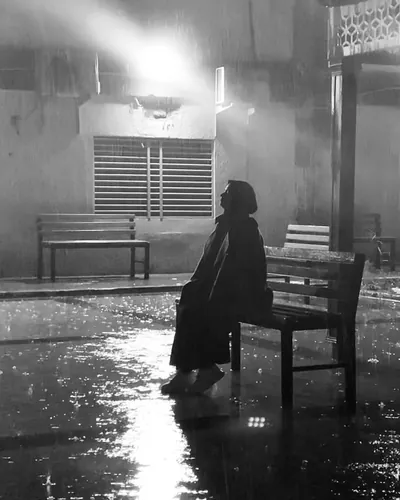
The evening of the recital arrived with a light rain.
Eleanor stood backstage, staring at the piano on the small wooden stage. The audience was modest, mostly former students, their families and a handful of townspeople who had known Arthur for years.
She could hear the gentle murmur of conversation beyond the curtain.
Arthur stood beside her, dressed in a dark suit and looking rather pleased with himself.
"Nervous?" he asked.
"Terrified."
"Good. It means you still care."
She gave him a disbelieving look. "That's your advice?"
"After fifty-two years of teaching, I've learned that most of my advice is ignored."
Eleanor laughed.
Arthur adjusted his tie. "Whatever happens, I'm glad you came."
She looked at him. "Thank you for asking me."
"I didn't really think you'd say yes."
"Then why did you ask?"
He smiled. "Because sometimes people need to be reminded that a door is still open."
A moment later, her name was announced.
Eleanor stepped onto the stage.
For one brief second, the room seemed to tilt. She saw the audience, the piano, the familiar arrangement of chairs. Her fingers were cold, and her heart was beating so hard she could hear it.
Then she saw Thomas.
He was sitting near the back, beside the aisle. Their eyes met, and he gave her a small, reassuring smile.
She sat.
The piano keys stretched out before her, white and black and impossibly familiar.
She placed her hands above them.
Twelve years ago, she had sat in another room, before another audience, and had been unable to play. She had carried that failure for so long that it had become inseparable from the way she remembered herself.
Now, once again, she was afraid.
But she began.
The melody filled the room, hesitant at first, then gradually finding its way. Her fingers moved with a familiarity she had almost forgotten, carrying her through passages she had spent weeks struggling to remember.
There were mistakes. Small ones, perhaps unnoticed by the audience, but Eleanor felt each one. Her left hand faltered once, and she briefly lost her place.
For a moment, she nearly stopped.
Then she remembered Arthur's words.
Music isn't ruined because you play a wrong note.
She continued.
By the time she reached the final passage, the trembling in her hands had eased. She closed her eyes, allowing the melody to carry her somewhere beyond the room, beyond the years she had spent running from it.
When the final note faded, she remained still.
The silence that followed was not the silence of a failed audition. It was not the silence of an audience waiting for her to finish.
It was simply the space left behind by music.
Then the applause began.
Eleanor looked up.
Arthur was standing near the side of the stage, his eyes shining. Thomas was smiling from the back row. She could see several people wiping their eyes, although she suspected some of them were simply being kind.
She stood and bowed.
For the first time in twelve years, she did not feel ashamed.
Arthur retired three weeks later.
The studio was emptied, the piano sold to a young couple who had recently moved into town, and the framed photographs carefully packed into cardboard boxes. Eleanor helped Arthur sort through the music books, keeping a few that he insisted she take.
She had planned to return to the city immediately after the recital, but the departure kept being postponed. One more evening with Thomas became another, and a visit to the harbour became an afternoon spent walking through the old streets.
Neither of them spoke much about what might happen next.
On her final evening in Wrenford, Eleanor visited the studio one last time.
The room was almost bare. Without the piano, it seemed smaller than she remembered. The floor still creaked, and the afternoon light still fell through the curtains, but the silence was different now.
Arthur stood by the window.
"I suppose this is it," Eleanor said.
"I suppose so."
"Fifty-two years. You must be quite relieved."
"Ask me again in a week."
She smiled.
He turned towards her. "Have you thought about taking lessons again?"
She hesitated. "Not really."
"Well, perhaps you should."
She looked at the empty space where the piano had once stood. "I don't think I'll ever be what I was."
Arthur's expression softened. "Nor should you."
Eleanor frowned.
"People spend so much time trying to return to who they used to be," he continued. "But you're not that girl anymore. You have a different life now. Different hands, different experiences. There's no reason you cannot make something beautiful with them."
She looked down. "I wish I hadn't stopped."
"I know."
"I wish I had tried again."
Arthur reached for her hand. "But you didn't. And you cannot spend the rest of your life punishing yourself for a decision you made when you were nineteen."
She swallowed. "I suppose not."
He smiled. "For what it's worth, I think that girl would be rather proud of you."
Eleanor blinked away the tears. "Thank you, Arthur."
He squeezed her hand. "Thank you, Eleanor. It was a lovely final recital."
She laughed softly. "You're only saying that because I was your favourite."
"Naturally."
Outside, the rain had finally stopped.
Thomas was waiting across the road when Eleanor left the studio. He had his hands tucked into his coat pockets, and his hair was slightly damp from the evening mist.
"Ready?" he asked.
She nodded.
They walked towards the harbour without speaking. The water was dark beneath the fading light, and the boats rocked gently against their moorings. Eleanor leaned against the railing, watching the lights appear in the windows across the bay.
"Are you leaving tomorrow?" Thomas asked.
"Yes. The morning train."
He nodded. "Will you come back?"
Eleanor looked at him. "I don't know."
It was the honest answer, and perhaps the only one she could give.
Thomas rested his arms against the railing beside her. "I'd like you to."
She turned towards him.
"I don't know what happens between us," she admitted. "I don't know whether we can ever be what we were."
"I don't think we can."
She looked away, feeling the familiar sting of disappointment.
"But perhaps that's not such a bad thing," he added.
She met his eyes.
Thomas smiled. "We've had twelve years to become different people. Maybe we could start there."
For a moment, Eleanor said nothing.
Then she reached for his hand.
His fingers closed around hers, warm and familiar.
They stood together until the last of the daylight disappeared, neither making promises about tomorrow.
The following morning, Eleanor arrived at the station with her suitcase.
The platform was almost empty. A young girl sat on a bench beside her mother, holding a small music folder against her chest. She was tapping her shoes impatiently against the pavement, humming a tune Eleanor couldn't quite recognise.
She smiled to herself.
The train arrived with a low mechanical rumble.
Before boarding, Eleanor took out her phone and opened the message Thomas had sent the night before.
Come back soon.
She read it twice before replying.
I will.
Then she stepped aboard.
As the train pulled away, Wrenford slowly disappeared behind the rain-streaked window. The old rooftops, the church tower and the harbour became smaller until they were little more than shapes against the grey morning sky.
Eleanor thought about the recital, about Arthur's empty studio, about the girl she had been and the woman she had become. She thought about all the years spent wondering what might have happened had she returned to that audition, had she found the courage to try again, had she chosen differently.
There would always be a part of her that wondered.
Perhaps there was no escaping that.
But somewhere beneath the regret, another thought had begun to take shape. She did not have to become a concert pianist. She did not have to prove anything to the people who had once believed in her. She could simply play because she loved the sound of it. She could sit at an old piano in some unfamiliar room and allow herself to make mistakes.
For the first time, the thought did not frighten her.
She opened her bag and found the small music folder Arthur had given her. Inside was her mother's old recital programme, its edges softened by years of handling.
She unfolded it and read the familiar handwriting once more.
For my little girl. Keep playing, even when the world is too loud to hear you.
Eleanor rested her head against the window.
She had spent so many years mourning the life she might have lived that she had forgotten she was still living one.
The train carried her towards a future she had not yet learned to imagine.
And somewhere, in the quiet space between the last note and the first, she began to feel that perhaps the music had never really left her.
Perhaps she had only forgotten how to listen.
Story complete!
Enjoyed this story? Sign up to like it, save it, and support the author.




Discussion