

Wabi-Sabi
Listen to Wabi-Sabi
Checking audio availability…
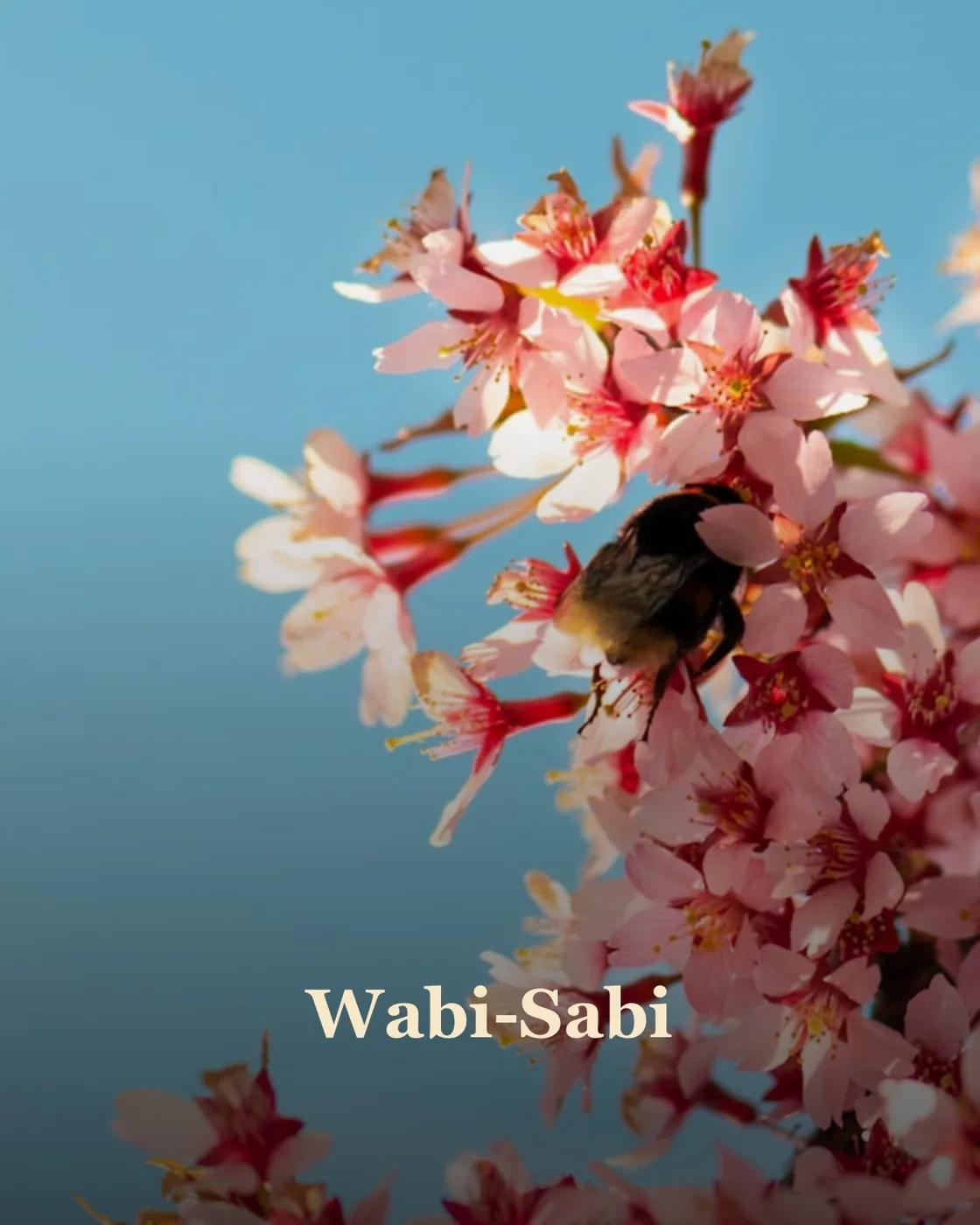
Cherry blossoms float
Carpeting the earth in pink
Spring is here again.
桜
A flash of bright plumage draws my attention to a robin. Landing lightly on a branch, he dislodges a shower of petals, throws back his head, and warbles. Cheerily-cheer-up, cheer-up, cheerily-cheer-up! A dusky companion joins him, and they flutter to the ground to pull worms.
Harbingers, I say to myself. Cherry blossoms, robins, even the earthworms. Walt up the hill, mowing the field. A subtle shift in the quality of light. The soft breeze playing with my hair, carrying a faint almond scent.
Recent rains have washed over the gravel driveway, leaving behind a layer of mud. Rivulets of water trickle down the slope, meandering around the larger stones. My gardening clogs squelch in the soggy soil, while weak sunshine tries to warm my back. Spring is here again.
There’s not much in the mailbox. An advertising flyer, a bulk rate envelope, a postcard from our optometrist. Time for your eye exam. I double-check the box. I fan the pages of the flyer to make sure there’s nothing stuck inside.
A cloud crosses the pale sun, and I shiver.
This is the first spring in fifty years that I haven’t received a card from Edith.
桜
Thirty-five students per classroom might seem a daunting prospect to modern teachers. Fifty years ago, it was standard. I was just over twice the age of my charges, and enthusiasm overpowered inexperience. I could tackle anything. Or so I thought.
“Good morning!” I smiled at the children filing into the classroom. “Welcome to sixth grade. I’m Miss Young. Your desks are labeled in alphabetical order. Please find your place and sit down.”
At age eleven or so, they’d figured out their relative positions in the class list. It didn’t take long for most of them to locate their desks and plop down, but one boy remained standing beside the only unoccupied desk. It took me a moment to realize he was grinning.
“Is something funny?” I asked, raising my eyebrows and trying to sound stern. I consulted my seating chart.
“Douglas?” I hoped my voice didn’t sound uncertain. The name on my chart indicated that he was Douglas O’Hara. But his features didn’t match the name.
“Yes!” He pointed to the placard on his desk and burst into a fit of giggles. “But my last name is Ōhara, not O’Hara.” He flashed his dimples at me.
I’ve always been a sucker for dimples. Douglas soon became one of my favorites.
The sixth grade curriculum included cultural studies. I figured the best approach was to concentrate on the backgrounds of my students, to give them a sense of being connected to what they were learning. Most of our community came from European backgrounds, so we started there.
“The Portuguese were great navigators,” I reminded the class. “They traveled to distant places, leaving bits of their own culture and language behind. It may surprise you to learn that they still influence Asia. Especially China, India, Japan… so I think we’ll take a trip to Asia in the spring!”
An excited buzz filled the room. Now, I thought to myself, I’ve got to engage the young minds. Make the journey worthwhile.
One day after class, I leafed through a trade magazine and learned about a just-published book called Farewell to Manzanar. Perfect. I applied for permission to order thirty-six copies and hoped they would arrive on schedule.
桜
“We’re going to be reading the memoir of a woman whose family was shipped to an internment camp during the Second World War, simply because they were Japanese. She was a little younger than you when they were sent away, and just your age when the war ended. Doesn’t that sound interesting?”
“My parents lived in one of those camps,” Douglas said matter-of-factly.
“Do you think they’d be willing to talk to us about their experience?” I asked, then almost wished I hadn’t. But Douglas was nodding vigorously.
“They’ll do it!”
We read the book together during the first part of March. I wanted to follow up with a field trip to the Japanese Tea Garden in Golden Gate Park, and I’d gotten a bee in my bonnet that we needed to go on the very day of spring equinox.
“But that’s a Tuesday!” The principal frowned. “Field trips are supposed to be scheduled on Fridays.”
“Mr. Watkins, please. Don’t you want the class to have a meaningful experience? It’s a very important part of Japanese culture to celebrate spring by picnicking under blooming cherry trees. It’s called hanami. Flower viewing.”
After a pause he relented. “Oh, I suppose it’s all right.”
Mrs. Ōhara volunteered to chaperone.
桜
We sat on blankets beneath the pink-and-white sakura bower, finishing our picnic lunch. The scene could have been an impressionist study by Monet or Renoir, but there’s more to my memory of that day than just pictures.
Even now, I can still see the dark branches etched against a pale blue sky. I feel the mild warmth of sunshine filtered through blossom-laden trees; hear the birdsong; remember a gentle breeze carrying an indefinable scent—the breath of spring itself.
“Mrs. Ōhara is going to tell you a story,” I explained. “Please listen respectfully. No talking, no slurping through your straws.”
They gathered in a semicircle around her and sat cross-legged.
“Well, everyone, Douglas has told me all about his friends in his class. I’m glad to be here with you,” Mrs. Ōhara smiled. “What I’m going to tell you is a true story. It’s about finding a treasure.”
The students were enraptured. Treasure!
“My parents, Takeo and Yoshi Hayakawa, were born in Japan. They were excited to come to California. My siblings and I were born here. We have American names because our parents wanted us to fit in, but we each have a Japanese second name to help us remember our heritage. My first name is Edith, and my second name is Sakura.”
She waved her arm in an arc, indicating the trees above our heads. “Sakura means cherry blossom. I was born in the springtime. Haru, in Japanese.” A few petals drifted down, as if in response to her summons. One settled on the top of her head, pale against her glossy black hair.
“In the spring of 1942, my family was forced to leave our home. I had just turned eight. Old enough to remember, not old enough to understand. Although, the adults didn’t understand either.”
I need not have worried about the class paying attention. They hunched forward, silent. There was not a peep from them. Even Marty, the class clown, was captivated.
“Mama came in early to wake us, even though it was a Saturday. I remember it was still dark in the room. And all quiet outside.
‘Come, we must eat asagohan! Quick!’
Mama’s English was fair, but she couldn’t pronounce the word breakfast. So she stuck to Japanese for that. She held out our bathrobes and guided us—my sister and me—to the kitchen, where Papa was getting our brothers settled at the table. Mama grabbed bowls and spoons. Papa set out a box of cereal. I can see in my mind that box of Raisin Bran, the only type of cereal Mama would buy. We didn’t know what was happening, but this was no ordinary day. None of our usual Japanese-style breakfast of rice, miso soup, and meat or fish—a meal that was to be eaten without hurry. It seemed that this day, we were in a rush.
“We had already been on food rationing for a while. There was only enough cereal for each of us children to have a small bowlful. Mama and Papa hastily ate leftovers from Friday’s dinner.
‘Takeo,’ Mama told Papa, pointing at the refrigerator, ‘make sure to empty reizōko and unplug. Nothing must be left!’ I didn’t think anything of it at the time, but later I realized why she said that.
“‘Eat! Eat!’ Mama clapped her hands twice, like this—”
Clap-clap! Mrs. Ōhara demonstrated. The students copied her.
“Mama finished her bowl of leftovers and stood. ‘Hurry. Dishes in the sink when you’ve finished. Then we have something to tell you.’
“As you can imagine, that ‘something’ changed life as we knew it. We had no idea of what lay ahead. We had a few hours to get dressed, pack a box with necessities for each of us, and say goodbye to our pets. I turned for one last look before I went out the door. The ceremonial doll Mama called Murasaki stood silently in the entry hall, guarding the house; a serene white porcelain lady in her glass display case, with elaborate hair and a beautiful kimono of lilac and scarlet.
“When we left, the cherry trees were in full bloom—just like these are. Robins were singing, hopping in the grass, hunting worms—just like those.” The closest bird cocked his head and peered at her as if he understood.
“Our neighbors, the Nijssens, promised to look after the animals and the property. When the van came, they hugged us. Then they waved until we couldn’t see them anymore.
“Hours down the road, we arrived at a holding facility over in the Central Valley. We waited for the camps to be built, not knowing how long it would take. It was crowded, hot, and uncomfortable. We were surrounded by strangers. They looked like us, but we didn’t know them.
“We were there the entire summer, and into fall. Finally the day came that we were loaded onto a train. I remember feeling excited! I’d never had a train ride before. How many of you have taken a journey by train?”
Just a few hands went up. Mrs. Ōhara nodded.
“So you can understand that it was a new experience. At first, it was so thrilling! I wondered where the ride would end. Surely it would be better than where we’d been. We bumped and rattled along for three days. Even the train sounded like it was saying wonder-wonder-wonder…
“When we left the valley at the end of September, it was very hot. As we traveled east, the air cooled. We crossed Nevada, Utah, and most of Colorado, stopping just short of the Kansas border. Three whole states away from my home.
“Colorado was cold. And windy. The sand blew in our faces as we huddled at the station, waiting to be crammed into Army transport trucks. The word ‘camp’ sounded like fun to me, as an eight-year-old. But Camp Amache was dreary and bleak, a rough place in the desert. There were long buildings that looked like chicken houses, but there were no chickens. The buildings were for us. The whole place was surrounded by high fences topped with barbed wire.”
Mrs. Ōhara paused, looking around at the lovely spring day.
“We were lucky, compared to families at the other camps. At Camp Amache, we were allowed more freedom than most. I learned later that the governor of Colorado was against our detainment, so he was determined to treat us as nicely as possible.
“The adults wanted to make the camp look homier. They asked for seeds to start a garden. It was so cold, even inside the buildings, that the seedling trays had to be kept near the cooking area.
“By the time my birthday came, we’d been there six months. It was still cold. Gray skies. Snow. No robins. No cherry blossoms. So Mama made spring for me. She had tucked in one of our boxes a packet of washi, Japanese paper. And she made me an origami cherry tree. It was just a dry branch with three twigs, but she was very clever with the craft. She folded delicate blossoms, and even made a pair of tiny robins.
“We were at Camp Amache for three years, until the end of World War II. As Americans, we never should have been forced into camps. But Mama and Papa showed no bitterness about it, they simply accepted it.
“I remember once complaining that it wasn’t fair to be kept like prisoners. Mama explained, ‘This experience is an example of wabi-sabi. It is impermanent and imperfect. Even so, it can still be a thing of beauty. Like sakura, we will bloom again.’
“Do you remember, I said that this story was about finding a treasure?” Edith Ōhara smiled around at the group of children. “The treasure is life. It’s not always perfect, but we can find ways to make it beautiful.”
桜
The doorbell rings, and I realize I’ve been daydreaming. Maybe even dozing. It’s hard to bring my thoughts back from—where? That field trip, fifty springs ago? Camp Amache, so vividly recalled by Edith Ōhara?
I open the door. The sun has come through the clouds, lighting the blossoming trees with a soft pink glow. Robins are singing Cheerily-cheer-up, cheer-up, cheerily-cheer-up!
Our neighbor stands on the doorstep holding out a thick envelope. “This was in our mailbox.”
桜
Inside the envelope is a handmade card from Edith Ōhara, decorated with a sakura branch and a haiku. At nearly ninety, her work isn’t as precise as it used to be. The blossoms are uneven. The writing is wobbly. And it’s perfect.
Pink petals falling
Rosy as a maiden’s blush
Cherry blossom time
桜
Story complete!
Enjoyed this story? Sign up to like it, save it, and support the author.




Discussion