

Time Travelling Tom
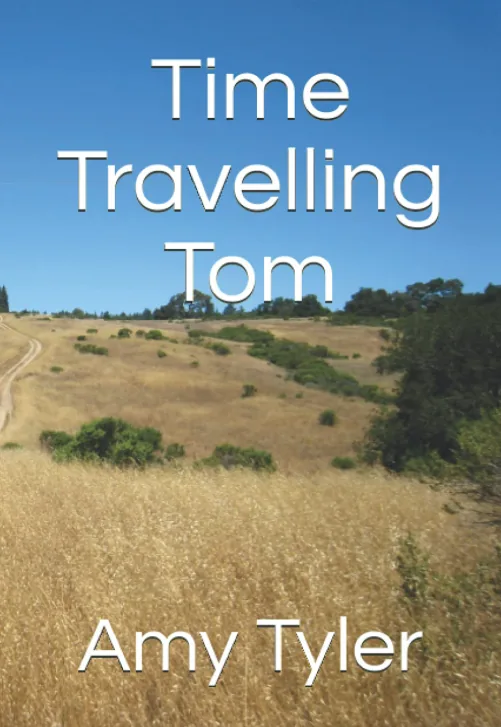
Listen to Time Travelling Tom
Checking audio availability…
Time Travelling Tom
Author: Amy Tyler
Contents
Chapter 1: The Field That Shouldn’t Exist
Chapter 2: Life Along the Nile
Chapter 3: Roman Britain – Power and Entertainment
Chapter 4: Viking Raiders and Settlers
Chapter 5: Medieval England – Everyday Life
Chapter 6: The Age of Exploration
Chapter 7: Inventors and Industry
Chapter 8: Titanic – A Ship That Couldn’t Sink
Chapter 9: World War II – Evacuees
Chapter 10: Standing Up for Change
Chapter 11: Reaching the Moon
Chapter 12: Divided Cities
Chapter 13: Chris
Chapter 14: The Truth
Chapter 15: Home Again
Chapter 1: The Field That Shouldn’t Exist
Tom lay on his bed, staring out of the window.
The trees at the end of the road were swaying gently, their leaves spinning through the air like tiny dancers. Reds, golds, oranges and browns floated past, crunching as they landed on the pavement below. It was a normal October Saturday — the kind that felt slow and quiet.
Too quiet.
Tom sighed and rolled onto his side. His younger brother was downstairs, shouting excitedly at the television while playing on the PlayStation. Tom had already asked twice for a turn. The answer had been the same both times.
“Later,” Mum had said. “Go and get some fresh air.”
Tom wasn’t sure why he felt so restless. He just knew he needed to get out.
He pulled on his hoodie, grabbed his trainers and jogged downstairs. His mum was in the garden, hanging up washing.
“I’m going out on my bike,” Tom called. “I’ll be back in an hour.”
“Helmet!” she shouted back.
Tom rolled his eyes but did as he was told. A few minutes later, he was cycling down the drive, the cool air rushing past his face. The leaves crunched under his tyres as he turned onto the pavement.
At the end of the road, Tom slowed down.
Left led towards school — boring.
Right led somewhere he’d never really explored.
Tom smiled to himself and turned right.
He pedalled past rows of houses and parked cars until the road opened out. After a few minutes, he noticed something strange ahead. To his left, behind a wooden gate, was a narrow path winding into a wide, open field.
Tom frowned.
He was sure that field had never been there before.
Curious, he turned onto the path and rode through the gate. The noise of cars disappeared almost instantly. The grass stretched out in every direction, bright green and untouched. A few trees stood far away, their branches still.
There was no one else around.
“No dogs… no people…” Tom muttered. “Weird.”
He pedalled faster, enjoying the quiet. The air felt different here — thicker somehow, like the moment just before a storm.
Suddenly, something brushed across his face.
Tom yelped and squeezed his eyes shut.
It felt like he had ridden straight through a giant spider’s web. He waved his hands in front of his face, trying to wipe away the sticky feeling.
“What on earth…?”
When he opened his eyes, his breath caught in his throat.
The field was gone.
Tom was no longer surrounded by grass and trees. He was sitting on his bike in the middle of a crowded pavement. Towering buildings stretched high above him. People rushed past, talking loudly, bumping into him without stopping. Cars filled the road, horns blaring.
Tom quickly dragged his bike to the side.
“Where am I?” he whispered.
His heart hammered in his chest.
Then he heard a sound that made his stomach drop.
A roaring noise — growing louder and louder.
Tom looked up.
And the sky wasn’t empty anymore.
Chapter 2: Life Along the Nile
Tom couldn’t look away from the sky.
The roaring sound grew louder, making his ears ring. People around him were pointing and shouting, but before Tom could understand what was happening, the world seemed to tilt.
His bike wobbled beneath him.
Then everything went dark.
When Tom opened his eyes again, the noise was gone.
The ground beneath him felt warm and gritty. He sat up slowly and brushed sand from his hands. The tall buildings had vanished. The cars were gone. The crowds were gone too.
Instead, a wide river stretched out in front of him, sparkling under a blazing sun.
Palm trees lined the riverbanks. Beyond them stood flat-roofed houses made of mud bricks. In the distance, enormous stone shapes rose into the sky.
Tom squinted.
“Are those… pyramids?”
People were moving along the river, carrying baskets and clay pots. Some were washing clothes in the water. Others were guiding boats with tall white sails that caught the wind.
Tom stood up, his heart racing.
“I don’t believe this,” he whispered. “This is Ancient Egypt.”
A boy about Tom’s age ran past him, laughing. He wore a white linen tunic and was barefoot. Behind him, a man led a donkey loaded with sacks of grain.
Tom noticed something strange.
Almost everyone was wearing dark lines around their eyes.
He watched as a woman crouched by the river, carefully painting her eyes with green and black powder.
“Why are they all wearing makeup?” Tom wondered.
As he walked closer to the village, he saw cats everywhere — stretching in the sun, weaving between people’s legs, perched proudly on walls.
“They must really love cats here,” he muttered.
A group of workers marched past, pulling huge blocks of stone on wooden sledges. A man shouted instructions while others poured water on the sand to help the stones slide more easily.
Tom stared in amazement.
“They’re building the pyramids,” he said softly.
Near the riverbank, farmers were tending crops. They used simple tools to dig channels that carried water from the river to their fields.
Tom suddenly understood.
“The Nile,” he said. “It gives them everything.”
As if on cue, he noticed the river rising gently against its banks. He remembered learning at school that the Nile flooded each year, leaving behind rich soil for farming.
“This is how they survive,” Tom said. “Without the river, nothing would grow.”
Music drifted through the air.
Tom followed the sound and found a young boy sitting under a tree, plucking the strings of a small harp. An older man sat nearby, watching carefully and making notes on a piece of papyrus.
Tom smiled.
Even thousands of years ago, people were still learning, teaching and creating.
Suddenly, Tom felt a strange tug in his chest — the same feeling he had felt in the field.
The air shimmered.
The river blurred.
“Wait!” Tom cried, reaching out.
But the sand, the river and the pyramids faded away.
And once again, Tom was falling through time.
Chapter 3: Roman Britain – Power and Entertainment
Tom landed hard.
He groaned and pushed himself up, rubbing his elbow. The sand beneath him was no longer soft and golden like Egypt. This ground was firm and dusty, packed down by thousands of feet.
The first thing Tom noticed was the noise.
Cheers. Shouts. The deep roar of a crowd.
He looked up and felt his stomach flip.
He was sitting high above a huge open arena, surrounded by rows and rows of stone seats that curved around in a perfect oval. People filled every space, dressed in long tunics and cloaks. Banners fluttered in the air.
“Whoa…” Tom breathed.
Below him, horses stamped and snorted at the starting gates. Men in helmets and armour tightened their reins. Each chariot was painted a different colour — red, blue, green and white.
Tom’s heart began to pound.
“This is Roman Britain,” he said quietly. “The Circus Maximus.”
A trumpet blasted.
The crowd erupted.
Tom watched as a white cloth dropped from above. Instantly, the gates sprang open and the chariots burst forward. Horses thundered around the track, hooves pounding like drumbeats.
“Go on!” people shouted. “Blue! Blue!”
Tom leaned forward, gripping the stone seat.
The chariots raced past him in a blur. Wheels scraped dangerously close to the wall. One driver whipped his horses harder, pulling ahead by inches.
Then it happened.
A wheel struck the barrier.
The chariot smashed apart.
The driver was thrown across the sand as the horses bolted. The crowd gasped — then cheered even louder.
Tom froze.
“They’re enjoying this,” he whispered. “Even when someone gets hurt.”
As guards rushed onto the track, Tom noticed something else.
The seating was divided.
Well‑dressed Romans sat closer to the front, shaded by cloths. Higher up, poorer people crowded together on bare stone benches. Slaves stood at the edges, watching silently.
Tom swallowed.
“It’s all about power,” he realised. “Who you are decides where you belong.”
The ground beneath him began to tremble.
The cheers faded into echoes.
Tom squeezed his eyes shut as the stadium dissolved around him, the noise fading into silence.
When he opened them again, he was standing on a narrow stone road.
Buildings lined either side, made from stone and wood. Soldiers marched past him, shields locked together, their sandals slapping against the ground.
A man shouted orders in Latin.
Tom stepped aside quickly, his heart racing.
“This is Roman Britain,” he said again. “Not just entertainment… but control.”
A hand suddenly brushed his arm.
Tom spun around.
A boy stood beside him.
He looked about Tom’s age, with dark hair and curious eyes. He wore simple clothes and smiled nervously.
“Hi,” the boy said. “You looked lost.”
Tom blinked.
“I… I am,” he admitted.
“I’m Chris,” the boy said. “Want some company?”
Tom hesitated — then nodded.
“Yes,” he said. “I think I do.”
As the road shimmered and the world began to shift once more, Tom felt something new alongside the fear.
Relief.
At least he wasn’t alone anymore.
Chapter 4: Viking Raiders and Settlers
The air was cold.
Tom shivered as a sharp wind whipped past his face. The stone road beneath his feet had vanished. Now he stood on damp earth, surrounded by wooden buildings with slanted roofs.
Smoke curled up into the grey sky.
“Where are we now?” Chris asked, pulling his cloak tighter around himself.
Tom scanned their surroundings. People hurried past them, carrying baskets and tools. Their clothes were thick and rough, made from wool and leather. Chickens scattered as a group of children ran through the mud, laughing.
Tom’s eyes widened.
“This is a Viking village,” he said. “We’re in the Viking Age.”
A deep horn sounded in the distance.
Both boys froze.
From beyond the hill, long wooden boats began to appear. Their curved ends rose high above the water, carved into dragon shapes. Striped sails billowed in the wind.
Chris swallowed. “Those look… scary.”
“They are,” Tom said. “Vikings were fierce fighters — but they weren’t just raiders.”
As the boats reached the shore, men leapt out, hauling shields and axes onto the beach. Some wore helmets and thick cloaks. Others carried bundles of supplies.
Villagers rushed to help them.
Chris frowned. “If they’re raiders, why are people welcoming them?”
Tom watched carefully.
“They weren’t always attacking,” he explained. “A lot of Vikings were farmers, traders and explorers. They settled in places like Britain.”
Nearby, a blacksmith hammered red‑hot metal into shape. Sparks flew as he worked, sweat dripping down his face. A woman spun wool while keeping a watchful eye on a small child playing at her feet.
“This is everyday life,” Tom said. “Hard work. Cold winters. No electricity. No schools like ours.”
Chris glanced around. “No PlayStations either.”
Tom laughed — then stopped.
A group of warriors began practising with swords and shields. Their movements were fast and powerful. One wrong step could mean serious injury.
Tom felt a knot tighten in his stomach.
“Life back then was dangerous,” he said quietly. “You had to be strong just to survive.”
The familiar tug returned — stronger this time.
The village blurred.
The sound of clashing swords faded into the rush of wind.
Chris grabbed Tom’s arm. “Hold on!”
The ground vanished beneath their feet.
When they landed again, the world felt calmer.
Rolling green fields stretched out around them. Wooden fences lined muddy paths. Sheep grazed quietly, their bells clinking softly.
Tom smiled with relief.
“I think we’ve moved on,” he said. “This feels… different.”
Chris looked around. “Where next?”
Tom took a deep breath.
“If I’m right,” he said, “we’re heading towards medieval England.”
The wind picked up.
And time pulled them forward once again.
Chapter 5: Medieval England – Everyday Life
This time, the landing was gentler.
Tom opened his eyes to the sound of birdsong and the distant clatter of metal. He sat up and took in his surroundings.
They were standing on a narrow dirt road. On either side were small houses built from wood, stone and mud. The roofs were thick and straw‑coloured, sloping down low.
Chris wrinkled his nose. “It smells… strange.”
Tom nodded. “That’ll be because there aren’t any drains. Or toilets like ours.”
A woman passed them, carrying a wooden bucket filled with water. She wore a long dress and a faded apron. A baby was tied to her back with a cloth.
“This is medieval England,” Tom said. “Ordinary life, hundreds of years ago.”
They walked slowly through the village. Chickens pecked at the ground. A pig snorted loudly near a fence. Somewhere nearby, a hammer rang out again and again.
Tom followed the sound and found a blacksmith hard at work. Sparks flew as the man struck glowing metal on an anvil. His arms were strong, his face streaked with sweat.
“That’s how they made tools,” Tom said. “And weapons. Everything by hand.”
Chris watched, wide‑eyed. “It looks exhausting.”
“It was,” Tom replied. “Most people worked from sunrise to sunset.”
They passed a small market square where traders had laid out their goods. Bread, vegetables, wool and simple tools were displayed on rough wooden tables. People haggled loudly, their voices full of energy.
Tom noticed that many villagers wore patched clothes and worn shoes.
“Life wasn’t easy,” he said quietly. “If crops failed or someone got ill, there was no help like we have now.”
Chris stopped suddenly.
“Look,” he said, pointing.
At the far end of the village, rising above the small houses, stood a stone building much taller than the rest. Guards stood at the entrance, holding spears.
“A manor house,” Tom explained. “Where the lord lived.”
“So he had all that,” Chris said, glancing back at the tiny cottages, “and everyone else lived like this?”
Tom nodded. “Society was very unequal. Where you were born decided your whole life.”
A bell rang out across the village.
People paused, then began heading towards a stone church at the centre of the settlement. Its walls were thick, its windows small.
“Church was important,” Tom said. “It was the centre of life — not just for praying, but for meeting people too.”
As they followed the crowd, the familiar tug returned.
The bell’s sound stretched and echoed.
The village faded.
Chris grabbed Tom’s sleeve. “I don’t think we’re staying.”
Tom took a deep breath. “No,” he said. “History’s pulling us on again.”
The world blurred.
And time carried them forward.
Chapter 6: The Age of Exploration
Tom felt the air change as soon as he landed.
It was damp and salty, filling his nose and throat. Beneath his feet, wooden planks creaked and swayed.
Chris grabbed Tom’s arm. “I don’t like this.”
Tom looked around.
They were standing on the deck of a large wooden ship. Thick ropes were coiled everywhere. Tall masts rose above them, their sails flapping loudly in the wind. The sea stretched out in every direction — endless, dark and rolling.
“We’re on a ship,” Tom said slowly. “A very old one.”
Men hurried past them, shouting instructions. They wore loose shirts, boots and wide belts. Some carried crates. Others hauled ropes with aching arms.
Tom peered over the side of the ship.
Far below, waves crashed against the hull.
His stomach lurched.
“This must be the Age of Exploration,” he said. “When sailors travelled across oceans to find new lands.”
Chris’s eyes widened. “But they didn’t know where they were going, did they?”
Tom shook his head. “Not really. No maps like ours. No engines. Just wind, stars and hope.”
A man stepped forward, standing tall at the front of the ship. He wore a dark cloak and a proud expression. Several sailors gathered around him, listening closely.
“That must be the captain,” Tom whispered.
The captain raised his voice. “Land will come,” he declared. “We sail on.”
Chris leaned closer to Tom. “What if it doesn’t?”
Tom didn’t answer.
Below deck, the ship was dark and cramped. Barrels of food were stacked high, and the smell was awful. Rats scurried along the floorboards.
“People lived like this for months,” Tom said quietly. “They got sick. Some never made it home.”
The ship rocked suddenly, tilting to one side.
Chris stumbled. “Tom!”
Tom grabbed him just in time.
“That’s why these journeys were so dangerous,” Tom said. “But they changed the world.”
As the ship pushed forward through the waves, Tom felt the familiar pull in his chest again — strong and sudden.
The sea blurred.
The sails dissolved.
Chris squeezed his eyes shut. “Here we go again!”
The deck vanished beneath them.
And time swept them away once more.
Chapter 7: Inventors and Industry
The first thing Tom heard was the noise.
A deep, pounding rhythm echoed around him — clank, hiss, thud — over and over again. The air felt thick and smoky, making his chest tighten as he breathed in.
He opened his eyes and coughed.
“Ugh,” Chris groaned. “It smells awful.”
Tom looked around.
They were standing inside a large brick building. Tall windows lined the walls, but they were so dirty that barely any light shone through. Huge metal machines filled the room, their wheels spinning and pistons pumping furiously.
Men, women and children worked everywhere.
Some fed coal into roaring furnaces. Others hurried back and forth carrying heavy loads. No one looked up. No one stopped.
Tom’s heart sank.
“This is the Industrial Revolution,” he said quietly. “Factories.”
A young boy not much younger than Chris wiped sweat from his face as he rushed past them. His clothes were torn and his hands were black with soot.
Chris stared after him. “He should be in school.”
Tom nodded. “Children had to work back then. Families needed the money.”
The noise grew louder as a machine shuddered violently nearby. A man shouted a warning, pulling another worker out of the way just in time.
“It was dangerous,” Tom said. “People got hurt. Some didn’t survive.”
They edged towards a quieter room. Inside, a man stood proudly beside a strange object — a glowing glass bulb connected to wires.
Tom’s eyes widened.
“That’s Thomas Edison,” he whispered. “An inventor.”
The man flicked a switch.
Light burst into the room.
Chris gasped. “It’s like magic!”
Tom smiled faintly. “Electric light. It changed everything.”
As workers gathered, their faces filled with amazement, Tom felt torn.
“Inventions made life easier,” he said slowly. “But they didn’t help everyone straight away.”
Chris looked thoughtful. “So progress isn’t always fair?”
Tom met his eyes. “Exactly.”
The light flickered.
The machines blurred.
The pounding noise faded into a rushing wind.
Chris grabbed Tom’s hand. “Here we go again!”
And time pulled them forward.
Chapter 8: Titanic – A Ship That Couldn’t Sink
Tom felt cold straight away.
A sharp wind whipped across his face, and the ground beneath him felt hard and smooth. When he opened his eyes, he realised he wasn’t on land at all.
They were standing on the deck of a huge ship.
Lights glowed warmly through tall windows. Well‑dressed people strolled past, laughing and chatting as if they didn’t have a care in the world. Music drifted through the air.
Chris stared around him. “This place is enormous.”
Tom’s stomach tightened.
“I know this ship,” he said quietly. “This is the Titanic.”
Chris’s smile faded. “The one that sank?”
Tom nodded.
The ship gleamed with luxury. Thick carpets covered the floors inside. Chandeliers sparkled overhead. Men wore smart suits. Women’s dresses shimmered under the lights.
“This was the most advanced ship of its time,” Tom explained. “People thought it was unsinkable.”
They wandered further along the deck and noticed something else.
As they moved away from the grand areas, the ship changed. Corridors became narrower. Cabins were smaller and crowded. Families sat close together, sharing food and stories.
Chris frowned. “Why is it so different down here?”
“Class,” Tom said. “First, second and third class passengers lived very different lives — even on the same ship.”
A bell rang.
Tom’s heart skipped.
“Something’s about to happen,” he whispered.
The ship shuddered gently.
People paused, then carried on walking.
“It’s probably nothing,” someone laughed nearby.
Tom felt panic rise in his chest.
“They don’t know,” he said. “They don’t realise yet.”
Cold air swept across the deck. Voices grew louder. Crew members hurried past, their faces tense.
Chris grabbed Tom’s arm. “Tom… I don’t like this.”
Tom shook his head slowly. “This is where we have to learn something.”
Before either of them could move, the familiar tug returned — sudden and strong.
The lights blurred.
The voices faded.
The ship dissolved into darkness.
They landed in silence.
Tom sat up, breathing hard.
Chris looked at him. “That was horrible.”
Tom nodded. “So many people believed they were safe. They trusted the ship.”
He swallowed.
“And they were wrong.”
The air shimmered again.
Time pulled them onward.
Chapter 9: World War II – Evacuees
Tom felt the ground beneath his feet again.
This time, it was stone — cold and hard. The air smelled of smoke and steam. Somewhere nearby, a loud whistle blew.
Chris looked around nervously. “Where are we now?”
Tom’s heart sank as he took in the scene.
They were standing on a busy train platform. Clouds of steam billowed from a huge black engine as people hurried back and forth. Soldiers stood talking in low voices. Families clung to one another.
Children were everywhere.
Lots of them.
Each child carried a small suitcase or bundle. Many wore labels tied to their coats with string. Some were crying. Others stared ahead bravely, their lips trembling.
Tom swallowed hard.
“This is World War Two,” he said quietly. “These children are evacuees.”
Chris frowned. “Evacuees?”
“Children sent away from their homes to keep them safe,” Tom explained. “Cities were dangerous because of bombing.”
A girl about Chris’s age hugged her mother tightly. Her face was buried in her mum’s coat.
“I don’t want to go,” she sobbed.
Her mother stroked her hair. “I know, love. Be brave.”
Tom felt a lump rise in his throat.
“They don’t know where they’re going,” he said. “Or who they’ll live with.”
A whistle shrieked.
People began to move. Parents kissed children quickly, afraid they wouldn’t be able to speak if they waited any longer. Some waved. Some turned away, unable to watch.
Chris’s voice was quiet. “What if they never see each other again?”
Tom didn’t answer straight away.
“Some didn’t,” he said at last.
The train doors slammed shut. Slowly, the train pulled away, carrying the children with it.
The platform fell silent.
Tom felt the familiar tug return — slow and heavy this time.
The steam blurred.
The station faded.
They landed in a quiet countryside lane.
Fields stretched out on either side, green and peaceful. A small cottage stood nearby, smoke drifting gently from its chimney.
“It looks safe here,” Chris said.
Tom nodded. “That’s why they came.”
He took a deep breath.
“But safe doesn’t always mean easy.”
The air shimmered once more.
And time carried them forward again.
Chapter 10: Standing Up for Change
The heat hit them first.
Tom wiped his forehead as bright sunlight poured down onto a wide open space. All around them, people were gathering — hundreds, maybe thousands. The air buzzed with voices, footsteps and movement.
Chris shaded his eyes. “There are so many people.”
Tom nodded slowly. “This feels important.”
They stood near a large stone building. People held signs above their heads. Some read Freedom. Others read Equal Rights for All.
Tom’s heart began to race.
“I know where we are,” he said. “This is America — during the Civil Rights Movement.”
Chris frowned. “What was that?”
“A time when people stood up against unfair treatment,” Tom explained. “Especially against racism.”
A hush fell over the crowd.
A man stepped forward onto a platform. He wore a smart suit and stood tall, calm and confident. His voice carried clearly across the space.
Tom felt a shiver run down his spine.
“That’s Martin Luther King Jr.,” he whispered. “He helped change history.”
The man spoke about fairness. About kindness. About a future where people would not be judged by how they looked, but by who they were.
Chris listened closely. “He’s brave.”
Tom nodded. “Very brave. Speaking up wasn’t safe.”
Tom noticed police officers standing at the edges of the crowd. Some people looked nervous. Others looked hopeful.
“This wasn’t easy,” Tom said. “But it mattered.”
As the speech ended, the crowd erupted into applause. Some people cried. Others hugged one another.
Tom felt something warm spread through his chest.
“Change doesn’t just happen,” he said. “People have to fight for it — peacefully.”
The familiar tug returned, but this time it felt gentler.
The crowd blurred.
The signs faded.
Chris looked at Tom. “Do you think one person can really make a difference?”
Tom smiled softly. “I think we’ve just seen proof.”
The world shimmered.
And time carried them forward once again.
Chapter 11: Reaching the Moon
Everything went silent.
Tom opened his eyes slowly. For a moment, he thought he was floating. There was no ground beneath his feet — only darkness.
Tiny white lights glittered all around them.
Chris gasped. “Tom… are those stars?”
Tom turned slowly, his heart pounding.
They were inside a small, round cabin. Panels covered the walls, filled with buttons, switches and blinking lights. Through a window, the blackness of space stretched endlessly.
“We’re in space,” Tom whispered. “Inside a rocket.”
A deep rumble shook the cabin.
Chris clutched his seat. “I don’t like this!”
Tom swallowed. “Neither would I — but imagine how brave they had to be.”
A voice crackled through a speaker.
“Preparing for landing.”
Tom leaned closer to the window. Ahead of them was a pale, rocky surface — empty and silent.
“The Moon,” he breathed.
The rocket jolted, then settled with a heavy thud.
For a moment, nothing happened.
Then a hatch opened.
Tom watched as a man in a bulky white suit stepped carefully down a ladder. His boots touched the dusty ground, leaving deep footprints behind.
Tom’s chest filled with awe.
“That’s history,” he said. “Humans walking on the Moon for the first time.”
Chris stared, speechless.
The astronaut raised one hand and took a slow step forward.
Tom remembered the words he’d heard before.
“One small step…” he murmured, “…one giant leap.”
Chris finally spoke. “How did they do it?”
Tom smiled. “Teamwork. Years of learning. And believing it was possible.”
He looked around the cabin.
“So many people worked together just to get here.”
The familiar tug returned, but this time it felt calm — almost proud.
The Moon faded.
The stars stretched and blurred.
Chris smiled as the light swallowed them. “I like this one.”
Tom nodded. “Me too.”
And once again, time carried them onward.
Chapter 12: Divided Cities
The air felt cold again.
Tom opened his eyes to find himself standing on a wide street lined with tall buildings. The sky was grey, and the atmosphere felt tense and quiet, like everyone was holding their breath.
Chris frowned. “Why does it feel so… serious?”
Tom didn’t answer straight away.
Ahead of them stretched a long concrete wall. It ran as far as Tom could see in both directions. Barbed wire topped its edge, and tall watchtowers stood at intervals along its length.
People stood on either side of the wall.
Some stared at it silently. Others shouted. A few wiped tears from their eyes.
Tom’s chest tightened.
“This is Berlin,” he said softly. “And that wall is splitting the city in two.”
Chris stared at it. “Why would anyone do that?”
Tom took a deep breath. “To keep people apart. Families. Friends. Neighbours.”
They walked closer. On one side of the wall, colourful paintings and messages covered the concrete. On the other side, it was plain and grey.
Chris noticed the difference. “Why is only one side painted?”
“Because people on this side were allowed to express themselves,” Tom explained. “The other side wasn’t.”
A man nearby spoke angrily. “I haven’t seen my brother in years.”
A woman hugged her child tightly, tears streaming down her face.
Tom felt a heavy sadness settle over him.
“No one should be kept apart like this,” he said quietly.
Suddenly, a cheer rose from the crowd.
People were climbing onto the wall. Others were using hammers and tools, chipping away at the concrete. Dust filled the air as chunks fell to the ground.
Chris’s eyes widened. “What’s happening?”
Tom’s heart lifted.
“They’re tearing it down,” he said. “The wall is coming down.”
People hugged strangers. Some laughed. Some cried openly. The sound of joy filled the street, growing louder and louder.
Tom smiled.
“Even the biggest walls don’t last forever,” he said.
The familiar tug returned — warm this time, not frightening.
The wall blurred.
The crowd faded.
And time carried them forward once again.
Chapter 13: Chris
This time, there was no crash.
No noise.
Tom found himself standing in a wide, open space. There were no buildings, no people, no landmarks — just a pale sky stretching endlessly above smooth, white ground.
Chris stood beside him, unusually quiet.
Tom turned to him. “This place feels… different.”
Chris nodded slowly. “Yeah. Like it’s waiting for something.”
They walked for a while in silence. Tom became aware of something strange.
For the first time since meeting Chris, there was no pulling feeling. No rushing through time.
It was just… still.
Tom glanced at his friend. “Chris?”
“Hmm?”
“How come no one else ever talks to you?” Tom asked. “Back in the other places, I mean.”
Chris stopped walking.
“I don’t know,” he said, staring at the ground.
Tom frowned. “And how do you always seem to know what I’m thinking?”
Chris laughed softly. “Do I?”
Tom felt a tightness in his chest. “You do.”
Chris looked up at him then, really looked at him. His smile faded.
“Tom,” he said quietly, “are you scared?”
Tom hesitated.
He thought about the Titanic. The evacuees. The wall dividing families. The children crying on the train platform.
“Yes,” he admitted. “Sometimes.”
Chris nodded. “Me too.”
Tom swallowed. “What if I hadn’t met you?”
Chris didn’t answer straight away.
Instead, he asked, “Would you have coped on your own?”
Tom thought about it.
“I don’t think so,” he said honestly.
Chris smiled gently. “Then maybe that’s why I’m here.”
The white space around them seemed to glow brighter.
Tom felt a strange ache in his chest — not fear this time, but something closer to sadness.
“Are you going somewhere?” he asked.
Chris’s smile wavered. “I don’t think I’m meant to stay forever.”
Tom shook his head. “That’s not fair.”
Chris stepped closer. “You’ve learned a lot, Tom. You’re not the same boy who rode into that field.”
Tom opened his mouth to argue — but the world suddenly began to shimmer.
“No,” Tom said. “Not yet.”
Chris’s voice was calm. “It’s nearly time.”
Light flooded the space.
Tom reached out —
And everything changed.
Chapter 14: The Truth
Tom felt calm.
For the first time since the journey began, there was no rushing, no falling, no spinning through time. He stood alone in a soft, glowing space that felt warm and safe.
“Chris?” he called.
There was no answer.
A figure stepped forward from the light.
He was tall, with kind eyes and a gentle smile. His presence made Tom feel peaceful, as if everything was going to be all right.
“You’ve travelled far,” the man said softly.
Tom swallowed. “Who are you?”
The man didn’t answer straight away. Instead, he looked at Tom with understanding.
“You’ve seen the past,” he said. “You’ve seen fear, bravery, unfairness and hope. You’ve learned what people can do — both good and bad.”
Tom’s chest tightened. “Where’s Chris?”
The man’s smile faded just slightly. “Chris was never meant to stay.”
Tom shook his head. “But he was real. I talked to him. He helped me.”
The man nodded. “He did.”
Tom’s voice trembled. “Then where is he?”
The man took a step closer.
“Chris was part of you,” he said gently. “Created when you needed someone most.”
Tom stared at him.
“You were frightened,” the man continued. “Lonely. Overwhelmed by what you were seeing. Chris gave you courage when you needed it.”
Tom’s eyes filled with tears. “So… I made him up?”
“You created a friend,” the man said kindly. “Because you were strong enough to imagine support.”
Tom looked down at his hands.
“He felt so real,” he whispered.
“That’s because your feelings were real,” the man replied.
Tom took a shaky breath. “Why did all of this happen?”
The man’s eyes shone.
“So you could see,” he said. “So you could understand how lucky you are — and how much your choices matter.”
Tom thought of the children on the train. The workers in the factory. The people cheering as the wall came down.
“I won’t forget,” Tom said.
The man smiled. “I know.”
“And you?” Tom asked quietly.
The man met his gaze.
“Some call me God,” he said.
Tom felt no fear — only warmth.
“Is it time to go home?” Tom asked.
“Yes,” God replied. “You’re ready.”
Light surrounded Tom.
Everything faded.
Chapter 15: Home Again
Tom opened his eyes.
Sunlight streamed through his bedroom window, warming his face. Birds chirped outside. Everything felt familiar.
For a moment, he lay completely still.
Then he sat bolt upright.
“I’m home,” he whispered.
His room looked exactly the same — his posters on the wall, his school bag on the floor, his bike helmet hanging on the door. The noise of the television drifted up from downstairs.
“Tom!” his mum called. “Are you awake yet?”
Tom’s heart swelled.
“I’m coming!” he shouted, his voice cracking slightly.
He pulled on his hoodie and ran downstairs. His mum was in the kitchen, making toast. She turned, surprised, as Tom wrapped his arms tightly around her.
“Whoa!” she laughed. “What’s got into you?”
Tom pulled back, smiling.
“I just… I’m really glad to be here.”
His mum studied him for a moment, then smiled softly. “Bad dream?”
Tom thought about pyramids and ships. About trains and walls and the Moon. About fear and bravery and hope.
“The weirdest dream,” he said. “But the best one too.”
Later, Tom stepped outside with his bike. The road looked ordinary. The trees swayed gently, just like before.
He pedalled to the end of the street.
The field was still there.
But this time, it was just a field.
Tom smiled.
He knew something had changed — not the world, but him.
He thought about the children who had been brave. The people who had stood up for what was right. The inventors, explorers and dreamers who had shaped history.
And he thought about Chris.
“Thank you,” Tom whispered.
As he turned back towards home, Tom felt lighter somehow — stronger, kinder, and more grateful than before.
And this time, he knew exactly where he belonged.
Story complete!
Enjoyed this story? Sign up to like it, save it, and support the author.

Discussion