

The Wooden Swan
Listen to The Wooden Swan
Checking audio availability…
I was still learning how to live inside my thirties when the career I had built so carefully came to an abrupt stop. With nowhere else to go, I returned to my grandmother's house. When I lifted the lid of the walnut chest in the corner, the dry scent of lavender rose into my face like a childhood memory. Beneath yellowed lace, wool that smelled faintly of mothballs, and old photographs gone soft at the edges, I found it: a swan carved from wood, small enough to rest in my palm.
The graceful curve of its neck and the fine precision of its beak revealed the hand of someone with an artist hidden inside. Yet something was missing. Where the wings should have begun, at the shoulders, there was only smooth, untouched wood. Why would the most vital part be absent from a body made for flight?
My grandmother Nefise was sitting in her armchair by the window, watching the leaves fall outside. I walked over with the wooden swan in my hand. 'So you found it,' she said.
That autumn afternoon, she began to untie the knot of an entire life. As she spoke, her voice slipped back to the years she had spent at a boarding teacher-training school.
'I was eighteen, my beautiful Defne,' she began. 'The first time Behçet Teacher brought that battery-powered gramophone and played Tchaikovsky for us, I felt as if I had finally heard the music I had been waiting for all my life. And when I saw photographs of those girls in tulle skirts, I saw the person I had always wanted to become.'
That summer, when she returned to the village, she remembered watching her father, Mr. Rıza, in his workshop, shaping a thin piece of branch with a pocketknife. His large, calloused hands moved with astonishing care over that small piece of wood. One evening at dinner, she gathered all her courage and told her family about the dance steps she had learned. Her father did not lift his head from his plate. Her mother's face tightened. Mr. Rıza put his fork down hard against the rim of the dish and said, 'Put those city dreams out of your mind.' When my grandmother told me this, it was as if the sentence had been spoken only yesterday. 'It wasn't anger in his voice,' she said. 'It was fear. A deep fear of something he could not understand.'
I understood then that this had never been a passing fancy for her. It had been a declaration of being. When she returned to school, the dream burned even more fiercely. At night, after everyone else had fallen asleep, she would practice in secret on the creaking wooden floor of the dormitory, moving in the strip of moonlight that came through the window. Behçet Teacher noticed the fire in her and told her, 'Nefise, do not let yourself wither. There are places in this world where a life can open wider than anyone around you imagines.'
Together, they wrote a secret letter to a dance company in Izmir. Months passed with no reply. Years later, she learned from a relative that the envelope had, in fact, reached the village, but Mr. Rıza had thrown it into the stove without ever opening it.
As my grandmother continued, she took a deep breath. 'But Behçet Teacher and I did not give up,' she said. Their second attempt was quieter and better planned. This time, they gave Behçet Teacher's school residence as the address. When the answer finally arrived, she described the moment as if it were still unfolding: 'When he found me in the garden with that envelope in his hand, I thought my heart would stop. It was not merely an invitation. It was a key to another life.' She had been invited to Izmir for an audition.
Every clatter of the train wheels on the way to the city sounded to her like a victory march. As the dry land rolled past the window and fell behind her, she felt, with startling certainty, that she did not belong to the narrow world she had been assigned. In her pocket she carried the money her teacher had given her for the journey, and inside her jacket, pressed close to her chest, the precious letter. She did not think of it as paper. She thought of it as a passport.
The city, the stage, the peculiar smell of backstage air - sweat, dust, old velvet, face powder - all of it felt unreal. In the dim light of the wings, she watched the other girls warming up. Beside their confident, practiced bodies, she felt painfully raw. But the light spilling through the edge of the velvet curtain dissolved her fear. This was the place. This was where she belonged.
Just as her full name was announced and she was about to step through the curtain for her first performance, she felt an iron hand close around her arm. It was her father. His face was hollowed by travel, worry, and something like shame. 'Home,' he hissed. 'Now.'
After that command, after that return, she did not speak for a month. She fell silent again as she told me. Then, one day, she shut herself in her father's workshop and, for weeks, carved the swan with a knife. That wingless bird was everything she could not say: her rebellion, her disappointment, her strangled cry.
When my grandmother finished, I looked at the bird in my palm for a long time. It was not merely a piece of wood. It was an unfinished life. Something had to be done. Her story could not end there.
I called an old friend who managed a small theater and asked him to open it for one Sunday morning. At first he said it would be impossible, but when I told him my grandmother's story, he found a way. I did not tell her where I was taking her.
When I led that elegant old woman to the center of the stage, I started Tchaikovsky's familiar melody through the speakers. 'Mr. Rıza is not here, Grandmother,' I whispered. 'The stage has been waiting for you for seventy years.' At first she hesitated. Her body still remembered the command it had received long ago. But as the music rose, her shoulders slowly straightened. She closed her eyes. Then, as if she had last danced only yesterday, she lifted one arm into the air. The music entered her, and her body remembered a language it had been forced to forget. The positions she had practiced in secret in the dormitory, those delicate movements of the arms, surfaced one by one. She was not dancing for empty seats. She was dancing against time, bringing the dream of the eighteen-year-old Nefise together with the memory of the woman she had become.
That private moment was not enough for either of us. In the end, after a great deal of pleading, I persuaded the organizers of a Swan Lake performance to give us a few minutes onstage before the ballet began.
That night, when the curtain opened, I stepped out before the audience. My voice trembled as I said, 'Before tonight's performance of Swan Lake, I invite you to witness the seventy-year dream of Mrs. Nefise - a woman who once wished to become a swan, but whose flight was delayed.'
I moved aside, and the stage lights came up around my grandmother. She danced her own life. She danced the first flare of hope at school, the helplessness in the wings, the silence that followed, and finally, the peace of having returned to herself. When the performance ended, the hall fell into a deep stillness. Then applause rose like a storm. People stood. My grandmother's words that night stayed with me longer than the applause: 'Perhaps I never danced on a stage when I was eighteen. But someone once showed me that I was allowed to imagine it. A dream can wait inside a person for a lifetime and still know the way out.'
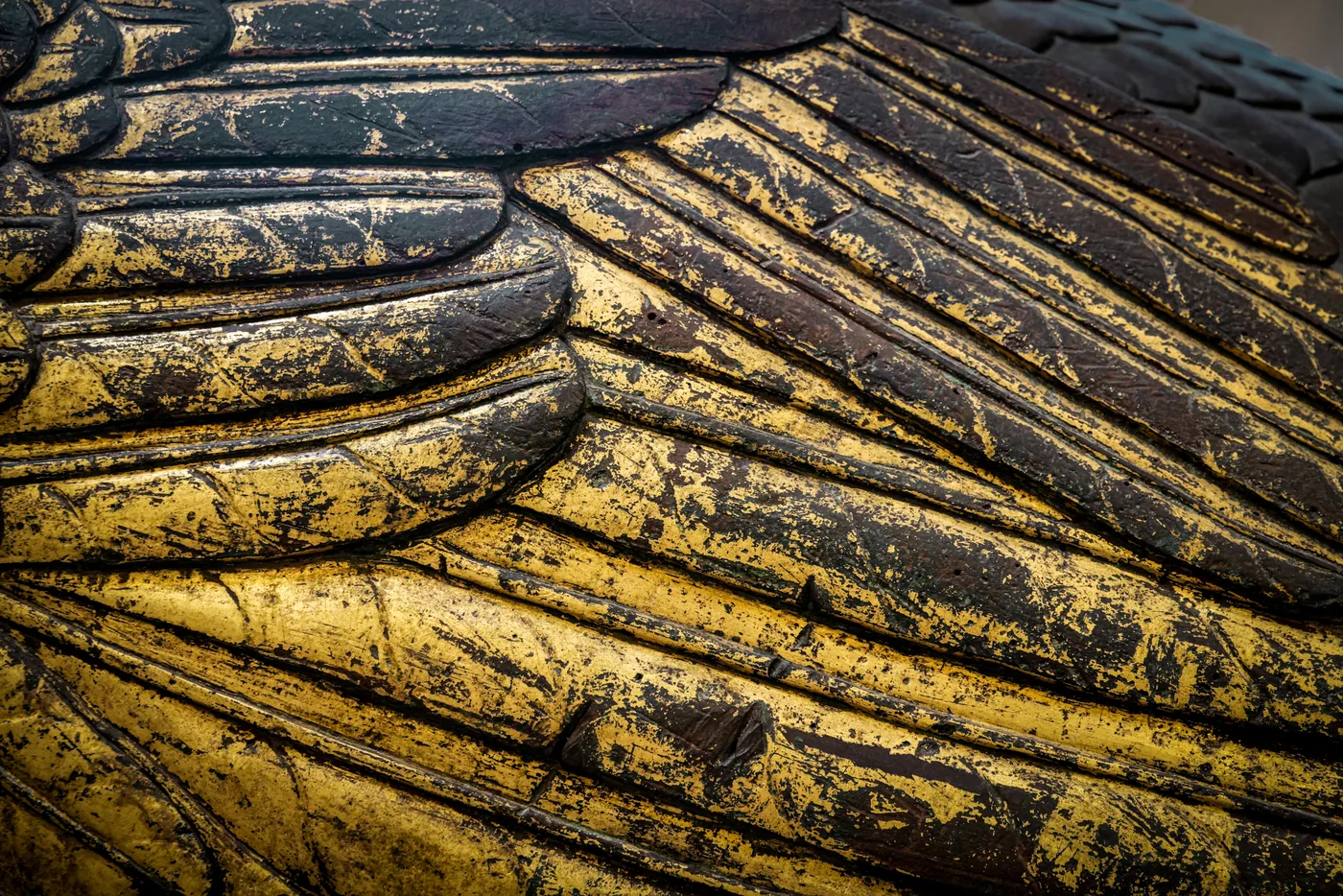
One week later, I found her with carving knives and pieces of wood in her hands, tools she had not touched in years. She was bent over her work with complete attention. What she was carving was a pair of magnificent wings. When she finished, she took the old swan from the table and carefully fitted the wings into the smooth, empty places at its shoulders.
It was wingless no longer. It was complete.
Story complete!
Enjoyed this story? Sign up to like it, save it, and support the author.





Discussion