

Strangers from the South: Short Story 3 - Ever Circling
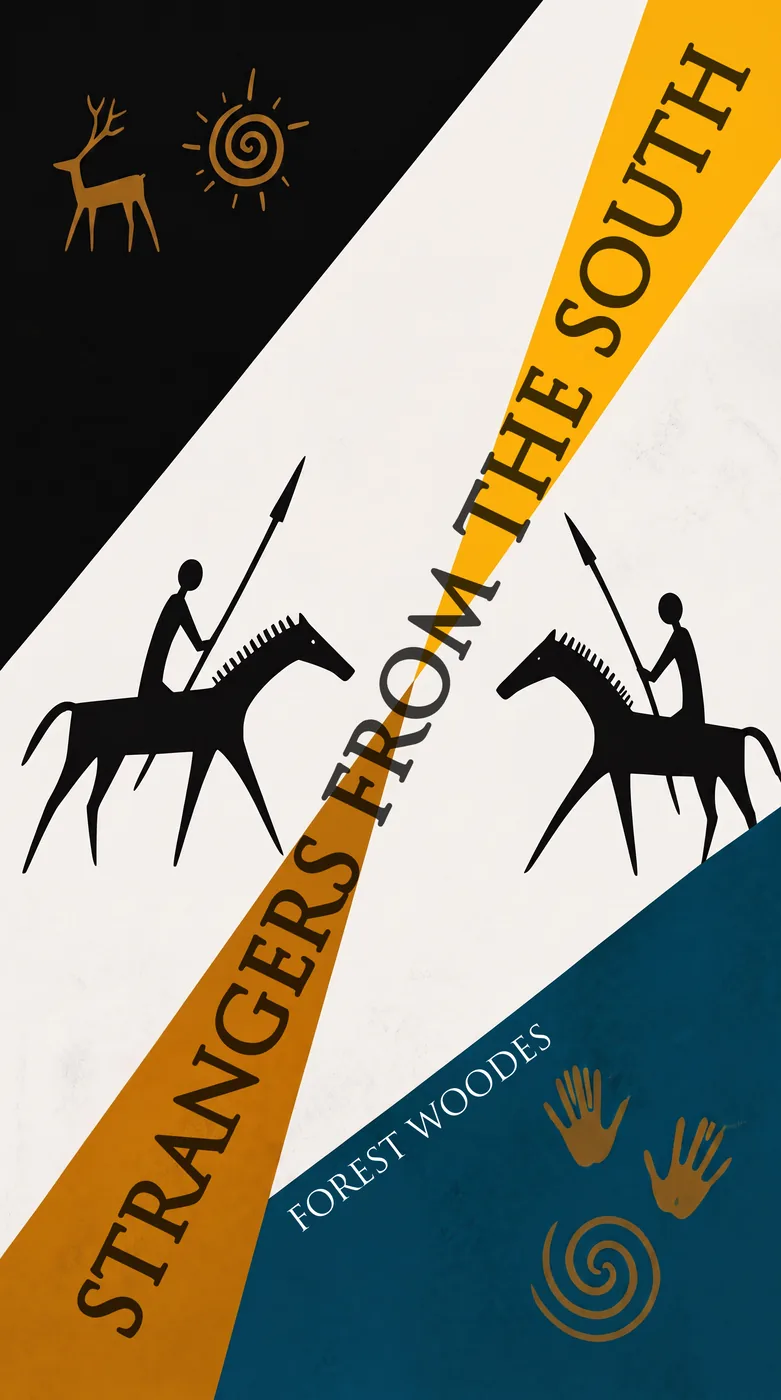
Listen to Strangers from the South: Short Story 3 - Ever Circling
Checking audio availability…
This is the third and final short story. The final paragraph of Ever Circling is the first paragraph of the novel Strangers from the South, so if you want to keep going with the story, you can! You can find the previous shorts already published: 1 - A House Made of Clay; 2 - Children of the Wastes. Be on the look out for a free novella set prior to the events of the hard science fiction series, An Emergent Universe. Please make sure to share and subscribe. Enjoy the journey!
Tamir and Ashwyn moved north, to the floundering harbor city Rus-Pinna—meaning literally ‘the Cape’ or ‘the Corner’, as it jutted out on a raised peninsula above a deep harbor and a reef barrier busy with woven reed canoes, pole boats, and shallow-hulled, sewn-wood plank ships with colorful sails. Just on the bank was a market selling colorful fish, sharks, turtles strung up on racks, next to wicker baskets of bird’s eggs, goats in pens, and merchants offering their wares to any passing soul. Beyond the fish market were rectangular, plaster-white warehouses, meeting caravans and boat cargo through the same doors. The city rose above the shimmering water, a mix of thatch and drystone construction, next to whitewashed mud-brick homes and a stepped pyramid on top of the hill at the center, the morning's sacrifices rising above it in a cloud of smoke.
They asked around and finally found a captain heading in the same vague direction who would allow passage in exchange for security en route. The ship they signed onto was quite large by world standards, and had not been built in the desert harbor-town, but somewhere further north. Square sails were the given away for Ashwyn as they belonged to the Sea People’s—the last trace of a once mighty maritime empire founded in a city of encircling harbors outside two great pillars that sunk under the waves in a day and night; her people reduced to wandering the sea; raiding, trading, pillaging and diminishing. The ship was flexible, shallow hulled—meant to skim across the water and made from sewn-wooden planks with mortise-and-tenon joints, propelled by square-shaped patched sails in open water and drew out oars when becalmed and in port.
Captain Hytep was black-bearded, olive-skinned, gravel-voiced, with a nose like a hawk’s beak and a unibrow. He had been rather mum about why such a voyage needed additional security, but Ashwyn and Tamir were desperate and signed on, anyway.
As they left, Tamir joined Ashwyn on the bow, looking out across the blue-green waters that turned cobalt and indigo in the depths but splashed turquoise and aquamarine in the shallows.
Since their time in the desert, Ashwyn had retreated into himself. Tamir wanted to give him space, but Tamir couldn’t shut up for long, and the struggle inside him gave out when he asked, looking over the edge of the ship, “You ready to go home?”
“No,” Ashwyn said, looking over and shaking his head. “I am not going home. I am going to ask around, track down any of those creatures in the north. What are you doing?”
“I need to visit the World Tree.”
“I—” Ashwyn swallowed, “I have tablets for Sandya.”
Tamir nodded, “I’ll make sure she gets them.” And followed up with, “Are you two ever—”
“Shut up, dwarf,” Ashwyn said.
Tamir burst into laughter, and Ashwyn smiled—the first in days.
They looked down into the water and passed marble columns with reefs growing along the bottom, covering them, and schools of fish flashing with color.
“What are the ruins down there?” Tamir asked.
“An Alban city from long ago. Back when the Imperium was at its height. I am surprised to see fish and reefs. The water must be deeper than it appears.”
“Look how clear the water is,” Tamir said.
Ashwyn nodded and added, looking down at the passing fallen temples, “That city back there used to be ours as well. The humans built on our foundations, never realizing the foundations were crumbling.”
Ashwyn soaked in the warm sunshine and the salt spray as the prow dipped and rose with the waves.
He said, after some time, “I want to be with Sandya. I didn’t run from her, I ran from me.”
“Does she know that?” Tamir asked, looking over.
“I think,” Ashwyn said, shrugging.
“Seems like something she needs to know. So far as I know she hasn’t—there hasn’t been talk of any suitors. I think your father would be incensed if that were the case anyway. She teaches at the temple school, writes her histories and is still a priestess in Ana’s cult. I stop-in when I am near the World Tree.” The dwarf grimaced and said, “I may still owe her money.”
Ashwyn burst into laughter, and the dwarf smirked.
“I just don’t want to become—I don’t want to—” Ashwyn huffed and crossed his arms.
“Don’t want to do what?”
“I know what I am capable of and I don’t want to be that person. It’s not who I want to be. Does that make sense? I know what happened when Yuvan died. That entire kingdom was wiped out and I didn’t stop it and I was one of the few people with the power to do that.”
Tamir slapped him on the shoulder and said, “Well, it’s your choice, but you’re not going to be able to run forever. You say you want to go east, but you have unfinished business in the west and until you deal with it you’ll be yanked back and forth. I am no prophet, or seer, or Knowing One, but it’s pretty obvious to me.”
Ashwyn sighed a long sigh.
Tamir asked, looking over, “Why the hell do you even want to go east?”
Ashwyn shook his head, “I don’t know.”
“Is it a dream, or a vision, or what?”
“A feeling. A bone-deep certainty. The sun rises in the east.”
Hytep called out, “Ashwyn, Tamir!”
They rose, walked across the moving deck past yard-arms, hempen ropes, past beams bearing large red and white striped sails that whip-snapped in the wind, around mates going about their business to the captain at the aft.
Hytep said as they walked up, “I want you two to keep an eye out.”
Tamir said, “For...”
“Monsters.”
Ashwyn whispered to Tamir, “That’s helpful.”
“And right on time,” Tamir said in a whisper, “Only informing us after we’re out of the harbor.”
Ashwyn cleared his throat, “What kind of monsters?”
Hytep said, “North of here, over the last few years the water smokes, the ground shakes, sometimes there is strange thunder out of clear skies. I’ve even seen mountains glow.”
Tamir asked, “And have you seen these monsters?”
Hytep shook his head, narrowed his eyes and said, “What else can it be, my friend?”
Ashwyn and Tamir exchanged looks, and Ashwyn nodded and said, “We’ll keep an eye out.”
Ashwyn and Tamir walked back over to the prow.
Tamir leaned over and said, “The man is mad! Monsters?”
“Well,” Ashwyn said with a shrug, “The world has a lot of strange shit in it. Walking trees, dryads, Djinn and Burning Wind. Just about every monster I’ve encountered walked on two legs.”
“Not to mention the deadmen officiating rituals Between the Rivers,” Tamir added.
“I have heard of leviathan.”
Tamir shrugged, “The man is mad. But if he wants to pay us for sitting on our ass, then who am I to tell him no?”
Their route took them first north, to the narrow island oriented west-to-east in the middle of the Green Sea. The island was home to miniature elephants that some took to equating with cyclopes when happening upon their skulls. The island stood out like a mountain with a shelf around it, forming steep cliffs ending at the dwindling sea below.
There were no monsters, for they too faced extinction like the elves, dwarves, and magic, but that did not mean there was no danger and death in this wide, indifferent world.
After taking on water, selling raw copper and tin to the locals, they set sail once more and headed northeast, meaning to bounce them from harbor to harbor across the northern shoreline of the Green Sea, landing them at a corner of the Riverlands—a delta at the bottom of the valley bordered by the central mountain chain and the northern frontier of a long, boot-shaped peninsula where they would continue northward on foot.
It was a few days later that the horizon filled with a column of black smoke. Floating by them were planks, bundles of sodden linen, and bodies of children, women, and men, all of which were swollen in the heat, drifting by them silent as the grave.
“What is going on?” Tamir said, looking down.
Ashwyn shrugged, saying, “Monsters.”
At night, an orange glow dominated the north-northeast horizon, bright enough to cast shadows and brightest at a point that dimmed and brightened. Mysterious, booming thunder reached them despite not a single cloud hanging in the sky. Ash fell silent like snowfall in winter while they inched closer to the smoldering coast of a small island off the mountainous peninsula to their east.
They were only a few miles out when a resonating boom! Swept across the surface of the sea, stirring the waters, condensing the moisture in the atmosphere and deafening them when the shockwave reached them, followed an hour later by a wave corresponding with bright orange light.
Unlike waves crashing on the shore, it was as though the sea were draining towards the smoldering island to the east and when the water returned; it spanned the horizon, coming up like a wall of water—the entire sea seemed to heave up, moving swiftly.
The captain yelled from the aft, “Oars! Oars! Oars! Bring us around. Around damn you!”
The crew, which had watched the spectacle burst into activity, all but the sailors whose eardrums burst when the pressure differential of the shockwave met them on the outside of the ship.
Seamen brought out the oars and frantically paddled in time with the drum in the center of the ship, but it was too late. The wave reached them, preceded by more thunder in the distance, capsizing the ship violently, tearing the hull apart, snapping yard arms, spilling the crew over the side and was followed by swirling currents that drug everything down into the depths followed by a deathly silence as the ash fell.
2
Ashwyn clung to planks floating in the water while ash and smoldering pumice rained down around him. At times, he was forced to dive to avoid the ballista cast off the fiery mountain in the distance. His legs burned with the effort of keeping his body afloat, and his heart pounded against his ribs, while the salt was enough to sting his eyes closed. He surfaced, gasped for breath, and caught the scent of sulfur. He did not see Tamir, but the bodies of the sailors with him floated by. The surrounding sea boiled with toxic gas, falling pumice and volcanic glass that was as sharp as the heirloom sword still strapped to his back.
Another boom echoed, followed swiftly by a shockwave that swept across the sea and yet more waves. As the sea drew towards the island once more, Ashwyn hopped off the plank-raft, furiously paddled further out into deeper water and met the wall of water at an angle, pushing his raft up the side diagonally and riding the crest out into deeper water.
He coughed, passing out-gassing bubbling up from the deep water in scalding flows that filled the air with miasmic poison.
“I’ll take monsters over this!” he yelled to no one.
Splinters of the ship floated around him, and at times he slipped off his raft, pushed it kicking through the water and gathered more debris, which he then lashed together with the remaining hempen rope threads floating nearby.
The world around him dimmed with sulfur fog, and even nearby landmarks were difficult to make out in the ashfall, the endless choking haze, pumice and glass hail. He lashed watertight bundles of cannabis, linen and cotton, to the outside of the raft and he crawled onto the raft and laid down, catching his breath and watching ash swirl above him, occasionally lashed by hot winds and clouds of stinking gas which brought about coughing fits. The waves diminished the deeper he floated.
He sat up and surveyed his surroundings. Nearby, gulls and birds had already descended, landing on the bodies of his shipmates and eating them while still more flew above, stirring a great racket that was able to rise above the distant rumble of the glowing mountain. Mako and great white sharks broke the surface and soon a feeding frenzy broke out as great schools of shark and fish circled the wreck, biting quickly, tearing flesh off bodies, staining the water red and swimming away from the mindlessly biting masses that tore chunks from the floaters and each other. Many circled his raft, breaking the surface, catching him with black, flat eyes and diving again—circling, ever circling.
Ashwyn grabbed a plank from the water, sat at the raft's edge and paddled like hell out into the blue, heading due north, towards an island that was no more than a blue-haze through the ashfall on the dawn horizon. The effort brought about a thirst, which only got worse the more he strained, and a dehydration headache roared in his head. He paddled north all day under the blazing sun, away from the feeding sharks, the shaking, violent mountain and the corpses of his shipmates. About evening-fall, he reached the island due north.
Ashwyn beached his raft as night came on and was so weak he could not move for many minutes; instead he lay in the sand and let the waves crash over him while he caught his breath. He looked at the shroud of stars covering the sky above.
“I need water,” he said to no one, adding, “I need it or I will die in the next day or two.”
And another thought came to mind, and he asked the stars above, “Do I want to keep living?”
The darkness did not answer.
He wasn’t sure wanted to keep going. He had lived long, and time had become an undifferentiated blur. After a while, every peach tasted the same, faces morphed into sameness, but then he thought, No, that’s not right. The world has emptied around me and grown wild, but so slowly it goes without notice. What would be the purpose of continuing?
He sat up, facing south and the orange glow on the horizon, punctuated by branches of lightning and delayed booms of thunder. It continued to rain chunks of pumice and ash, but the winds swept most of it off the island, so he could finally breathe again while coughing up black phlegm, nearly passing out with the effort.
“What’s the point,” he said, laying back down in the sand.
Ashwyn sat up again, turned away from the apocalypse, and surveyed the island. Nearby were sandstone low-rising cliffs crowned with stands of oak and wild olive above a bed of wormwood, goosefoot, asteraceae—wildflowers—and scrubby patches. He sat on a sandy beach. The air smelled of salt, water, juniper, sulfur, and ash.
He stood although part of him was fine with lying down and the surf and dying. He considered it the bravest act he’d ever taken, and he walked on in the rushing, empty silence.
3
Ashwyn followed the shoreline, ending up at the western side of the island, meeting a beach of rocks, scrub, dunes and pebble-sprawl. A dehydration headache pounded in his head, and each step took incrementally more effort than the last, and little things piled up.
He passed debris washing ashore—dead men beginning to swell in the heat, with chunks of flesh ripped away. Barrels, watertight bundles, bits of the boat and sails. Far in the distance, just behind the island, a column of black and gray ash pushed upward and spread out above him. Ashfall sometimes swept in from the south, and then eastern winds, kicking off the high plateaus and vast steppe further north and east, blew it out. He did not see any water-skins, or food washing ashore.
An hour after dawn, above him on beige sandstone cliffs, he spied a thick copse of trees crowding around something not visible to him. With a splitting headache, grinding, dragging fatigue, and burning muscles, he climbed the low-rise cliff-side, moving up at an angle on the steep sprawl, with thin rocks cutting into his feet as they sank into the sharp rocks. He pulled himself up the cliff-side using just about the last of his effort, lay on top of the cliff-face and caught his breath, then turned onto his belly, pushed himself up and stumbled into the copse.
A spring burbled away at the center of the copse. He did not stand on ceremony and instead drank the cool, sweet water directly, then used his hands to cup the water. He gulped, sat and took a break, then drank again.
He found clumps of wild gourds nearest the water and used his now corroded knife to hollow out the top of the brown, rigid, bulbous bodies and then hollowed them out, shaking the seeds and desiccated inner-matter out. He washed the gourds in the spring, shook them out, and then filled them with water.
A stand of pines stood nearby, and he coated the tops of the gourds with pine resin seeping out between the bark to seal them. He drank from the spring once more and stayed throughout the day.
As he regained his strength, he walked down to the beach and drug trade-goods onto the beach, combing through the flotsam cast off by the toppled ship. He found a bundle of linen in decent shape, a bundle of cotton that was mostly dry, and a watertight bundle of kif, which he picked open, stuffed the rank leaves into his satchel and walked back up to the spring where he sat pulled out his pipe, his iron-pyrite fire starter and packed the pipe with cannabis and then drug on the pipe, exhaling the skunky smell and finally relaxing, taking deep breaths and looking up at the relentless blue sky above.
Along the water’s edge were sedges and clumps of false-flax which he collected to form a weapon. He gathered the rigid, golden and brown stalks, used a stone to beat out the fibers and spent the day braiding the threads, creating a pocket at the center of the braids. He collected small, dense stones which he added to his deerskin satchel, still dangling on a hip and hung on a shoulder.
With his belly rumbling, Ashwyn tracked a hare which drank at the spring before he arrived and followed the tracks out into the scrub. He caught the hare munching at a patch of dandelions. Ashwyn knelt and then swung the sling and released it. The projectile rock caught the rabbit in the ribs, and Ashwyn leapt forward, grabbed it by the hind legs and dashed its head onto the rocks.
He carried back the hare to the spring, gathered sappy pine kindling to make sure the fire caught, and set to work setting the kindling on fire on a rocky slab using his iron-pyrite and stone firestarter. As the fire caught, burning with pops and hisses, he added twigs of oak to keep it burning for longer. When the fire burned merrily, he constructed a crude spit, deboned the rabbit, and threw the refuse far away from his camp, down the cliff-side where foxes could be seen feasting on corpses. He then returned to the fire and cooked the hare as night came on. The greasy, thin meat filled him. After gorging, he lay down on the warm stone's surface nearest the spring and fell asleep with the night sky above him.
In the morning, he walked out to the cliffs and looked out over the water to the west. Ashwyn was not sure, but he thought he saw lights on the water. He thought through the mental map he carried everywhere and drew in the dirt to pinpoint his position. He traced the lines of their departure from the southern-continent and considered himself on an island off the shore of the mainland—highlands which morphed into the steppe, but he could not be sure.
He filled every water gourd he could find, then hunted, bagging two rabbits, processed the meat by first cooking, then laid out the cooked meat on crudely woven flax and rubbed down the meat with salt which collected in pink-white piles at the bottom of the cliff-face. He gathered dried sedges and false-flax, wove the strands together and stored the salted meat in the bags.
Ashwyn carried his food and water back down the cliff, found his beached raft, grabbed a floating, broken oar, piled on his supplies, including the bundles of linen, kif, and cotton and pushed out, back into the water, and paddled northeast towards a blue-haze of shelf and hilly country.
4
Ashwyn paddled throughout the night heading northwest, towards the lights that winked out shortly after dark and beached on a shoreline of limestone cliffs, collected his belongings—the bundle of kif, cotton and linen to be used for trade, his water-gourds, and the hare in salt and wrapped them in torn red-and-white sailcloth he collected on the way and started walking.
About midday he came to a village on a shoreline where the cliffs fell away, made of thatched, drystone huts, crude docks spreading out in the turquoise water, racks of drying fish filled with brown-skinned, black-haired locals going about their chores. A deep bay shielded the village. A circular reef breaker surrounded it, and a stone jetty reached further out.
He interrupted a group of women gossiping around a well, with their little ones playing nearby in the dust. The women wore coarse linen heanos—an underdresses with a sharp V-cut decolletage over lower-body wraps held in place by a braided belt.
He said, “Trade,” in several languages and only made himself understood using a variant of the Old Tongue. The gossiping women pointed into the village, and he left.
He was getting too old for this shit. Movement had defined his life, as he seldom stopped. And he just felt tired, run down, beat up, yet he carried on though he did not know why, only that it was brave to do so.
Ashwyn walked to the crude docks and yelled out, “Trade! Trade!” In half a dozen languages until an older-timer with a stooped back and a mouth absent of teeth said, “I trade.”
He motioned Ashwyn to follow and walked to a makeshift warehouse of stacked stone and mortar just off the coast. Ashwyn turned and considered the column of soot and ash far off on the horizon, with the prevailing winds pushing it away from the shoreline.
At the warehouse, Ashwyn traded most of the kif, storing some in his satchel, he traded the linen and cotton for dried fish, meat and dried fruit, held in airtight bundles of flax and skin, and also bought a recurve bow that was undoubtedly of steppe-make, a quiver of iron-tipped arrows that were forged by the Yakmen dwarves, and clothing as his desert garb had rotted with water exposure and salt. The old man sold him a gray, fur-lined cloak that came cheap since the locals would never wear it in the heat, which he stored in the sailcloth bundle. He purchased a pair of leather boots with rawhide laces, likely traded with the mountain folk and drive-line hunters further north and west, and a deerskin tunic, along with hempen twine and bone hooks. The old man said something and pointed to the sailcloth. Ashwyn tore a large, wet piece off and handed it over, and in exchange the old man dropped three strips of hack-silver and a handful of corroded-green copper rings.
He asked the old man, “Horse?”
The old man stared at him blankly.
Ashwyn tried, “Ashva? Ekwos? Haykwos?”
The old man shook his head, saying, “Nay.”
Ashwyn asked, “Ship? Navis? Um, sneh?”
The old man shook his head again and made a wavelike motion with his arm.
“Fuck,” Ashwyn said with a sigh, looking off into the distance, adding, “That is one hell of a walk.” He asked the stooped old man, “Have you seen dwarves? Yakmen?”
Ashwyn demonstrated the height, and the old man shook his head.
“Shit,” he said. He bowed to the old man, thanked him, and walked north, leaving the village and climbing into the hills above the limestone shelf.
Two weeks later, following the coastline, he came to the mountains as the coast shifted west to east in orientation. Along the forested hill country, he encountered drive-line hunters heading north into their summer hunting grounds deeper in the mountains. The hunters stalked maral and dama, which moved down the slopes sooner and sooner each year from the high crags as the winters stayed longer and bit deeper. The hardier beasts—the ibex, reindeer, fox, and bison—would remain among the foggy peaks until the first true snows, but eventually, they too would be forced down by the shifting climate.
He traded with them—excess kif, empty gourds for water-bags, copper rings for dried meat, dried fruit and fat-and-clay paste he applied to his boots to keep them waterproof. He still carried the sailcloth that he used for a lean-to to sleep under as he walked on west. That too tore, shredded and fell apart, and soon he left it behind him.
A month later, he followed the edges of the mountains, up and around the sea, which at times was near enough to smell the salt air and sometimes behind the horizon. The country emptied. He hunted, he processed resources, he slept, he walked on.
It was three months later, nearing the beginning of summer, when he crossed the mountains and entered the Riverlands from the far south, at the delta spreading into the Green Sea.
The country was rich in game, thickly forested with spreading oaks that cooled the many clear oxbows scattered around the area. Willows, ash, and birches, along with thick green grass that smelled sweet in the evenings, lined the shorelines. He took roe-deer, maral, and hare and kept an eye on his back-trail for the circling wolf packs that howled to each other in the night, or the occasional bear or moose.
The first civilization he came across was a small human settlement surrounded by a sharpened pole palisade, a long hall in the center, and merchant stalls lining the muddy horse track in and out. The settlement was called Among Oak and Ash, and it sat near the Greenfork River headwaters, on the edge of the central uplands.
Ashwyn walked to an inn he frequented when he was in the area. The large, rectangular building, called the Honey-Eater Longhouse, featured painted, stylized bears around the oaken beams. He sat at a low-table, nearest the column of light let in by the fire-hole in the roof.
The hallkeeper raised his chin as he walked up.
Ashwyn said, “Mead, bowl of brown, a bath and somewhere to sleep for the night.”
“Just the one?” The man with a handlebar mustache and a face covered in tattoos asked.
“Just the one.”
He slid copper rings across the table. The hallkeeper scooped them up, brought wooden bowls of mead and stewed aurochs and unleavened brown bread. Ashwyn ate, walked out back to nearby gossiping washerwomen, stripped out of his filthy clothes and then eased into clay and bitumen-sealed tubs, while the washerwomen poured in hot water brought over in heavy bronze kettles.
When the water was lukewarm, he walked back in his wet but clean clothes and ate more. He asked the hallkeeper hurrying by, “I am sorry to bother you. Have you seen a dwarf—Tamir of the City Under the Mountain?”
The hallkeeper thought and shook his head, saying, “No, I know the dwarf you’re speaking of, haven’t seen him in some time.”
“Do you have blank tablets? So I can leave a message if you see him?”
“Sure, I’ll need money to ask the brick-maker. He’d make them.”
Ashwyn slid more rings across the table. The hallkeeper smiled, scooped them up and walked away to serve other patrons filling up the building. He reclined at his table alone, lit his pipe, and listened to the banter around him.
A trader said, “I just came back—the slopes are full of dead villages. I thought I’d go up into the highlands to sell as summer came on for furs. There’s no one left.”
The merchant speaking wore a buffalo-hide kilt strapped on by a cured leather belt. Above that was an ibex-wool tunic and a round, furry hat above graying hair. His companion wore a long tunic that reached his knees, made of cured deer-hide, held in place with a yellow and indigo linen belt.
Ashwyn leaned over and said, “I am sorry to bother you. These dead villages, can you tell me anything about them?”
He slid two copper rings across the table.
Each trader grabbed one, and the trader with the fuzzy, round hat said, “Just that—it’s like something came through and stole all the people. Everything is left. The places weren’t even looted.”
The merchant with the linen belt said, “And a mark—at least, I saw it up the slope. Could be nothing.”
“Can you show me this mark?”
The trader dipped his finger in his mead and drew a spiral radiating out from the center, connected by two lines.
The man with the linen belt said, “It was left on a door. No idea what it means.”
Ashwyn asked, “Was there a speaking ring nearby by chance?”
Both traders nodded.
“Hmm,” Ashwyn said, adding, “Can you show me where this area is?”
The man in the furry hat said, “Just head due east, up the slope. You can’t miss them. What do you think it is?”
Ashwyn sipped his mead and said, “I don’t know, but it’s got all the features of something I saw Between the Rivers. I appreciate both your time and forgive me for intruding.”
“Be careful,” the man with the furry hat said.
“Good advice.”
Ashwyn stretched out on the floor that night, sleeping next to the warm firepit on hides and furs. In the morning, the hallkeeper brought him a raw clay tablet along with his meager breakfast.
Ashwyn wrote: Tamir, if you get this, I am alive. I am travelling east to check on dead villages up the slope.
Then, he walked on, heading towards the mountains due east.
Ashwyn was seven days into a nameless country when he encountered the boy. The country was raw and blustery, and the sky alternated between columns of fickle sunlight sweeping across the highlands and gathering clouds and darkness. Juniper, heather, peat and cranberry bogs, and thin groves of aspen with bone-white trunks and green spade-shaped leaves covered the high-country. Higher up were stands of spruce and fir that occasionally disappeared behind a cloud bank, and further up the slope, the distant mountaintops remained veiled under a gray ceiling that seldom broke. Silence followed the elf everywhere he traveled. He was walking east. It seemed like he was always walking east, but he never knew why.
Story complete!
Enjoyed this story? Sign up to like it, save it, and support the author.




Discussion