

Parasite
Listen to Parasite
Checking audio availability…
The life forms on Mars did not have names. There were none with the capacity to name themselves, let alone anything else. No, the organisms on Mars did nothing more than just live. Breed. Run. Kill. Feed. All the necessary things to continue existence.
The harsh atmosphere on Mars bred harsh creatures. The thick heavy atmosphere, flowing rivers and volcanic activity produced a world in which large, lumbering behemoths stalked slowly along the landscape. But such a harsh atmosphere also produced other creatures that were just as harsh and unforgiving. Smaller organisms, tough as old boot leather. Organisms that were a lot more… invasive.
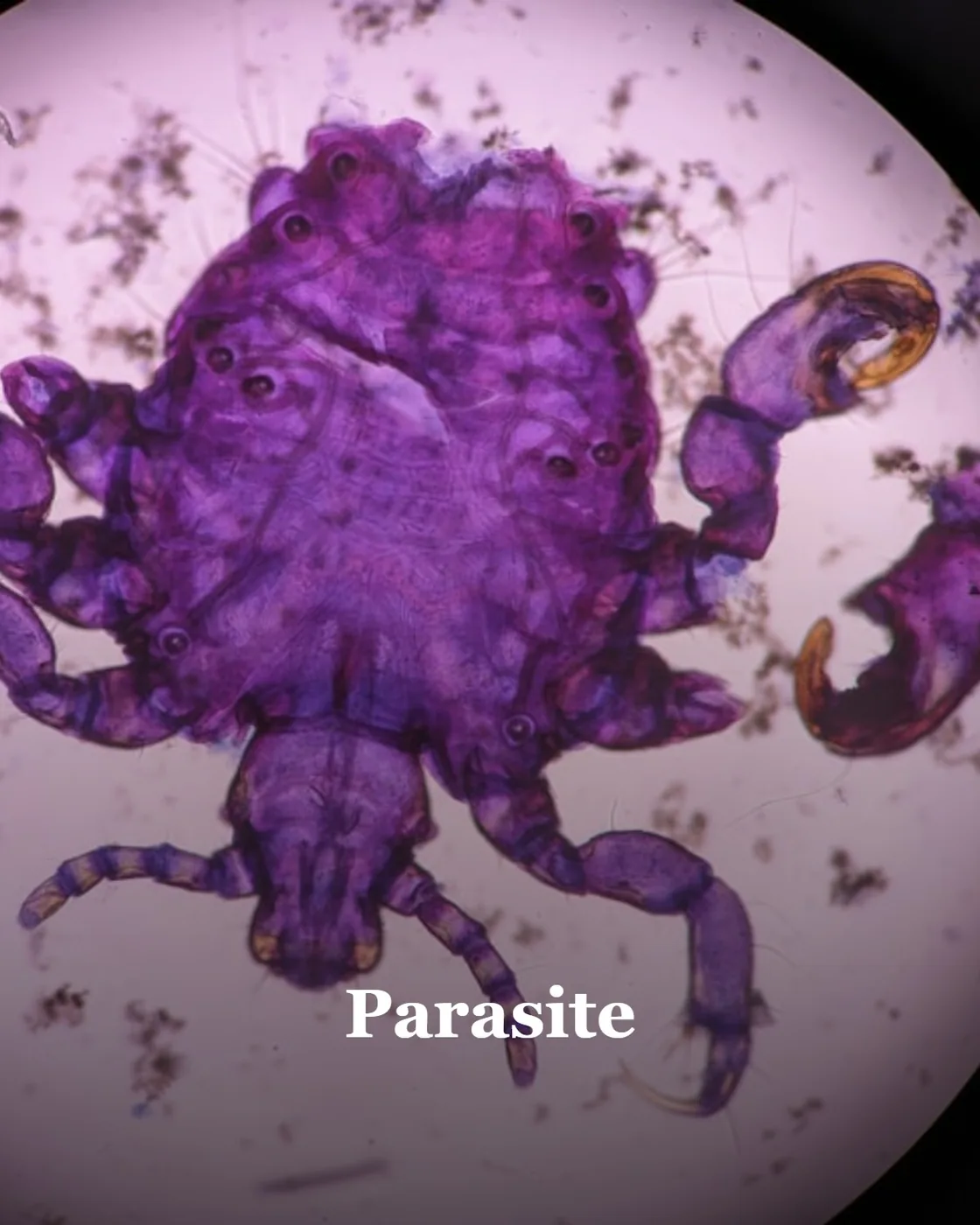
Parasites.
Like the larger animals that roamed over the surface, these smaller insect-like forms had no conscience to speak of. Only instinct. And it was this instinct that told them to attach themselves to the large Martian organisms, to burrow into the flesh, to turn the huge animals into nothing more than living marionettes, mercilessly sucking the life from them until there was nothing left to take.
Over time, the Martian atmosphere changed. What was a difficult climate to begin with became even more so. The very air became a cold, thin, choking atmosphere that began to wipe the alien life away, their bodies rotting and crumbling, their remains slowly and surely buried by the red sands, compressed by thousands upon thousands of years of building layers of sediment.
But the parasites survived.
At least to a point. Without the larger animals to feast and live upon, even these intrusive organisms began to die. But their evolution had given them bodies that could survive the changing climates and the long, winding path of time that lay before them.
All they had to do was rest.
And sleep.
And wait.
MARS - 2097
The dome of the Mars penal colony sat on the surface of the red planet like a silver blister. Placed about a quarter mile away, the atmosphere processor filtered the stifling Martian air and made it breathable, if only for a small section of land encompassing the prison and work area. There was no need for fences here. Any prisoner who wandered beyond the range of the artificial air would die a slow and agonizing death. And none of them wished for that. The prisoners on Mars were the worst of the worst, but even they valued their own lives.
The colony had only been established in the previous year. So far, 250 convicts were already in place, with plans for more. A survey team had come during this month’s rotation, and they were scouring the rocky terrain for the best place to set up the next atmosphere processor before beginning the expansion of the colony. The prisoners themselves would be expected to excavate and work the site, building the next silver carbuncle. And then the next and the next, until the entire planet would look like a cell under attack from a vicious virus.
The survey team consisted of 3 members, all of them in Atmos Survival suits, as they were travelling beyond the range of the breathable air. Satellite surveys of the planet had identified some potential areas on which to build. The requirements were a relatively flat piece of land on which to build the machine itself, but then a cave or more sheltered spot nearby in which to store and protect the more delicate machine mechanics, that could potentially be damaged by the Mars weather systems. The technology was, theoretically, built to withstand such things, but any extra protection the planet could offer was more than welcome.
The 3 team members travelled on the rover, nicknamed Hawkeye, due to its tracking capabilities, toward the grid reference that beeped incessantly on the sat-nav screen. The nearer they got, the more insistent the beep became.
‘Shut that damn thing off,’ said Waller. ‘I’ve got eyes.’
Deakins reached over and tapped the navigation computer, turning off the irritating sound. Waller continued to drive the rover, expertly navigating around the occasional protrusions of rock that sprouted out of the ground. The pock-marked and crater-laden surface of Mars was a challenging trek for anybody, but he enjoyed it. Waller was very proud of his driving skills, so much so, that he never used the auto-drive function that was built into Hawkeye.
‘Looks good out there,’ exclaimed Banks. She was sat on a slightly raised seat behind the two men in front. She was meant to be a lookout of sorts, but they were so near to their destination, and so clear was the piece of land to where they were headed, it had rendered her task pointless.
‘Yeah,’ agreed Waller. ‘Flat as hell here. Lucky, we found it on this scraggy piece of rock.’
Deakins chimed in next. ‘There doesn’t seem to be much of a cave system, though.’
‘Just give it a chance,’ said Waller, gruffly. ‘We haven’t even got out to have a look yet.’
He drove forward another 25 metres before stopping the rover at the recommended spot. ‘Come on then sightseers, let’s go and have a look.’
The 3 team members hopped off the rover. Deakins stretched as if he had just awoken from an 8-hour sleep.
They walked along the terrain, each of them feeling a sense of satisfaction at what the planet had offered up.
‘Good ground,’ Deakins cooed.
‘Yeah,’ agreed Banks, her eyes fixed on the scanner screen. ‘Not detecting any anomalies.’
Waller stopped and gazed at the raised rocky terrain ahead, which had the potential to hold a cave system that could house the processor mechanics. It looked like an island in a sea of sand.
There was a slight dip before the rocky mound, which meant that it was a lot more expansive than it looked from afar.
The three of them tackled the slope gracefully, stepping and sliding until they reached the bottom, and the base of the rocky island. Banks turned the scanner up to its highest sensitivity and began to walk the length of the mound.
‘Gimme some news,’ asked Waller, eventually. ‘Is this thing solid?’
She stopped what she was doing and looked over to him. Even through the visor, he could see she was smiling.
‘No,’ she called. ‘It’s hollow!’
With that in mind, all three of them scanned the terrain again with keener eyes. If it was hollow, surely there should be an opening. While Waller and Banks were scrambling this way and that, Deakins stopped in his tracks and stared, moving his head like a curious dog. It was then he noticed the undulations in the rock. He walked towards them, noticing something like a wall. His skin began to tingle at the thought that something was behind it. He started to speed up in order to look.
His eyes widened.
It was the entrance to a cave.
He spoke clearly into his helmet mic, calling Waller and Banks over to his position.
…
Each of them turned on their helmet lights to illuminate the hazy darkness. The floor sloped downward and was strewn with loose rock, which caused both Waller and Banks to slip over.
Deakins tread more carefully, keeping his footing. ‘Should we go back and get some climbing gear?’ he asked.
Banks consulted the scanner that she had attached to her arm. ‘No, we’ll be okay. It flattens out.’
After a further few steps, she was proved right, and the floor suddenly became level. Stopping for a few moments to get their bearings, they carried on into the cave. It proved vaster than they expected, with huge sloping sides heading upwards, like the interior of a pyramid.
‘This is great,’ said Waller.
Banks continued to eye the scanner, looking for anything that would make the storing of mechanics problematic. So far, nothing. The location seemed perfect. It was then the scanner started pinging. She lifted the screen nearer to her face. A 3D scan materialised on it.
‘I’ve got something here,’ she called.
‘Like what?’ said Waller, indifferently. He had no worries or concerns that anything was suddenly going to jump out and attack them. Mars had been explored and examined for years prior to the penal colony being built there. NASA had conducted countless remote survey missions before sending human crews. But then again, he thought, who’s to say there hasn’t been some kind of civilisation here before? Thousands of years ago. Millions, even. The thought made his heartbeat quicken. Perhaps there was money to be made on this trip from an ancient artefact. He tried to suppress the child-like excitement that had abruptly began to bubble in his chest.
‘It’s a series of objects, in a kind of mound,’
Waller screwed his face up, visions of thousands of credits appearing, then disappearing before his eyes. ‘Well, it’s just rocks, then, isn’t it?’ he said irritably.
‘No, not rocks. The objects are all uniform in shape.’
Waller sighed, turned around and walked over to have a look at the screen himself. He eyed the digital readout. There were lots of objects, all spherical in shape, all roughly the same size. Once more, his heart began to beat faster.
‘Let’s go and look.’
…
They had walked another 12 metres when the objects came within range of their helmet lights. They all paused, the 3 of them sharing a wary look. Waller moved first, then Banks and Deakins followed. There seemed to be about 60 of the strange objects in all, gathered loosely together on the cave floor. They looked about, seeing more in the distance, or gathered into the rocky nooks. They reminded Waller of ammonite fossils, coiled shapes, like giant seashells. They were about the size of basketballs, and they looked dense and heavy.
‘My god,’ said Deakins, breathily. ‘These are, I mean, they’re aliens.’ He looked at Waller and Banks. ‘They’re aliens, right?’
Waller smiled greedily. ‘They’re aliens, alright. Not the ‘live long and prosper type’, but they’re aliens.’
‘They must have been trapped here for, who knows...?’ interjected Banks. ‘…hundreds of thousands of years? Millions?’
‘It doesn’t matter how long,’ said Waller. ‘It matters how much. This find could net us all a pretty penny.’
‘Won’t the company take that?’ said Deakins.
‘Screw the company,’ growled Waller. ‘We found them. Just a shame we didn’t find a live one.’
‘No chance of that,’ said Banks. ‘These things have been here too long. They look like they’re made of stone.’
As they were talking, Deakins had wandered over to one of the objects. Carefully, he brushed off some of the red dust. Whatever type of animal this was, it would have been powerful. It was covered in thick, leathery-looking plates. Uncoiled, it could end up being more than a foot long. He turned to his companions. ‘We’re gonna need help getting some of these out of here.’
Waller laughed. ‘Some of them? We’re gonna get all of them. We’ll get the prisoners out here with equipment. This stuff is coming with us on the next trip home.’
…
That evening, Waller, Deakins and Banks shared a drink with the colony warden, the 4 of them talking about fame and money long into the Martian night. The warden, had negotiated himself a slice of the profits, in exchange for the manpower and for not alerting the company to what had been found. It had taken almost 2 days and 20 prisoners to transport most of the strange objects back to the penal colony location. All but 2 of the colony rovers were utilised in the moving, and 6 guards had watched the operation go down, keeping an eye on the prisoners, but also fascinated by the dead alien forms.
The landing craft that would take Waller, Banks and Deakins back to their ship could hold only 10 of the objects at most. Any more than that, and the weight to fuel ratio of the craft would be off. Their ship ran on autopilot, but all three of them were trained in its operation and conducted diagnostic testing before and after every trip. Deakins had remotely activated the start-up process of the ship in orbit when the penal colony weather-alert started to ping.
A sandstorm.
A big one.
Waller cursed. ‘Absolutely typical. We’re almost ready to go for Christ’s sake.’
Deakins sighed. He was used to his colleague’s impatience and gruff demeanour by now, but it still irked at times. ‘It’ll just be a couple of hours. By the time it passes, the ship will be ready, and we can get out of here. It’s not like they’re expecting us back anyway.’
Waller didn’t answer, which Deakins took to mean reluctant acceptance.
All around them, the objects lay, spread across the floor. The 10 they were taking home hadn’t been loaded yet. The rest would stay on Mars for the time being.
‘Why don’t you organise getting these things loaded onto the carrier before the storm arrives?’ said Deakins, soothingly.
The sudden call to action brightened Waller up considerably. ‘Good call. I’m gonna suit up.’
Outside, the wind had already begun to pick up, but it was well below danger-level for the time being. Waller trudged off to get into his suit and grab some help to load up the alien objects. Banks was resting. Deakins turned back to the monitor and continued the ship start-up sequence. He was all alone. Smiling, he turned on some music. He loved classical music, his fellow team members did not, so any chance of listening to it in solitary comfort, he took. He considered listening to the Planet suite, by Holst, but thought that it was a little too on the nose, so chose the Moonlight Sonata by Beethoven instead. He turned the volume right up and let the melancholy piano wash over him. Fill him. He let himself daydream of the fame and fortune to come.
He smiled as he turned to the start-up sequence of the landing craft that would carry them and their precious cargo into orbit and dock with the waiting ship. Occupied as he was by the task at hand and the music filling the control room, he failed to notice one of the objects at his feet as it started to move. Its leathery plates, unopened for countless years, subtly cracking and clicking as the creature unfolded, seeing with its alien eyes a whole new world to explore.
Then another started to open.
And another.
…
The survey team was meant to send an update back to the company on earth every 6 hours. When the first didn’t arrive, there was irritation, but when the second was missed, there was concern. When communications to the penal colony itself went down, alarms started metaphorically ringing.
Thanks to the invention of the Light-Speed drive, travel to and from Mars was a matter of minutes rather than years, providing the crew were kept in stasis for the trip. Instead of sending a crew, however, the company decided on a probe. Only 25 minutes after launching, the probe arrived in Mars orbit and connected remotely to the colony video feed and downloaded all of the information. When it was transmitted back to earth, what the company executives saw made their blood run cold.
Every prisoner, every guard, indeed, every human, stalked across their screens like zombies, hideous alien forms attached to their backs. They were feasting on each other like rabid dogs, growling and snarling, and their blood ran across the once pristine white floors, painting them as red as the Martian sands.
On the 11th of October 2097 it was revealed to the public that the Atmosphere Processor on Mars suffered a catastrophic failure which led to the death of all inmates and prison staff. The processor exploded resulting in the complete annihilation of everything in the surrounding area. Relatives of the prisoners would receive the appropriate amount of compensation due to them based on the release forms they signed upon transport to Mars, while relatives of the penal colony staff would receive compensation based on the contracts of employment they signed when working for the company.
On the 20th of November 2097, a shuttle took off from the outskirts of London heading to the red planet. Official records stated that the shuttle was carrying supplies and mechanical equipment to refit the Light Speed Drive on a Martian transport ship. The log would go on to say that the L Drive would embark on a test flight to Mars and back. None of the logs or the flight records would explain that when the ship arrived in orbit, it dropped a PETN – a non-nuclear explosive chemical bomb that wiped out any trace of the penal colony and its inhabitants.
But in a distant cave outside of the blast radius, in a cave cut off from the light, yet more parasitic organisms lay dormant. The atmosphere of Mars as it now stood, was not conducive to this type of alien life. It was only the processor that made their re-animation possible.
But when the dust finally settles and the incident fades into memory, someone, somewhere would surely try again. And when that time comes, they would be there.
Waiting.
When the ship returned to Earth, it reported that the L Drive worked perfectly.
Story complete!
Enjoyed this story? Sign up to like it, save it, and support the author.


Discussion