

Like A Flower

Listen to Like A Flower
Checking audio availability…
They spell her name differently here: Bloom, not Blum. And Lotte finds she doesn’t mind. She won’t be correcting them. It’s just one more strange thing in an ocean of strangeness. And although she was never a star in the language classes in the Realschule, she has picked up the language remarkably quickly. She has even got used to the food.
You’re safe now. People say it to her all the time.
Ten days after she got here, when she was still too sick and shaky from the journey to do more than stagger from one room to another, a lady with iron-looking hair and sharp glasses came to tell Lotte she would be staying from now on with a family called the Wilsons, who owned a haberdashery shop in Essex.
Lotte struggled with the word ‘haberdashery’, and the lady with the iron hair got a bit impatient, but only because she was so terribly tired. Everyone is tired, Lotte thinks, exactly as tired and hungry as they are back at home.
And she knows how lucky she’s been. It isn’t everyone who would have a total stranger living in their home. Mr and Mrs Wilson are the kindest people Lotte has ever known. She helps out in the haberdashery shop. She doesn’t have to hide anymore, or wear a yellow star on her coat, or walk in the gutter to leave the pavement for other people. She can go shopping with Mrs Wilson whenever she likes, and she can listen to the wireless openly, without fear. She is allowed to ride a bicycle (although she’s lost the knack and the first time she tried, she fell off). She can sit on a park bench, and she can go into a library anytime she wants to.
She’s safe now.
But at night she dreams about Berlin and in her dreams she’s little again, running to Hampi in the kitchen with a grazed knee or a bumped head. The kitchen is warm and busy, filled with the rich warm smell of chicken cooking in the oven, and Hamlin in her apron is strong and safe. She’ll scoop Lotte up to sit beside her at the big scratched table and she’ll give her something to eat: a broken off piece of pumpernickel bread, a handful of raisins.
“Stop crying now liebchen, and tell me where it hurts.”
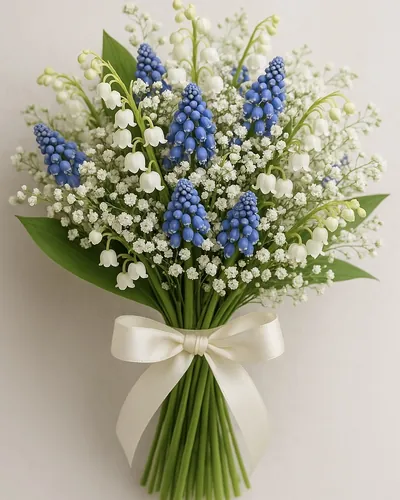
But it hurts all over. Every bit of Lottle Blum is hurting, and it’s like it won’t ever stop. Bloom. Like the flower.
Last night she went with Mrs Wilson to the Gaumont cinema in King’s Lacey to see Spencer Tracy in Keeper of the Flame. Mrs Wilson loves Spencer Tracy. She says it’s nice to have a girl to go with, someone who won’t tut at you when you have a little weep into your hanky at the sad bits. (A kindred spirit, if Lotte knows what that means. Do you, dear?)
So they went. And before the big picture there’s the newsreel, which last night had smiling RAF boys in their smart uniforms and silk neckscarves giving the thumbs up before climbing into their bombers: the Target for Tonight, said a voice, is Berlin.
Our brave bomber crews, taking the war into the lair of the beast. Striking a blow for freedom right at the heart of Hitler’s evil empire!
Mrs Wilson tactfully slipped Lotte her hanky, and whispered she wasn’t to take on so.
But she can’t help it.
Berlin may be the heart of the evil empire, but it’s also Lotte’s home, and home to everyone she’s ever loved. The pain of not knowing if they are dead or alive is with her all the time, unignorable, like a toothache. Oh my Mutti, oh Vati, Hampi, where are you?
The next day, Walter the post boy brings a parcel for Lotte, but she is at the haberdashery shop and doesn’t see it till lunchtime.
“Ever so disappointed you weren’t in, he was,” Mrs Wilson says, “he said, can I have a word with Miss Bloom? Soft spot for you, he has.”
Lotte says nothing at all but her face must have shown something because Mrs Wilson remarks that Walter is a very nice boy, and Lotte could do a lot worse.
The English, Lotte has discovered, are satisfied with so little. They say you could do worse, or, it’s not too bad. They are grateful for small mercies. And so is Lotte, God knows, but even so she can’t see herself getting together with Walter the postboy. He calls her Lottie even though he must know it’s Lotte, and Miss Bloom. Bloom, like the flower. His favourite way of talking to her is to ask her the names of things in German.
“What do you call that?” he’ll say, pointing to a dog, a milk bottle, a dandelion. It’s almost interesting, but not quite.
“Stop pairing people off,” Mr Wilson says, “and leave the girl alone. She’ll do what she wants to do, when she wants to do it.”
Which is nice of him, even if Lotte doesn’t know what she wants to do. Apart from go home, which will never be possible again. She’s a refugee, which is not a nice thing to be, because it means you have to be grateful for small mercies, for the rest of your life.
So, the parcel. Mr Wilson fetches scissors, and Lotte slices through the string. The contents tumble into her lap. It is the history of Lotte, in letters and photographs. It is things she had forgotten, things she had never thought to see again. Someone had risked a lot to send these things to her, to remind Lotte of what it meant to be Lotte. Lotte Blum. Like the flower.
“There, now. Don’t take on so. Is this your Mum and Dad? They look nice,” Mrs Wilson says.
Lotte touches the letters, the school reports, the photographs of Aunt Sarah in the Tiergarten with Mimi the daschund. They feel smooth and warm and real under her fingers.
“It’s nice for you to have your own things. Someone’s been thoughtful. Who sent it?”
There’s a letter, no, not a letter, just a folded note on a scrap of paper.
Mr Wilson says he didn’t suppose they’d got anything to write on, the poor buggers. She unfolds it, and reads.
My dearest Lotte, I am so happy you’re safe. I saved these few things for you. I am sorry I could not do more. One day I will see you again, I hope. With love from Hampi.
“Now, isnt that nice, Mr Wilson says, giving Lotte his handkerchief, “and one in the eye for Hitler and his bunch of bloody thugs. They had a good go, the buggers, but there’s some things you can’t destroy. However hard you try.”
Story complete!
Enjoyed this story? Sign up to like it, save it, and support the author.



Discussion